Uncategorized

Jive Talking and Toasting part two

Last week I wrote about the connection between toasting and jive talking from Cab Calloway and Albert Lavada Hurst, which writer and historian Beth Lesser brought my attention to through her work. This week I continue this connection between the jive talking DJs in America and toasters like Count Matchuki, Sir Lord Comic, and King Stitt and I focus on a few of the key DJs during the 1950s.

vernon-winslow2

One of these jive-talking DJs was Vernon Winslow who broadcast his show, “Jam, Jive, ‘n’ Gumbo,” from New Orleans with his character, “Dr. Daddy O,” and partner DJ Duke Thiele who portrayed the character of “Poppa Stoppa.” Winslow explains, “Poppa Stoppa was the name I came up with. It came from the rhyme and rap that folks in the street were using in New Orleans. Poppa Stoppa’s language was for insiders.”

vernon-winslow

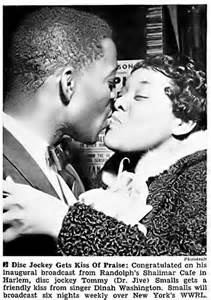
Tommy Smalls was a DJ in New York known as “Dr. Jive,” though he got his start in Savannah, Georgia. His catch phrase was, “Sit back and relax and enjoy the wax. From three-oh-five to five-three-oh, it’s the Dr. Jive show.” He was known as the “Mayor of Harlem” and unfortunately, in 1960 he was one of the DJs arrested, along with Alan Freed, in the payola scandal.

tommy-smalls-dinah

tommy-smalls

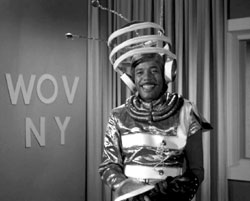
And Douglas Henderson, known as “Jocko” broadcast from a number of cities with his show, “Rocket Ship.” Henderson was also known as the “Ace from Outta Space.”Author Bill Brewster writes of Henderson: “Using a rocket ship blast-off to open proceedings, and introducing records with more rocket engines and ‘Higher, higher, higher…’ Jocko conducted his whole show as if he was a good-rocking rhythmonaut. ‘Great gugga mugga shooga booga’ he’d exclaim, along with plenty of ‘Daddios.’ ‘From way up here in the stratosphere, we gonna holler mighty loud and clear ee-tiddy-o and a bo, and I’m back on the scene with the record machine, saying oo-pappa-do and how do you do?”

jocko

jocko2

Notice any similarity between the jive talking of these DJs and the toasts of Lord Comic and Count Matchuki? Some of Matchuki’s toasts have the same language as the jive of these DJs. Matchuki’s toast include “When I dig, I dig for mommy, I dig for daddy, I dig for everybody,” and “It’s you I love and not another, you may change but I will never,” as well as, “If you dig my jive / you’re cool and very much alive / Everybody all round town / Matchuki’s the reason why I shake it down / When it comes to jive / You can’t whip him with no stick.”

Count Matchuki, born Winston Cooper in 1934, is widely considered the first toaster. He was raised in a family that had more money than others so he grew up with two gramophones in the home and was exposed to swing, jazz, bebop, and rhythm & blues. He says that he got the idea to begin toasting over records after hearing American radio. He told this to Mark Gorney and Michael Turner as they recount in a 1996 issue of Beat Magazine. “I was walking late one night about a quarter to three. Somewhere in Denham Town. And I hear this guy on the radio, some American guy advertising Royal Crown Hair Dressing. ‘You see you’re drying up with this one, Johnny, try Royal Crown. When you’re downtown you’re the smartest guy in town, when you use Royal Crown and Royal Crown make you the smartest guy in town.’ That deliverance! This guy sound like a machine! A tongue-twister! I heard that in 1949. On one of them States stations that was really strong. I hear this guy sing out ‘pon the radio and I just like the sound. And I say, I think I can do better. I’d like to play some recordings and just jive talk like this guy.”

count-machuki

Sir Lord Comic, whose real name was Percival Wauchope, began as a dancer, a “legs man.” He began toasting for Admiral Deans’ sound system on Maxwell Avenue in 1959 and his first song was a Len Hope tune called “Hop, Skip, and Jump.” In Howard Johnson and Jim Pines’ book, Reggae: Deep Roots Music, Sir Lord Comic recalls, “When the tune started into about the fourth groove I says, ‘Breaks!’ and when I say ‘Breaks’ I have all eyes at the amplifier, y’know. And I says, ‘You love the life you live, you live the life you love. This is Lord Comic.’ The night was exciting, very exciting” (Johnson Pines 72). Lord Comic’s first toast, he says, was, “Now we’ll give you the scene, you got to be real keen. And me no jelly bean. Sir Lord Comic answer his spinning wheel appeal, from his record machine. Stick around, be no clown. See what the boss is puttin’ down.”

lordcomic

One article in the Daily Gleaner on May 1, 1964 advertised Sir Lord Comic’s performance at the Glass Bucket Club, an upscale establishment. “Sir Lord Comic will be at the controls with his authentic sound system calls,” it stated. Some of his recorded songs include “Ska-ing West,” “The Great Wuga Wuga,” “Rhythm Rebellion,” “Jack of My Trade,” and “Four Seasons of the Year,” among a few others. Sir Lord Comic’s “The Great Wuga Wuga” was likely inspired by the jive talk of Douglas “Jocko” Henderson who spoke of the “great gugga mugga.” Additionally, Henderson’s show, “Rocket Ship,” became a song recorded by the Skatalites with Sir Lord Comic toasting over the instrumentals, calling out the title of the song to begin the instrumentals and continuing with his percussive techniques.

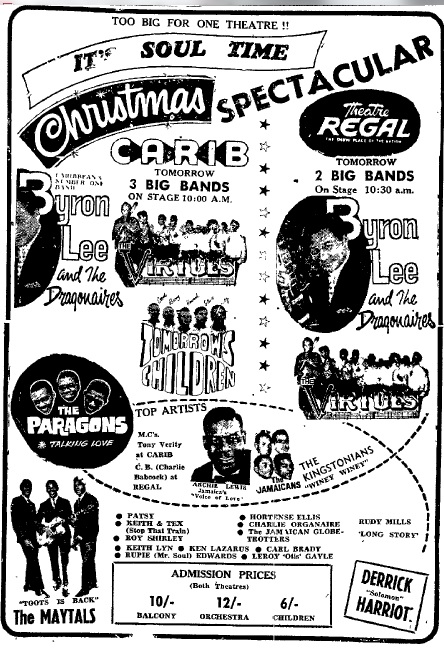
Last week, a reader made me aware of a connection between Canadian jive-talking DJs as well and they cited this article here. His name was Charlie Babcock and he came to Kingston in 1959.  He was the “cool fool with the live jive.”

babcocok

Share the connections you see, or hear, between jive-talking American DJs and Jamaican toasters!

Uncategorized

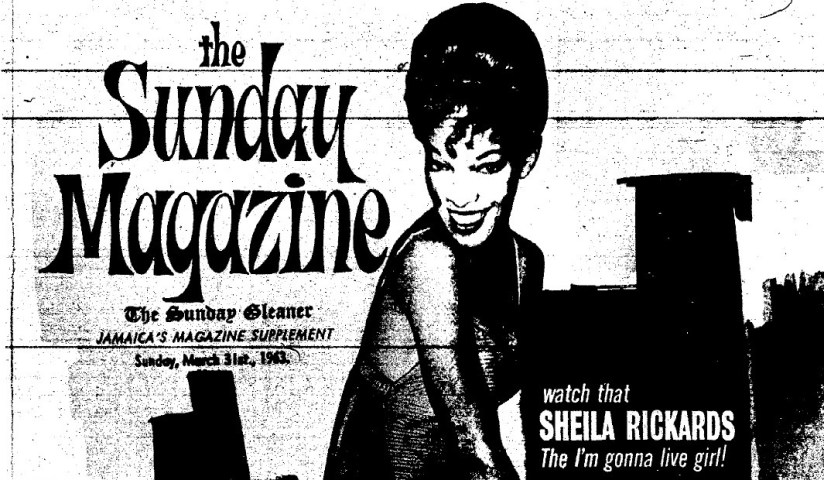
Sheila Rickards–The I’m Gonna Live Girl!

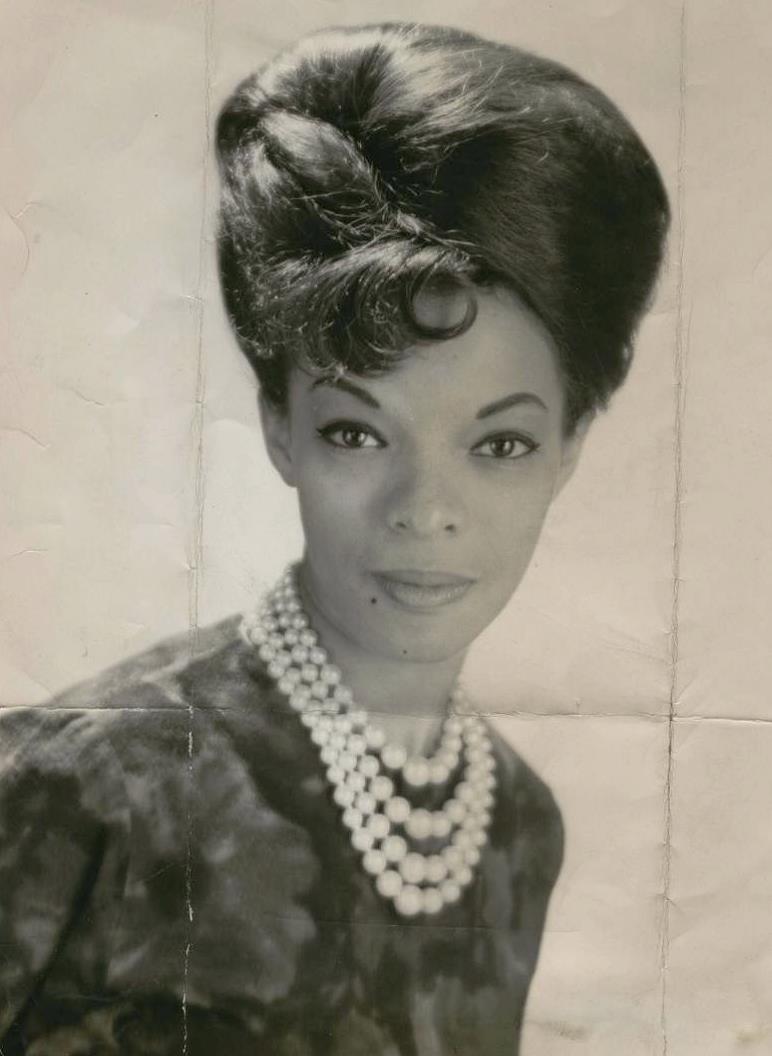
sheila-rickards

The following is a excerpt from my book, Songbirds: Pioneering Women in Jamaican Music on the vocalist Sheila Rickards:

The Daily Gleaner on March 31, 1963 stated that she was born a “preemie” weighing only three pounds at birth. She was born just seven months into her mother’s pregnancy in 1942. Sheila got her start at age 14 when she appeared on the Lannaman’s Children’s Hour, a talent show broadcast on RJR. She then got the chance to compete at the Vere Johns Opportunity Hour in 1956 where her talent for singing jazz was recognized. She was hired to perform with the Baba Motta at the Myrtle Bank Hotel and the Glass Bucket for long runs, as well as on the North Coast and for Sonny Bradshaw. “From Colony Cottage Hotels on and then Nassau. There, it was the Goombay Club for nearly a year of making warm friends with every not she sang. Spots at the Junkanoo Club there too, singing onetime with Billy Cooke and his Combo who did a spread in Nassau at the time. And at the Nassau Beach Lodge. She says, ‘I had one of the swingingest times of my life!” states the Gleaner article which goes on to list another number of performance venues that booked Rickards. She was billed as the “I’m gonna live girl” after one of her performances at the Ward Theatre Pantomime where she sang a song with these words.

Sheila Rickards’ father, Ferdinand Arthur Rickards, was a contractor for the Sugar Manufacturers Association. He grew up in St. Catherine and was a performer—a singer, actor, and comedian. He helped foster his daughter’s love for music by purchasing records for the family phonograph. There were over 200 records in their Greenwich Town home, which was quite a substantial amount in the 1960s for a family to own. Her father said, “Sheila was born to be a singer, she’s been singing since she was four years old, started music when she was seven, very musical like her mother and sisters.” Her sister, Thelma, sang on the radio, on ZQI.

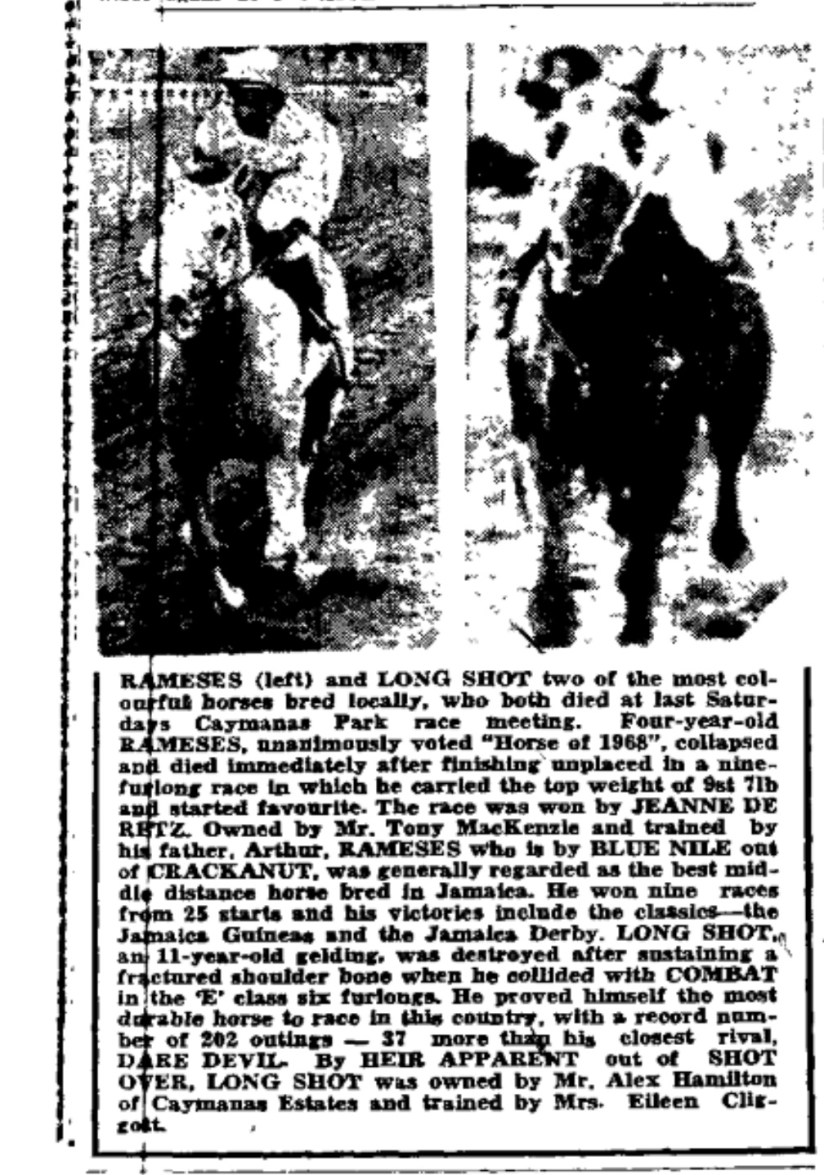
longshot-april-1-1969

Sheila Rickards performed opened for Sammy Davis Jr., when he came to Jamaica and she became well acquainted with him and his wife. In fact, she even babysat their eight-year-old child for a couple of days. Sheila traveled to the United States to try to further establish her career. That same Gleaner article states, “And now Sheila is in America and the house, they [her parents] say, is too quiet without her. She stays in America with the family of Mrs. Benskin who visited Jamaica last year and was so impressed with Sheila’s talent that she insisted that she come to the USA and train. She will, go to a school to do dramatics and to develop her singing and acting. Singing and acting she wants to make her ‘career!’ And she will also study dress-designing which she says she will make her ‘profession.’” Dan Monceaux, director and camera operator for a documentary on Sheila Rickards which never came to fruition says, “Many people knew of her, but not of her whereabouts. Evidently she emigrated to the USA, and married, likely changing her name in the process. I believe she had ambitions to make it in the USA, but these dreams were never realised.”

sheila-rickards-gleaner

The film was constructed around a song that Rickards recorded for Bunny Lee called “Jamaican Fruit,” a haunting song whose lyrics talk of the slave trade and is a fairly obvious reference to Billie Holiday’s “Strange Fruit.” Monceaux says, “The song ‘Jamaican Fruit’ has very strong lyrics for its time, and our research revealed that it was actually a cover (with lyrical variation) of a song by American soul singer Zulema Cousseau (her artist name was simply ‘Zulema’).” Zulema’s version was called “American Fruit.” Rickard’s version states, “We came from a distant land / our lives already planned / we came in ships from across the sea / and never again our home we’d see / and now we’ve become Jamaican fruit of African roots.” It talks of how their children’s last names were erased, they were commodities, and it encourages an uprising that is not present in Zulema’s version. “The time has come for us to join hands / let’s not be punished by the rules of this land / now that we’re aware of what we must do / let us no longer be fooled, no longer be fooled / let us all be black, let us all be black / and Jamaican fruit of African root / I wanna be black, let me be black, black is beautiful.” Rickard’s original version was only released unofficially in Canada, according to Monceaux, but his co-producer, Chris Flanagan, negotiated rights to re-release the song. Her whereabouts are still unknown.

sheila-rickards-gleaner-march-31-1963

Listen to a sample of Sheila Rickards’ “Jamaican Fruit of African Roots” from Shella Records HERE

Sheila Rickards & Mapletoft Poule Orchestra’s “Say and Do” HERE

More info on Shella Records, the documentary, and quest to find Sheila Rickards HERE

Uncategorized

Last Train to Expo ’67

expo-67-a

I have written before about the 1964 World’s Fair in New York City where Byron Lee & the Dragonaires made an appearance to debut the ska, along with numerous other Jamaican musicians, vocalists, dancers, and delegates, but did you know there was another World’s Fair where Byron Lee & the Dragonaires performed? Expo ’67 in Montreal was an incredibly popular and well-attended World’s Fair, so successful that organizers extended the length of the fair beyond the October 27th end by two days, on October 29th. It was such an important event for Montreal that they even named a baseball team after the festival–the Montreal Expos. The fair kicked off on April 28th, 1967 and a number of notable musicians performed at Expo 67 including The Supremes during a live broadcast of the Ed Sullivan Show, Petula Clark, Thelonious Monk, The Tokens, Jefferson Airplane, Tiny Tim, and even the Grateful Dead. Numerous dignitaries from around the world attended, including Queen Elizabeth II, Lyndon Johnson, Robert Kennedy, Jackie Kennedy, Princess Grace, Charles de Gaule, and perhaps most interesting for those fans of Jamaican music–Harry Belafonte and Haile Selassie.

But fans of Jamaican music know best of Expo 67 from the Melodians’s tune, Last Train to Expo 67, recorded for Duke Reid in 1967. It might be hard to take a train from Jamaica to Montreal, but trains were popular objects in Jamaican music (and all music, really) as symbols of transition, movement, and escape. Perhaps some collectors even know of the Diamonds’ Expo ’67 (Silhouette) recorded on the JDI label, for Copley Johnson. of the same name.

Expo 67 was an important event for Jamaica. The Daily Gleaner on June 2, 1967 reported that the Jamaica Military Band traveled to the fair in August of that year to perform at “Jamaica Day,” August 3rd. The newspaper stated, “‘Jamaica Day’ has been so named by Expo ’67 Authorities as a tribute to Jamaica’s participation in Expo ’67 and the authorities hope that Jamaicans will try and attend on that day. The Jamaica Military Band returns to Canada for the period August 23 to 30 to appear in the Calypso ’67 Carnival in Gait and later in Toronto. This tour is being arranged by the Jamaica Tourist Board and the band is part of the Jamaican participation.”

expo-67-b

Edward Seaga, who was at that time Minister of Finance and Planning, also attended Expo 67 on Jamaica Day and he also met with dignitaries on economic and trade matters. Prime Minister Hugh Shearer also attended. In December, 1967, Shearer received a gold medal of commemoration from Expo 67 officials for their participation in the fair which exceeded attendance expectations.

Tony Cohen, also known as “Caps,” said in a Jamaica Gleaner article in 1995 that Byron Lee & the Dragonaires performed during Jamaica Day. Cohen was a percussionist and sometimes vocalist for the band. He stated, “I recall with pride our performance on Jamaica Day at the Montreal Expo in 1967. Thirty five thousand persons were in attendance. That was my first concert outside of Jamaica. It was magnificent, awesome.” The band performed on Thursday, August 3, 1967 at a reception for Shearer at the fair, which was followed by a performance of the National Dance Theatre Company.

expo-67-flag

Even though Byron Lee & the Dragonaires performed, and even though there were songs commemorating the fair, the focus was not on music this time around, as it was during the World’s Fair in 1964 in New York. This time, the focus was on cocktails. That’s right, cocktails. Jeffrey Stanton on the westland.net website describes the Jamaica Pavilion as the following:

“The Jamaican pavilion was a replica of a 19th century two-story country shop. It was constructed of thick, sand-colored plaster walls with shuttered upper windows and a cedar shingle roof. The entrance was through a small courtyard attached to the main pavilion. Panels and displays in the open entranceway told the proud story of the island’s industrial, social and cultural progress. The visitor passed through carved wooden doors into a smaller foyer displaying artistic works, and into the large bar, a cool, high ceilinged oasis. Barrels of rum, coffee and ginger lined the upper balcony and baskets and cylindrical wicker fish traps hung from the heavy beams. Cases along the walls displayed a wide variety of Jamaican products. Bartenders served the tastiest, most thirst quenching rum punch at Expo. Jamaican hostesses dressed in vibrant pink and orange, offered a choice of a Soon Come Sling, Half Moon Haze, or Look Behind Ambush rum punch to visitors seated at corner tables.”

expo-67-pavillion-2 expo-67-pavillion

Above is a photo of the Jamaican pavilion in recent years, as well as one from 1967 during the fair.

Below are a few of the cocktails available at Expo 67 at the Jamaica Pavilion which were described in a brochure.

expo-drinks expo-drinks2

See a promotional video for Expo ’67 HERE.

Listen to the Melodians’ song HERE.

Listen to the Diamonds’ song HERE.

expo-67-from-gleaner-1-25-67-air-canada-ad

Uncategorized

Bumps Jackson

bumps-jackson

I’m trying to locate Keith “Bumps” Jackson and hoping today’s post will help someone to point me in the right direction. He was a bassist who performed with Byron Lee & the Dragonaires before relocating to the U.S. to found his own group, Bumps Jackson & the Caps. Below is an article that ran in the Daily Gleaner, June 23, 1969.
Bumps Jackson . . . Arranger, composer, guitarist and band leader

“Music is a mind-soother; it’s one of the ways In -which an individual can express himself” says ‘Bumps’ Jackson, tenor guitarist and leader of the Caribbean No. 1 band, BYRON LEE AND THE DRAGONAIRES. Born in Kingston on December 1, 1946. Keith Jackson later nick-named “Bumps’ attended Central Branch Primary and Excelsior School. He was graduated in 1965. From an early age Bumps had a flare for music and during his spare time especially during summer holidays, be com posed songs. It was in 1964 that he was first exposed to a musical instrument — practicing the bass-guitar with the Tytans band. After several months of thorough rehearsals, Bumps gained confidence and when the band’s bass-guitarist left he took over the role. He was associated with Tie and the Tytans for a year, after which he joined the Virtues.

Until late 1965, Bumps had only short engagements with most of the Island’s leading bands. He felt that those he had been around with did not really have anything to suit him. He tried free-lancing and in this way became associated with Byron Lee in Christmas of 1965. Bumps Jackson recalls that one night he was listening to the Dragonaires at the Club Sombrero, when Byron Lee approached him and asked: “How come a good bass player like you is not working?” Bumps said he told Byron that he was not interested in being confined to one band.

Byron Lee had to travel quite often to the United States and Canada on band business so he arranged with Bumps to take his place whenever he was not available. Bumps then became associated with the Dragonaires. After four months he was introduced to the six-string tenor guitar and took the bandstand as a second guitarist when Byron was able to play the bass. During that time Bumps created a name for himself and to many music fans he was regarded as one of Jamaica’s leading bass and tenor-guitarist. In the Dragonaires Ken Lazarus was the No. 1 tenor guitarist and leader in the latter part of last year. Lazarus left the group and Bumps took over as deputy band leader.

Bumps’ greatest moment came in January of this year when he was appointed leader and his first assignment was a Sunday night at the Club Maracas, Ocho Rios. “It was a fantastic experience for me and one I’ll never forget” he recalls. “I kept calm and observant and the other boys gave me confidence as the night went by,” he told me. Bumps says: “Most people feel that being a band leader is an easy job, but it is certainly one of the most difficult.” One has to develop a good working relationship with the members and Bumps says this the Dragonaires have achieved. As a member of the band, Bumps has travelled to New York. Boston, New Jersey, Connecticut and Lake George in the United States and to Toronto and Montreal in Canada. The band’s recent tour to Belize, British Honduras came in for high praises and was described as one of the best tours. Bumps is the band’s arranger and composer and his work includes Keith Lyn’s latest hit “Having a hard time.” He has been featured also in several recordings with the bass guitarist from Ska to Rock Steady and Reggae. “The Dragonaires are sounding magnificent,” says the leader, “and all I am interested is to keep it on a standard second to none in Jamaica and to maintain our place at the top in the Caribbean.” —J.S

Uncategorized

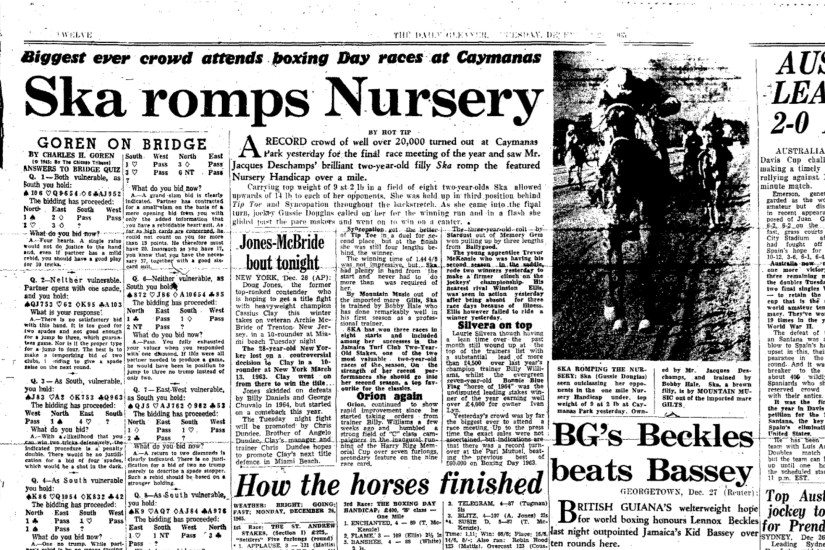
A Horse Named Ska

ska-romps-nursery

This horse has a name, Ska, so take that America (the band, not the country)! I came across this article that was written during the summer of 1964, when ska was all over the Daily Gleaner after finally being accepted by the colonial newspaper. Apparently, ska was such a rage that owner Jacques Deschamps named his horse after the genre! It got me thinking about Jamaican music and the horses. I’ve previously written about Jamaican music and boxing, which you can read about here, and there is definitely affair between the Jamaican culture and boxing, but there is also one between the Jamaican culture and horse racing.
Perhaps the most well-known song about a race horse is that classic, “Longshot Kick De Bucket,” by the Pioneers. Before this song was made, the Pioneers recorded their song “Longshot (Buss Me Bet)” which was written by Lee “Scratch” Perry, according to Dave Thompson in his book, Reggae & Caribbean Music, and was produced by Joe Gibbs. This racehorse, Long Shot, had a long career, yet never won. “He gallop, he gallop, he gallop, but he couldn’t buss [bust] the tape.”
Their more popular sequel, “Longshot Kick De Bucket,” was about that same horse and begins with the same horse track trumpet call. According to Kevin O’Brien Chang and Wayne Chen, it was producer Leslie Kong (Beverley’s) who first heard about the death of Long Shot and so he had the Pioneers write and record a song about it and it was not only an immediate hit, but it has been covered many times over, namely by The Specials, as a staple of Jamaican music. The song references Caymanas Park which is the popular horse track in Kingston. The lyrics tell of the death of Long Shot, and the details of his death are told here, in this article I found in the Daily Gleaner on April 1, 1969, along with a photo of Long Shot! There he is folks, before he kick de bucket! And here’s Rameses who also met his demise that same week. The article states this horse was voted the “Horse of 1968.” Naturally, he became the subject of the Pioneers “Poor Rameses,” which has a similar sound to their previous horse homages. A post mortem conducted on Rameses revealed that he died of a heart attack. There is a trophy called the Rameses Trophy which is named in his honor and is still awarded today at Caymanas Park.

longshot-april-1-1969

Yet another Jamaican music and horse race connection comes with Vincent Edwards, better known as King Edwards, who ran a sound system with his bother George called The Giant. It was one of the big three sound systems along with Coxsone Dodd’s Downbeat and Duke Reid’s The Trojan. But did you know that King Edwards was also involved in horse racing? Today, King Edwards is the president of the Jamaica Racehorse Trainers Association (JRTA). In an interview with Michael Turner and Brad Klein in February 2013, King Edwards told him of his work with horses. “I’m a politician. And a race horse trainer. I’m training horses now. For forty nine years. Even when I was a member of Parliament I was a trainer,” Edwards said. You can read the entire interview here, and I would recommend you do—it’s fantastic!

There have been plenty of songs referencing horses and horse racing over the years, including “Race Horse Touter” by Leon Wint which was later covered by Ranking Roger, and “Horse Race” by Derrick Morgan and Neville Brown. There were horse songs full of innuendo like “Small Horse Woman,” “Horse Tonic,” “Ride a Cock Horse,” and “Ride a Wild Horse.” There were horse songs full of metaphor like “Death Rides a Horse,” “Selassie Rides a White Horse,” and “Can’t Flog a Dead Horse.” Then of course, there was the record label called Horse, a sublabel of Trojan Records, appropriately!

horse
Share your Jamaican music and horse connections in the comment section below!

SKA, Uncategorized

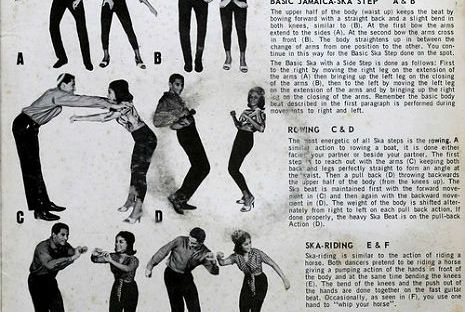
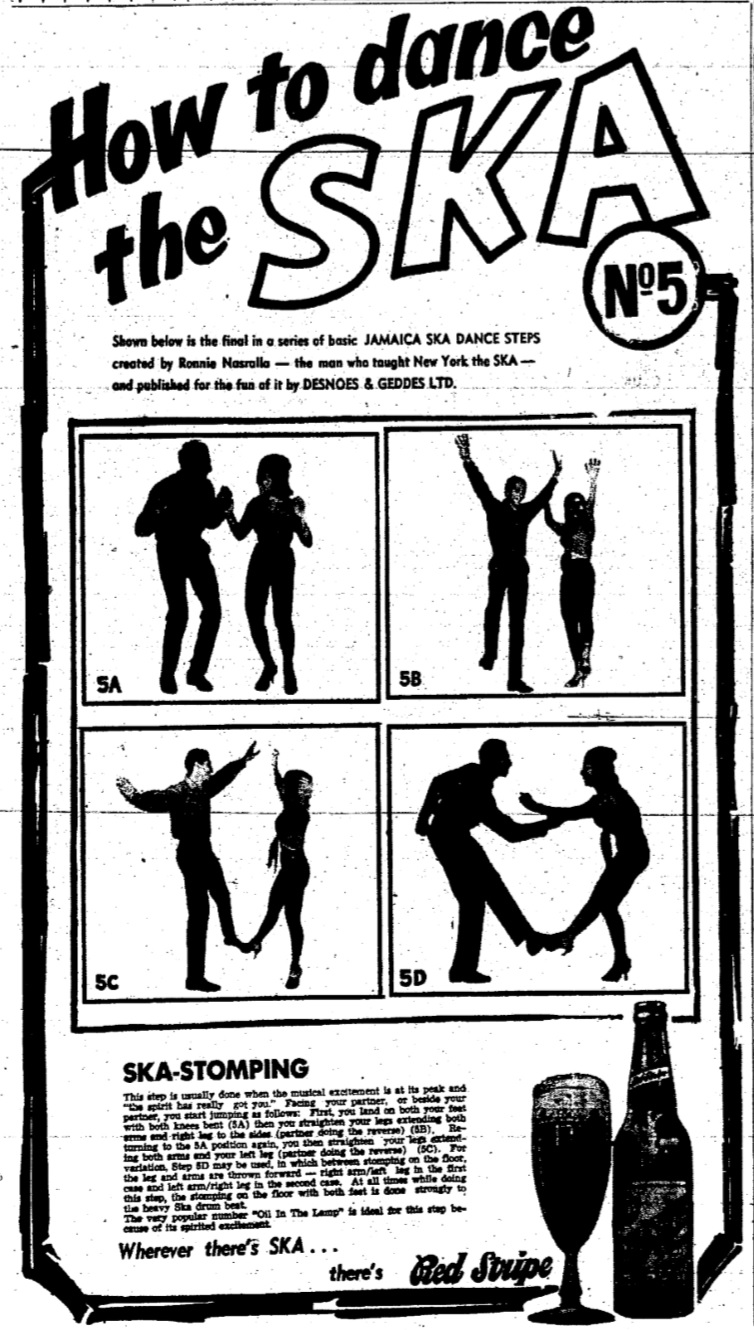
How to Dance the Ska

skaaaaaaaaa

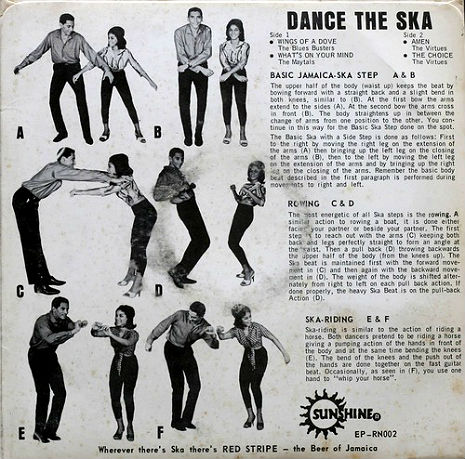
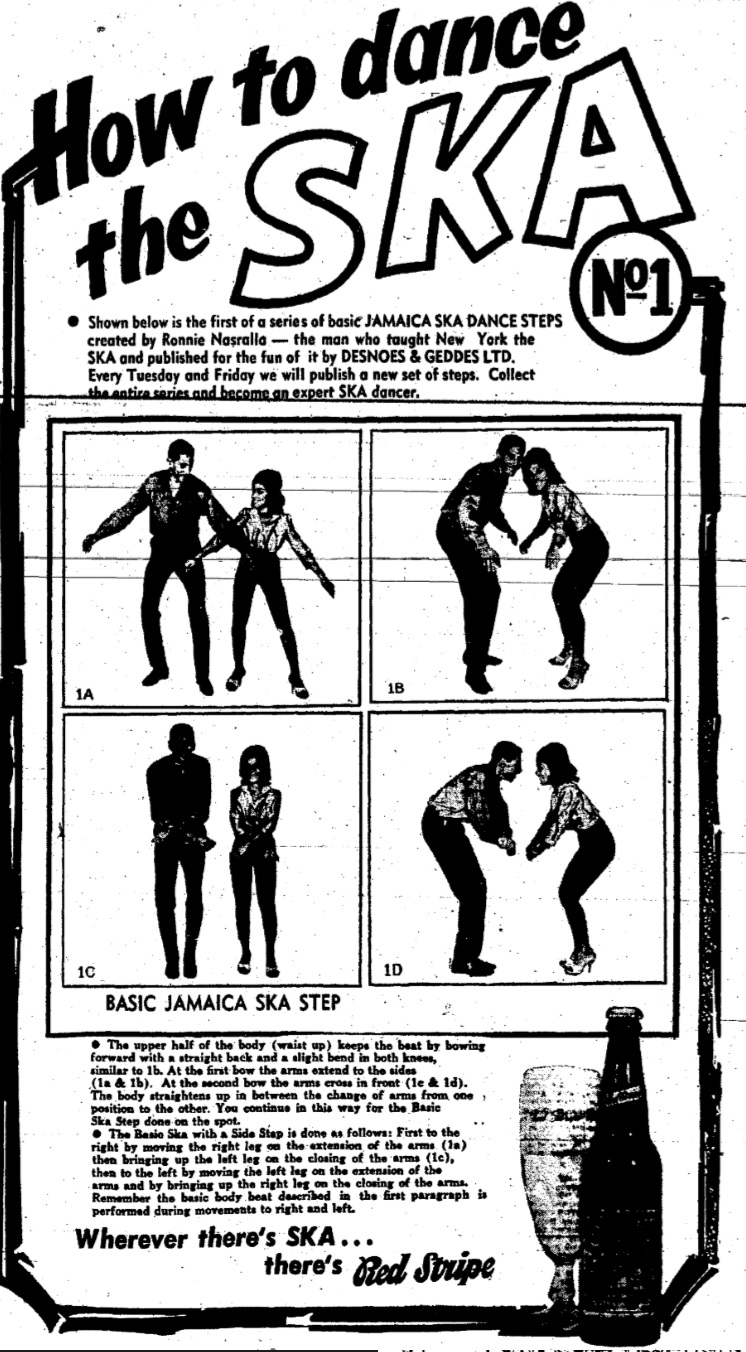
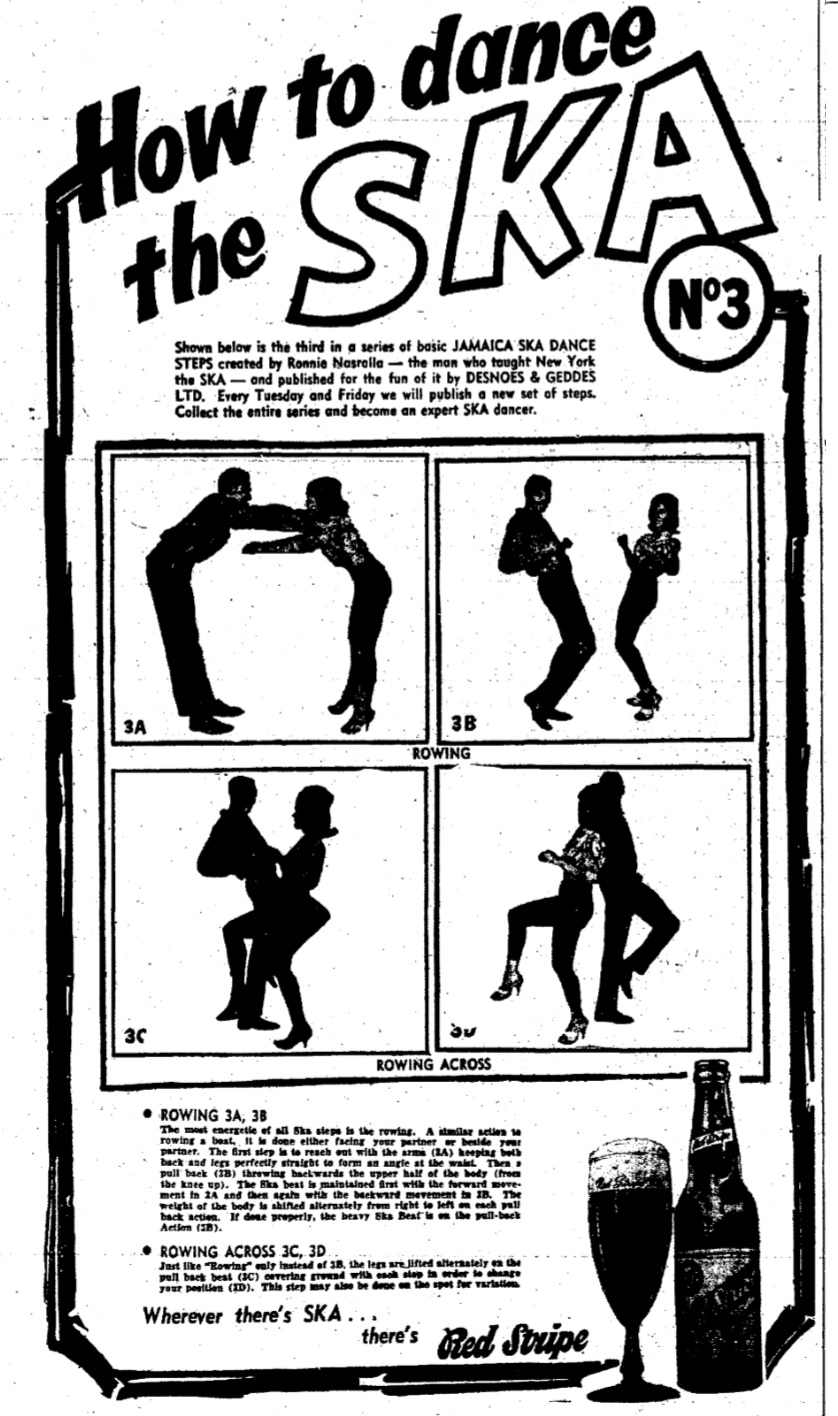
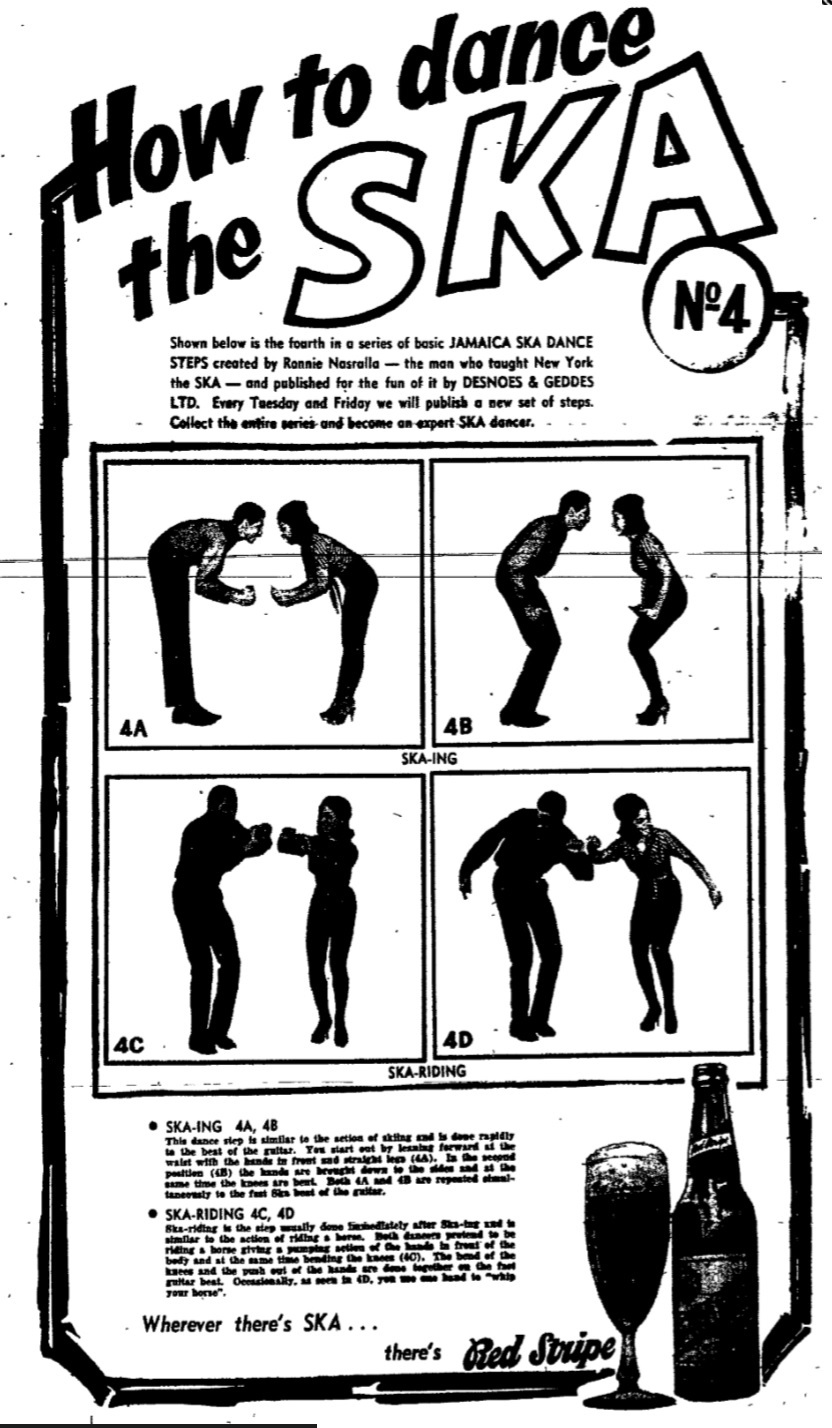
We have seen the photographs of Ronnie Nasralla and Jeannette Phillips teaching us to dance the ska, step by step. These guides appeared on the back of various LPs, especially those by Byron Lee & the Dragonaires. But a dig through Daily Gleaner archives this week revealed that these dance steps also appeared in the newspaper in the summer of 1964, and so I post them here for you to see. They are essentially the same as those on the back of the albums, but they are sponsored by Desnoes & Geddes, the brewer of Red Stripe.

First a little background, which I posted earlier this year. Ronnie Nasralla told me how he came to create these dance steps to showcase the ska with Seaga and Byron Lee. “Let me tell you how it started. One day, Eddie Seaga, who was my close friend, called me. Eddie Seaga was friends with my sister. He was my sister’s boyfriend and he used to come by my house and I help him with his political campaign. Advertising was my forte. So I did all the advertising for the government, Eddie Seaga at that time. I help him with all his promotion. He told me he heard a music that was breaking out in Western Kingston called ska and he asked if I could promote it for him, so I said, ‘Well, I’d like to learn about.’ And we organized and I said, well Byron Lee is the best person to promote it. So we get together with Byron Lee down in Western Kingston and I learned the ska music. Eddie organized a dance at the Chocomo Lawn in Western Kingston—it’s an outdoor nightclub. And Byron played there and all the ska artists performed with Byron and it was a sensation. He [Seaga] said to me, ‘Ronnie, move around the crowd and see what they are doing on the dance floor and see if you can come up with a brochure about how to dance the ska. So I did that, saw the people dancing around and came up with a brochure about a week after, how to dance the ska, give them different steps in the ska, and something that they could use to promote ska worldwide. That brochure was used by the government, they put it in all the record albums and it was sent all over the world and I was asked to go to the states and promote the ska with somebody and I got Jannette Phillips to dance with me. Jannette was a dancer, a belly dancer, a friend of my sister. We took pictures doing the different steps and the brochure was produced and given to the government and it was put in all the ska albums,” says Nasralla.

Nasralla had traveled to the U.S. with the group of musicians from Jamaica to promote the ska at the 1964 World’s Fair in New York. You can read more about this visit in my posts here: Ska Ska Ska! Jamaica Ska!

Without further ado, here are the advertisements from the Daily Gleaner, so get ready to put on your dancing shoes!

ska-no-1-june-23-1964

Uncategorized

Charley Organaire–Master of the Harmonica

charley1

You may know Charley Organaire best from his harmonica solo in Stranger Cole’s classic “Rough and Tough,” (listen to it here: Rough and Tough), or over 1,000 other Jamaican recordings over the years, but did you know that Charley is still going strong, singing and harmonizing all over the world? His song, “I Never Stop Loving You” was featured in the classic movie “Love Jones.” And Charley Organaire is performing tonight in his hometown since the mid-1970s, Chicago, to kick off his European tour with the Prize Fighters, a stellar band from Minneapolis. Charley Organaire, along with Roy Richards, was responsible for pretty much all of the harmonica in ska and rocksteady, even reggae, during the 1960s and 1970s in Jamaica (unless you count Lee Jaffe on Bob Marley’s “Talkin’ Blues,” because we all know, he sure likes to count himself!). The harmonica is an important but overlooked instrument in Jamaican music. But the harmonica not only provides lyrical musical harmonies—it also gives Jamaican music its spine, the essential rhythm that makes ska ska, rocksteady rocksteady, and reggae reggae.

charley2

Charley not only performed the harmonica back in Jamaica, but he also sang. In fact, in 1967, at a New Year’s Day show, a three-hour show at the Ward Theatre, Organaire was touted for his vocal performance. The Daily Gleaner article on January 3, 1967 stated, “One of the featured singers, Charlie Organaire, brought down the house with such popular hits as ‘Goodnight My Love,’ and ‘Stand’ By Me’ and was called back to give another performance.” As Rico Rodriguez would say, “Nice!”

charley-organaire

According to the Jump Up! Records website, which is the label founded and operated by Chicago ska, rocksteady, and reggae authority Chuck Wren, Charley Organaire has a rich history as a musician and entertainer. The Jump Up! website states, “Charles Cameron was born in Kingston, Jamaica on March 20, 1942. He was inspired by the singing of his mother Louise, and his neighbor Mr. Randolph, a mean harmonica player. From the early age of 5, Charles started performing in neighborhood concerts, churches, and lodge halls – reciting poems, singing and playing his plastic harmonica. At the age of 9, a talent scout named Vere Johns had Charles performing on the “Opportunity Knocks” radio program and at various theatres in Kingston, such as the Palace, Ambassador, Gaity, and Majestic. He performed with all the big singers like Jimmy Tucker, Winston Samuels, and Laurel Aitken, plus was a side-kick to Bim and Bam, Jamaica’s leading comedians at the time. In his teens, Charley “Organaire” Cameron performed with big bands lead by Carlos Malcolm and Sonny Bradshaw. Then Charles teamed up with Bobby Aitken and formed a band called the Carribeats, recording the hit track “Never Never” with Bobby on vocals, Charley on harmonica. Charley “Organaire” was now unstoppable, becoming a well known studio musician performing on sessions with Bob Marley, Jimmy Cliff, The Tenors, Derrick Morgan, Millie Small, Toots and the Maytals, Phyllis Dillon, Stranger Cole, and Lord Creator. The “Organaire” worked for the biggest labels in Jamaica: Prince Buster, Studio 1, Beverly’s, Duke Reed, Treasure Island, Highlights and King Edwards. Charley also started producing hits for his Organaire label, most notibly “Little Village/Little Holiday”, “London Town”, Illusive Baby”, “Sweet Jamaica”, “Your Sweet Love”, and “Let me Go”. Being one of the most popular entertainers in Jamaica, he moved to the north coast and worked in the tourist industry. Playboy, Hilton, Holiday Inn, Intercontinental, Yellow Bird, you name it, he played there. Charles moved to Chicago in the late 70’s, eventually forming his own band called “The Charles Cameron & Sunshine Festival”. The “Organaire” band played in various night clubs, for major corporations, and political functions throughout Chicago including events for former Mayors Harold Washington and Jane Burn. Charles also played at Chicago Fest, Festival of Life, Taste of Chicago, and the African Fest. Charley “Organaire” Cameron continues to write and record to this day, the title track from his “Never Stop Loving You” CD appeared in the movie “Love Jones” starring Nia Long and Lorenzo Tate, and his newly released “Friends” CD features collaborations with Charlie Hunt and Steve Bradley. In 2012/2013 Charlie Organaire became a regular fixture at Chicago’s Jamaican Oldies productions at Mayne Stage, performing with Stranger Cole, Roy Panton & Yvonne Harrison, Eric Monty Morris, Derrick Morgan, Derrick Harriott and Dennis Alcapone.”

charley-organaire-dec-24-1967

My friend Aaron Cohen wrote a fantastic article on Charley Organaire in Thursday’s Chicago Tribune. Here is the text from that article:

“Charley “Organaire” Cameron is a harmonica player and singer, but sitting in the Good To Go Jamaican restaurant in Rogers Park, he is regarded somewhere between a celebrity and favorite uncle. He deserves both roles.
More than 50 years ago, Organaire performed in the instrumental section on a plethora of pivotal early Jamaican ska and rocksteady recordings. Since 1976 he has lived in Chicago, where he’s worked in different musical idioms; until relatively recently only a few fans knew about his historical role. But his upcoming first European tour will focus on the music that he helped originate.
“Charley was the harmonica sound of ska music, as well as an important arranger,” said Chuck Wren of Chicago’s Jump Up Records, which released three new Organaire ska singles this month. “He was on so many sessions; that Wailers tune you hold closest to your heart could have been 90 percent arranged by him.”
All of which began simply enough. Organaire listened to his mother sing and a neighbor play harmonica while he was growing up in 1950s Kingston. He heard different music through Radio Jamaica and from signals farther away.
“That one radio station in Jamaica would play country, blues, jazz and classical music,” Organaire said over glasses of Caribbean ginger beer. “A Cuban station would play Latin music. But where all music came from is basically the R&B from New Orleans.”
When Organaire was a teenager, he picked up a chromatic harmonica, which could play all 12 notes on a scale, as opposed to the more typical diatonic model that covers eight. His colorful tone and dexterity throughout shifting tempos made him valuable on pioneering ska and rocksteady recordings by the Wailers, Prince Buster and Jimmy Cliff. He owned his own record label, also called Organaire, which released his locally popular “Elusive Baby.”
“Back then we’d start every day at 9 in the morning and do no less than eight songs for each session,” Organaire said. “I had a great time working with (saxophonists) Tommy McCook and Roland Alphonso. Since they were jazz guys, I learned so much from them.”
Those lessons proved helpful when Organaire got fed up with the Kingston record industry’s often desultory (at best) payment system, and he left to work in hotels and resorts on the country’s north coast. He’s still amazed that tourists preferred hearing him sing jazz standards instead of Jamaica’s own music.
After Organaire accepted an invitation to play in a Greek venue in Chicago in 1976, he stayed here. That gig turned into engagements at the Latin clubs that thrived here decades ago, including El Mirador and Las Vegas in Humboldt Park.
“I would play salsa and a little jazz,” Organaire said. “I’d also sing ‘My Way.’ It didn’t matter if you were from China; everybody knew ‘My Way.'”
A show at the reggae club the Wild Hare led to Organaire’s appearance singing his ballad “I Will Never Stop Loving You” in the 1997 film “Love Jones.” But for the past 27 years, his contributions have not just been musical. He has also worked on behalf of Chicago Concerned Jamaicans, a foundation that raises money to provide scholarships to needy students on the island.
“One student’s mother had six children and couldn’t afford a home,” Organaire said. “We helped her through a scholarship, and now she’s an engineer.”
Organaire’s generosity also emerged two years ago when he began participating in the Jamaican Oldies concerts that Wren has organized at Mayne Stage. Along with performing, Organaire helps the veteran artists feel more at ease working with much younger American backing ensembles. The musicians in one such group, the Minneapolis-based Prizefighters, have been fans of Organaire’s early ’60s sessions and perform on his new recordings. He does not expect this to be the last generation to rediscover his legacy.
“When the right time comes, all you have to do is be ready,” Organaire said. “If you stop, it’s over, and I will keep going on until I drop.”

Read even more about Charley Organaire here: World of Harmonica article

Read an interview with Charley here: Reggae Vibes interview

And visit Charley’s website: Charley’s website

And see Charley with the Prize Fighters on tour: Tour

Here’s a great blog post on the harmonica in Jamaican music: Harmonica

Uncategorized

Goodbye Mr. Goody

goodall1

It is with heavy heart that I dedicate this week’s Foundation Ska blog post to Graeme Goodall who died this past Wednesday, December 3rd. Graeme was a good friend who had generously provided me with numerous interviews over the years and was always ready to answer any question I had. He had a terrific sense of humor and deeply loved his wife Fay, recalling their days together at dances when she was pregnant, her little bun in the oven jumping to the bass of Downbeat’s sound system. Graeme was crucial to Jamaican music in so many ways it is almost daunting to write a blog post about him—he deserves so much more. But I shall give it a go and hope you will all chime in with your memories and thoughts in the comments section below.

Graeme Goodall was known affectionately as Goody. He was born in Melbourne, Australia in 1932 and died at the age of 82, although you’d never guess he was that old. His spirit and lucidity could trick you into thinking he was at least two decades younger, and his memory of minute details was sharp as a tack. He was a studio engineer for Ken Khouri’s Federal Records an in July, 2011 he told me in an exclusive interview how that came to be.

“I went from Australia to England in 1932 mainly to study more than anything else. In 1954 I was working for a commercial broadcasting station in Melbourne but I looked around and everybody older than me looked very very healthy, including the chief engineer and I figured, I better do something to leap frog over them. At the time the Australians were very into going overseas because they had been restricted through the Second World War and so I went to England, dead broke. I needed to send enough money for my ticket I suppose so I worked selling appliances that that didn’t last long so I worked my way into a company called IBC-UPC, International Broadcasting Company, Universal Program Corporation, and they did programs for Radio Luxembourg and they also did recordings and were probably the largest independent recording studio in Great Britain and so one way or the other I was trained as an engineer and they got me into doing remote broadcasts, or remote recordings actually, of shows like ‘Shilling A Second,’ ‘People Are Funny,’ ‘Strike It Rich,’ and during the week we had to make recordings of people like Petulla Clark. During that time, one of the girls who worked there in a sort of secretarial position said why don’t you go down there and see R.P. Gabriel who is chief engineer of a company called Rediffiusion, and Rediffusion, of course, had commercial broadcasting stations throughout the British Commonwealth, specifically the British Empire, countries that had not achieved independence. It was sort of funny because in the land of the blind, the one-eyed man in king. They had no commercial broadcasting engineers in the U.K., so it was down to the Canadians and the Australians. So I guess I passed with flying colors at the Rediffusion house in London and they said we’ve got two positions going—one in Nigeria, one in Jamaica, and I thought about that for a while and to be honest with you, I’d been so much an engineer that I forgot about geography, so I called an uncle of mine and he said, ‘Come out old chap and have tea with us,’ so I went out to his house and he said, ‘I thought the Goodalls were smart, and they offered you a job in Nigeria and Jamaica? My cousin Tom,’ who was my father, ‘I didn’t think he’d breed an idiot! What are the times?’ and I said, ‘Well, Nigeria is 18 months and Jamaica three years,’ and he said, ‘Well shouldn’t that tell you something?’ I said, ‘Well not really.’ He said, ‘We send British people down to Nigeria,’—he worked for the British government, he said, ‘They’ve had enough after 18 months!’ I said, ‘Oh! Okay, thank you!’ So I went to BOAC and I got a map of the place and it was a tourist brochure that was obviously 30 or 40 years old with voluptuous-looking ladies walking around and I said, ‘Well that sounds good,’ and so I signed up for three years for Radio Jamaica. I was always a studio person, an audio man plain and simple.

We designed and put on the island’s first commercial FM service in the British Commonwealth in 1954 in Jamaica, in a time when you couldn’t buy FM transmitters and we put it in basically as a studio transmitter link, and STL from Kingston, which is where the studios were, into Montego Bay. It was a double hop across the island and it just worked out that it was a wonderful system and people started buying FM radios from the United States that were definitely better quality and at the same time, they had a network of amplifiers made by the parent company. So that’s kind of how it all sort of started.

This went very well for three years and my three-year contract was up and I had three months of fully-paid vacation and the equivalent of paid airfare back to England, so I said, well that’s good, I’ve got three months paid for, so I cashed in my return ticket to England, flew to Miami, went Greyhound across to San Francisco and got a ship from San Francisco back down to Sydney, a train down to Melbourne and used all of my fare allowance on betting back to Australia. That went very well, everything was fine, but after about two weeks I got bored to tears and I talked my way into working in television in Melbourne. I worked there for about four months and Jamaica started calling me, the government started calling me, saying they were putting in a government broadcasting, not just as a competition, but as an adjunct to Radio Jamaica—we need you back here to put it all in and by the way, there’s a ticket on the way if you need it. I was 25 or 26 and all of my friends were settled down and I was the last person they wanted to see around the house. I’m a single bachelor, making good money, wearing American clothes, and they didn’t want me around, so I was short of friends and all of my other friends were back in Jamaica, so I said okay, back I go! I flew Pan Am back to Jamaica and that was my second stint with RJR, and that time it was for JBC Broadcasting, which was exciting because it was a new approach.

Out of the RJR concert studio, which I’d already built, I utilized all sorts of things like outside broadcast equipment to get extra mic input, and the famous story that goes down in history is that I converted the men’s lavatory into an echo chamber, which was quite interesting. So that’s all the original Island Records, the Caribs, Laurel Aitken, Wilfred Edwards, people like that, we recorded them all at Radio Jamaica Studios. I’d go home and relax a bit, maybe go out and dance with the Caribs a bit and we’d all go back into the studios around midnight and record until about four or five o’clock in the morning, go home, get a couple hours sleep, and come back and work at Radio Jamaica all day. How I survived, I don’t know.

I built a studio, a very primitive studio up on King Street in the back of Ken Khouri’s furniture store. The only person who was making records at that time was Stanley Motta and you couldn’t really call it making records, although I guess it was making records because he was cutting the record disc, but Ken Khouri wanted to do something a little bit better, so I advised him. He got a mic recorder, a tape recorder, some microphone and I threw a studio together for him and so he started making records. And that was progressing and people don’t realize that Ken Khouri and his wife, Gloria, they were the principal owners of Federal Records. Actually it started off as Records Limited up on King Street and one of the big shareholders in Records Limited was Alec Durie who owned Times Records. And Time Store is probably the biggest retailer of phonograph records, so this is how it all came about. Ken started pressing records. I know he had the Mercury franchise and he started pressing Mercury Records so when he got more into it and it was obviously a money-making venture, he built this studio that became Federal Records, and it was rather primitive and I don’t know how it all came about, but all of us started talking and I said, the hell with Radio Jamaica. I quit Radio Jamaica, went down there and literally took the studio under my wing and also the cutting system and we could do everything when they walked into Federal Records. They make a noise and they would end up with a finished product. And that was the secret. Ken Khouri literally saw it as I saw it. There’s no point in making a disc and sending it away, because it has to go through several processes and then it would come back, you’d have to order the labels and it was restrictive because if it took off you’d have to wait for product to come back from England and it did not make any sense. So Ken had the foresight and I had the technical knowledge and we managed to pull it all together and everybody came to Federal Records.

I remember when I said to Ken, we got a problem here. We’ve got to get some echo in here somehow. He said, what does that require? I said, well I could design an echo chamber. I could modify the equipment, which I did. I rebuilt a lot of it to make it a lot more professional and I said I’d design an echo chamber and tag it on the back there. He said, that sounds good. All the walls were a different angle from one another. The Jamaicans that we got to build it refused totally to build it. And I remember one of them talking to Ken and they didn’t figure that I could understand. They said, ‘It’s not right, Mr. Khouri, it’s not right. We cyaan build it because all the walls dem different,’ (laughs). I figured it all out, these guys were used to putting up walls vertical, floors and ceilings horizontal, and everything at 90 degree angles from one another. And Ken said, ‘I don’t know what he’s doing but trust me, you’ve got to do it his way.’ So we built it that way and I think that was one of the primary things because then when we started adding reverb, it brought it into a completely different area. And that was the start of Federal Records.
I went down to this horrible place in Trench Town in my little Mini Minor and I went up to Coxsone’s dance on a Friday night and I went up to the guy at the door and I said, ‘Where’s Downbeat?’ and they all sort of looked at me and said, ‘Just a minute,’ so he said, ‘Come on in,’ and it was amazing, all these people, there was probably a couple hundred people or more, and they all looked at me, ‘Who is this apparition? Did this guy just fall out of the sky? Is this the fifth coming of Christ?’–this gory-looking white guy in the sound system dance in Trench Town, and this little Chinese girl. And then all of a sudden Coxsone appeared and said, ‘Hey Mr. Goody, yuh make it deh, come, lek me buy yuh a drink.’ So I walked through and when Coxsone came it was like the Red Sea parting and he just walked through and I walked through with him and the crowd parted between us, and then it was the funniest thing because a lot of people that I knew, like Bim Bim and people like that that work for Coxsone, it was different. ‘Let me buy you a drink, Mr. Goody,’ ‘What do you want to drink, Mr. Goody,’—all of a sudden we’re exalted and they’ve got to buy me a drink, and my wife was all upset because this bass boominess was upsetting the baby that she was carrying. The baby started moving because the bottom end was so heavy. I could see the look on her face saying, ‘What’s going on here?!’ And I heard exactly what I had to do to make this record for the people. Because now I could see what they wanted. And I could feel what they wanted. So I went back to Federal the next week and I knew exactly what I had to do, I knew exactly how I had to do it and how exactly I had to weigh it down. And this is the problem that all these other people, including, I have to say it, Eddie Seaga, who I would love to be in there, but he never really understood what he had to get out there to influence the people. So that was it.”

Over the years, Graeme shared with me stories of the artists themselves, the producers, the wives, and tales of life in Jamaica in the 1950s and 1960s which I have included throughout my books. I am forever thankful to Graeme for all he has given me—the history, the music, and most of all, the friendship. We all should be profoundly thankful for all he has given to Jamaican music. You will be deeply missed, my friend. Love to you. To see Graeme Goodall interviewed in the flesh, make sure to catch a screening of Brad Klein’s Legends of Ska film which is now showing at locations all over the globe, including next week in Havana, Cuba!

goodall2

Uncategorized

Remembering Bim Bim

James-Mckenzie

I saw a post by Mark Williams yesterday that Allan “Bim Bim” Scott had just passed away. He died on October 20, 2014 and a service in his honor took place on November 16th. I thought this would be an opportunity to talk about Bim Bim who was Coxsone Dodd’s associate producer, without whom we may not have one of the most impressive set of recordings of Skatalites tunes, for Justin Yap on his Top Deck label.

First, let us read the article that Howard Campbell wrote in the November 20, 2014 edition of the Jamaica Observer on the burial of Bim Bim, whose name was James McKenzie, although most knew him y Allan (sometimes spelled Alan) Scott or Bim Bim:

Dodd’s ally laid to rest

Thursday, November 20, 2014

James ‘Bim Bim’ McKenzie

JAMES ‘Bim Bim’ McKenzie, a close associate of producer Clement Dodd during the 1960s and early 1970s, died on October 20 at the Kingston Public Hospital at age 74.

The St Mary-born McKenzie was also known as Alan Scott. The thanksgiving service for his life took place last Saturday at the Dovecot Chapel in St Catherine.

He was interred at the Dovecot cemetery.

Scott worked with Dodd at his Studio One label when it was transitioning from rocksteady to reggae in the early 1970s. He is said to have been instrumental in introducing singer Winston ‘Burning Spear’ Rodney to Dodd, as well as a group of musicians out of Linstead who ‘changed’ the Studio One sound.

Those musicians were the Soul Defenders band which included percussionist Joseph Hill who later found fame as singer Culture.

McKenzie eventually left the music business and moved to Prospect, St Thomas, where he went into farming.

James ‘Bim Bim’ McKenzie is survived by two children (Anice Scott Mullings-Anderson and Michael Scott), four grandchildren and three great-grandchildren.

— Howard Campbell

In my biography Don Drummond: The Genius and Tragedy of the World’s Greatest Trombonist, I write a few words about Bim Bim, including the following:

The Skatalites also continued to record for various producers but they sought to get better wages than they earned as solo artists. One of the producers they recorded for, who was known for offering fair wages, was Justin Yap and his brother Duke Yap who ran the Top Deck label. Justin Yap was introduced to the Skatalites by Allan “Bim Bim” Scott, Coxsone’s assistant, who knew the musicians personally and suggested Yap record them. During a now-famous all-night recording session using Studio One in November, 1964, Yap recorded some of the Skatalites’ most classic tunes, all written by Don Drummond. He arrived for the session with five songs already written—Confucius, China Town, The Reburial, Smiling, and Marcus Junior. In the liner notes to Ska-Boo-Da-Ba, the re-release of Top Deck’s Skatalites sessions, Yap recalls his thoughts on Drummond. “I admired Don Drummond. I call him maestro. He takes over. He’s in charge. He knows what he’s doin’, he very professional. And when you hear my recordings with Drummond, you listen, you know that he took charge,” said Yap to Steve Barrow. He says it was a little tough to deal with Drummond at first because of his idiosyncrasies. “I remember when I drove Bim down town . . . we drove to his home. First of all, I didn’t go in—Bim Bim went in and talked to him first. I remember one time he took off! Just went down the road and come back with his answer—it’s ok! Whatever he had to do, you know?” Yap told Barrow.
Sure, one can argue that without Bim Bim these songs would have just been recorded for a different producer, perhaps Coxsone himself, but we all know that each producer has his or her own sound, own take on the music, own production and creative interpretation. Without Bim Bim making this connection, ska history would not have been the same. Thank you Bim Bim for your contributions to Jamaican music.

Enjoy these now-classic ska tunes:

Confucius

China Town

The Reburial

Smiling

Marcus Junior

Uncategorized

Enid Cumberland

keith-enid

We may know Enid Cumberland from her duos with Keith Stewart. But few know that Enid was with Studio One for over four decades–not as a performer, but as a studio employee. Of course you can read an entire chapter on Enid Cumberland in my newest book, Songbirds: Pioneering Women in Jamaican Music which is available through this website, skabook.com, but here are a few excerpts from that chapter, to celebrate Enid’s long career in Jamaican music.

Enid Cumberland lives alone today in Stony Hill and she remembers her childhood with a sense of humor. Born on December 11, 1930, Enid is still whip smart, active, and filled with love. “My mom had eleven of us—can you imagine?” she recalls. “My daddy was a soldier in the army and at that time it was King Edward the eighth. When my mommy used to go out she had to leave some of us with grandma or she had to share us with somebody because we were so plenty. My mother was part African and my daddy was Jamaican and part Jewish and we have a mixture, some darker than some.”

Enid was given special opportunities in school—opportunities like singing for the school choir. She also sang in church—her own and others. “We grow up Roman Catholic but I never understood much of that, to be frank. It was in Latin and there’s a lot of Latin. I always go to all churches because I can sing and my friends would have a concert and ask me if I could come and sing and I say you have to ask my mommy and daddy so they give information and come and take me. And I wasn’t a person that was scared. I show off when I’m singing! (laughs) And they say, ‘Oh this little girl! She can sing like a big woman!” But it wasn’t until after graduation from school that Enid really got her start. It was at Vere John Opportunity Hour, the launchpad for so many careers in Jamaican music, that Enid Cumberland also got her big break into the world of show business. “I sing for Vere Johns when I was 20 or 22, something like that, but I found a partner. His name was Keith Stewart and we did a few hits and we were recognized in Jamaica over time,” she says.

Enid also continued to record, primarily as a duo artist, performing songs with Lord Creator at Studio One. Lord Creator, whose real name was Kentrick Patrick, was a calypsonian made popular by his hit song “Independent Jamaica” in 1962. With Enid he recorded “Simple Things,” “Love Lost (Lost My Love),” “I Cried a Lie (I Cried a Tear),” and “Beyond,” all at Studio One in 1963 and 1964. And she also partnered with other artists over the years as they came into the studio, such as Roy Richards and Larry Marshall, but it was all done at Studio One post Keith & Enid breakup and she explains why. “I wanted to have children. Show business I had to leave because you don’t get much. Whatever we did get, it helped up, but that was years ago and it’s whatever they offer you. You cannot survive on it, you know? And I got married and started to have my children and I didn’t bother with the singing outdoors on stage and so on. I started to work at Studio One for Coxsone. Why I did that was because I was sure of my salary and don’t have to wait until someone call me to come do a job. I did supervision. People would come in and backup artists so I show them where they stand and get the microphones and move them up and down. I did that for Studio One for about 40 years. Everybody come here, and some invite me to England, but I think you’re not really suited to that when you have children,” she says.

Enjoy the Keith & Enid classic, “Worried Over You,” a tune in the traditional American R&B style that Jamaican musicians so loved: Worried Over You

“Send Me” was another huge hit for the duo, listen here: Send Me

And here’s an Enid solo, Town & Country Cafe, recorded at Studio One in 1971: Town & Country Cafe