
Uncategorized

The Monkey Tambourine Tree

tree

I am beyond excited to write this week’s blog post! I have stumbled across a photo of the Monkey Tambourine Tree, also called the Dibby Dibby Tree, that once stood at the Alpha Boys School. I was looking through some old issues of the Jamaica Journal that I recently purchased off of ebay for the fun of it, and located in the May-July 1987 issue was an article titled “The Search for Africa’s Baobab Tree in Jamaica.” This photo appeared on page 6, and I thought, could this be the tree? The one that Don Drummond practiced under that I had been told about by various Alpharians? I posted my inquiry on Facebook and had my hopes confirmed–this is the tree!!!

My friend Ronald Knight who was an Alpharian and a member of the band says, “Yes it was. We used to do our musical theory lessons under it every morning, the buildings you can see was where instruments were kept. And to the right of the tree,out of sight was the printing & bindery buildings. It brings back some memories , that tree ….” Alpharian Charles Simpson confirms, “Its back of the printery and binding shop right of the old band room,” and Rico Rodriguez also agrees, this was the tree!

Why is this so exciting for ska fans like me? Well I would like to talk about it by including the following information which is an excerpt from my book in the chapter entitled, The Monkey Tambourine Tree. Had I discovered this photo before it was published, this certainly would have been included in the chapter. I get chills thinking of Don D practicing as a child under this tree. I can picture him there, I can almost see his ghost.

From Don Drummond: The Genius and Tragedy of the World’s Greatest Trombonist:

How did Don Drummond develop such musical skill at such an early age? Certainly Reuben Delgado had a big hand, Drummond’s classmates and mentors like Carl Masters had a hand, but truthfully, it was Drummond himself who took the opportunity he was given and made the most of it. Instead of playing games like other boys, instead of going to class to further develop his math or reading skills, Drummond spent time, on his own, under a tree, practicing. Winston “Sparrow” Martin recalls Drummond’s discipline for music when they were both students at Alpha. “I came here when I was nine years old and Don Drummond was on his way out. He was a man who liked to stay by himself. There used to be a tree by the band room when I used to be here called the Monkey Tambourine Tree and he used to sit there practicing, or if he not practicing he would be looking at a piano book. He practiced the trombone out of a piano book, because the piano has the melody and the harmony so you practice that and he would play the part of what the piano played. On the piano you have something called the treble section and the bass section so he would play the bass section,” says Martin. A monkey tambourine is a specific style of wood tambourine. The tree that Martin and others referred to as the Monkey Tambourine Tree was also called the Dibby Dibby Tree by Sister Ignatius and others after a slang term meaning bad quality.

tree1

Headley Bennett also remembers Drummond practicing and studying under the Monkey Tambourine Tree. “We meet him at Alpha. He never used to play games with us. He just sit under the tree and watch the games. And he used to read a lot. He used to read a lot about leaders, like the Russian leaders and German leaders. He used to read those kind of books. And I used to look at him and tell him that I don’t really understand those books. He need the knowledge, you know? But they were too high for him, for his age, you know. He was around 14 or 15 years old and we were the same age. We played cricket, football, baseball. He sat under the tree and watched us. And he always smilin’, you know? When we see him under the tree he smiled. He used to practice more than any one of us. When we finished class at three or four o’clock, he practiced every evening when he’s not watching games. He practiced very hard, more than us. We were in the band together with Reuben Delgado. He was a very strict band leader. Drummond was quiet. You could not get him to talk too much. He don’t want to discuss nothing. You don’t have to talk about nothing at all. He used to read a lot, that’s how he tried to gain more knowledge,” says Bennett. It was during this time that Drummond was fitted for glasses since he was found to be extremely nearsighted. His glasses were very thick, like magnifying glasses.

Martin says that Drummond even began skipping classes to practice on his own and the administrators allowed it since he was so skilled at music. Walking the path on Alpha’s campus from an area of overgrowth and debris that used to house the old band room, Martin recalls, “When he was going to school, we take our instruments from here and walk to the practicing area. But when we leave the practicing area and come back to put all the instruments away, Don don’t put his instrument away yet. He sit down under the tree and practice, so when the bandmaster come in, Mr. Delgado, he would still stay there, with his instrument but he would have the piano music in his hand.”

tree2

Drummond spent time studying classical music in the classroom, but on his own he listened to jazz on the radio and he started to compose songs of his own. “Don Drummond didn’t want to play classical music, he wanted to play jazz music and he practice jazz music, so a lot of guys do that when they’re older, they want to go into jazz, the Louis Armstrong, the J.J. Johnson, all these type of jazz musicians we used to hear about,” says Martin.

Uncategorized

Pop-A-Top

popatop-nov-17-1968

This week we take a look at the short-lived style called “Pop-a-top” which existed from around 1968 to 1970. It seems that Derrick Morgan was the originator of this style, or so he says, which features an upbeat tempo in some tunes, in others is slower. The feature that makes it pop-a-top is the keyboard. It is, what I would describe, a sound like a carnival carousel—not a calliope, but the organ. Other have identified the sound as a “bubble organ.” It is a novelty style. It was neato, didn’t last long, and you can really only listen to it in small doses.

Here’s what I was able to gather historically about pop-a-top. The only editorial I could find in the Daily Gleaner archives didn’t come from the era of poptop, but from years later in an article about Derrick Morgan. “By 1968 . . . Morgan was responsible for the hugely successful pop-a-top series of songs, when the rhythm of his re-recorded version of Fatman was extensively used.” So perhaps it was around 1968 when this phenomenon started, and it seems to have ended completely by 1970, as far as I can tell.

Here’s what Derrick Morgan told me back in 1996: “You have to remember, ska music is a foundation. What is ska? It is the guitar and the piano. That is what you call ska. And rocksteady is the same guitar and piano but it is the bass and the drum that changes and make it slower and we call it rocksteady and still we didn’t like the name rocksteady and we try for another one. We try for another one. ‘Pop-a-top, pop-a-top,’ you know? We tried that one but it did not last long. I only made ‘Fat Man’ with pop-a-top rhythm. It took off a little in England but it didn’t last for long so we have to go ahead looking for another name,” says Morgan who then spoke about reggae.

I have learned after a healthy debate on the Pama Forum, that the term “pop-a-top” comes from a Canada Dry commercial at the time that may have inspired the style of music. Pop a top means to pop the top off the bottle, or as some have pointed out, to pop the pop tab off the can. Some music aficionados are careful to point out that this was not a genre, not a subgenre, and instead was a style of reggae or maybe nothing at all. You be the judge. I am throwing this out there for discussion which is why I include it as a blog post, not a scholarly dissertation–it is fascinating to me, and I hope it is for you too! Have a listen and chime in below.

Here is a list of pop-a-top tunes compiled by my great friend and collector Si Gains (thanks Si!). Have a listen and add yours to the list:
Sour Ofrus, “East Me Up Officer” http://www.youtube.com/watch?v=NoCPDSZmoYE

Andy Capp “Popatop” http://www.youtube.com/watch?v=Ts-TrLH2PEw

Derrick Morgan “Fat Man” http://www.youtube.com/watch?v=hZ8InkIPgXQ&list=PLR9vn98_oC5o9efhMwGVVkfhPa9v6cwDu

Ernest Ranglin “Pop-A-Top” http://www.youtube.com/watch?v=iXALNnfNsSE&list=PLR9vn98_oC5o9efhMwGVVkfhPa9v6cwDu

Fitzroy & Harry “Pop a Top Train” http://www.youtube.com/watch?v=HsZFD6Rl1g4&list=PLR9vn98_oC5o9efhMwGVVkfhPa9v6cwDu

The Maytones “Billy Goat” http://www.youtube.com/watch?v=nIra8QTbKgs

Joe Gibbs and the Destroyers “Nevada Joe” http://www.youtube.com/watch?v=315LlD3oqm8

The Creations “Mix Up Girl” http://www.youtube.com/watch?v=cey-8dIRdII

Also, Foundation Ska fans and friends – I’m giving away a pair of tickets to The Apple Stomp on May 31 and June 1 at Irving Plaza in New York! Time to go crazy and skank the weekend away to the music of ska heavy hitters The Toasters, Big D and the Kids Table, Stubborn All Stars, Five Iron Frenzy and many more!

Just share this post on Facebook and Twitter for your chance to win a weekend pass to  NYC’s best ska festival. One lucky winner will be chosen on May 21- don’t want to take a chance? You can buy tickets now at http://bit.ly/AppleStomp

Uncategorized

Ezz Reco, Boysie Grant, and Beverly Mills & The Launchers

Ezz-Reco

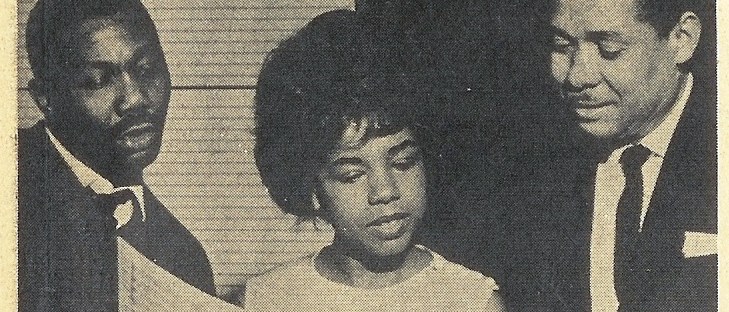
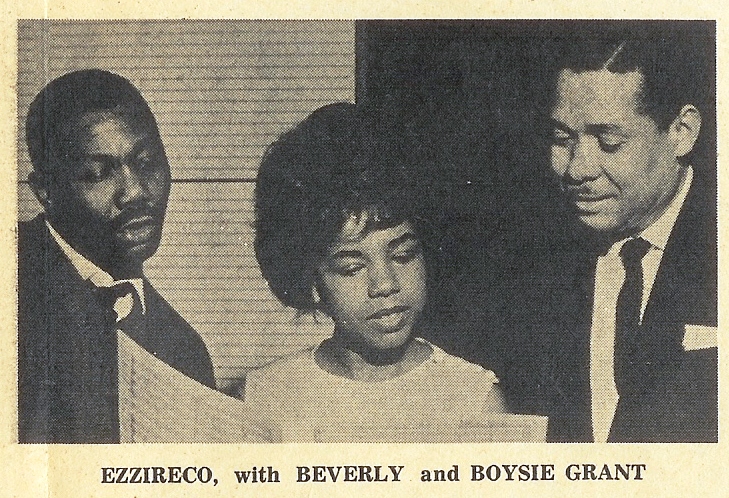
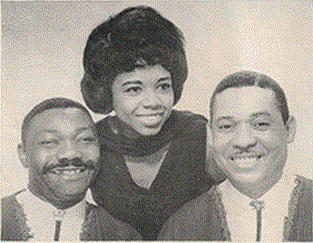
Before Millie Small hit the UK big with her hit “My Boy Lollipop,” Ezz Reco (birth name was Ezzard Reid but could there be a cooler showbiz name than Ezz Reco?!), Boysie Grant, and a woman named Beverly along with a band called The Launchers broke into the British market with Jimmy Cliff’s tune, “King of Kings.” Cliff had recorded his iconic song in 1963 and Ezz Reco did it in the UK in 1964. The B side of Ezz Reco’s version was a song called “Bluebeat Dance” to try to capitalize on the blue beat trend, and they also recorded “The Bluest Beat,” “Please Come Back,” “Little Girl,” all in 1964 for Columbia, and then in 1968 recorded “Return of the Bullet” and “ZZ Beat” on Blue Cat.

Ezz Reco & The Launchers, as they were billed, toured with Roy Orbison and were joined by Jamaican saxophonist Johnny Hope. Reco was a drummer and both Boysie Grant and Beverly Mills were vocalists. On Ezz Reco’s page of the playbill for the tour it reads, “What does Blue Beat sound like? It’s a lazy, medium-tempo sound, with a slight blues inflection. Front-line instruments, playing behind the vocal, stab out riffs on the beat with the insistent thump of a locomotive tackling a gradient. How did Blue Beat happen? Explains Boysie, “Back home in Jamaica we were dancing the Twist long before Chubby Checker was leaping about. By the time it became popular all over the world it was stale for us and we started looking around for something else. We have a gathering called pokamania [sic]—a revival dance—where the congregation shuffle their feet and shout eh-eh-eh-eh on the beat behind the preacher’s sermon. It’s a movement we have been doing for generations and from this grew the Blue Beat dance and the music to fit it.”

Kind of an interesting history, don’t you think?! Talk to 100 people and you will get 100 versions as to how it all started, but there is something behind the history—the connection to folk music is critical, and the connection to American rhythm & blues, so it definitely has some validity.

ezz

Boysie Grant also chimed in on blue beat’s popularity in the Daily Gleaner on March 17, 1964, the first article that the newspaper had published about ska despite the fact that it had existed for some time. But ska, you see, was a “downtown music,” until Byron Lee and the Dragonaires bridged the class divide. In the article entitled, “The Ska Hits London—but they call it blue beat,” (the text of which can be read here: http://old.skabook.com/foundationska/2013/12/origins-word-ska/) Boysie Grant appears with Ezz Reco in a photograph that is not preserved well enough to reproduce here, but the caption reads, “Here are the two men in the hit parade, Boysie Grant with the small moustache and brown hat and Ezz Reco with the big moustache and black hat. Boysie does the lion’s roar at the beginning of ‘King of Kings.’ Ezz has lots of gaps and bits of gold in his smile. He used to be a boxer, is a very cheerful man and laughs the whole time. Boysie is delighted that his native Jamaica is producing something other than rum. ‘Ezz and I,’ he says, ‘Ezz and I are the greatest and the prettiest and the most authentic.’ They will soon be joined in the hit parade by a girl called Millie. She sings ‘My Boy Lollipop.’”

I am wondering if the Beverly who sings with this group, Beverly Mills, is the same Beverly that Kenroy Fyffe told me sang with him in the Spanishtonians on “Rudie Get Plenty” and others (not “Stop That Train” which is misappropriated to them but is actually the Webber Sisters). Kenroy couldn’t remember anything else about Beverly including her last name and didn’t know of any other recording she did, so if anyone knows anything about Beverly Mills, please contact me.

I wanted to also include an article in the Daily Gleaner that appeared on August 16, 1971 with the headline “Boysie Grant is Alive!” as an example of early death hoaxes, just when you though the internet was the culprit!! Kidding, but the article is interesting. It states, “Boysie Grant, rumoured to have died in 1958, breezed into the GLEANER, offices on Tuesday, ‘large as life and very much alive and kicking.’ Some old timers on the entertainment scene may remember Boysie from back in the 50’s when he played the stage shows night club circuit, and held a 15-minute slot on radio as leader of the vocal group the ‘Four Keys.’ He was also a member of the “’Ivy Graydon’s Orchestra.’ He left Jamaica in 1955 for Connecticut, USA to check out what opportunities the States had to offer. He remained there for only a year before going on to England, and a tour of the Continent with the Perez Prado Show. Returning to London after three months, he played the hotel and night club circuit. In 1963, Boysie did his first recording on a 45 rpm — “King of Kings/Blue Beat Dance” with another Jamaican vocalist Beverley Mills, and backed by Ezz Reco and the Launchers. Ezz Reco, leader of this group, then exponents of the “Blue Beat,” is Jamaican ex-boxer Ezzard Reid, who migrated to the UK more than 20 years ago. Boysie is said to have been one of the first promoters of Jamaican music in England — the Blue Beat is an adaptation of the Ska. He now does solo night club performances, singing mainly ballads, blues and soul numbers. With regard to the rumour about his alleged death, Boysie says that he has no idea how this began. By now, he says, most of his friends must at least be convinced that he is very much alive —“they took a lot of convincing though,” he said with a smile. He was accompanied here by his wife, the former Mary Lundy a Jamaican nurse residing in England. Boysie says they plan to remain in the island for an indefinite period.”

Here’s a link to that tune, “King of Kings” so you can hear Boysie do the lion roar, look out Katy Perry! http://www.youtube.com/watch?v=Y6_IbY4cLLU

Uncategorized

Ronnie Nasralla

nasralla

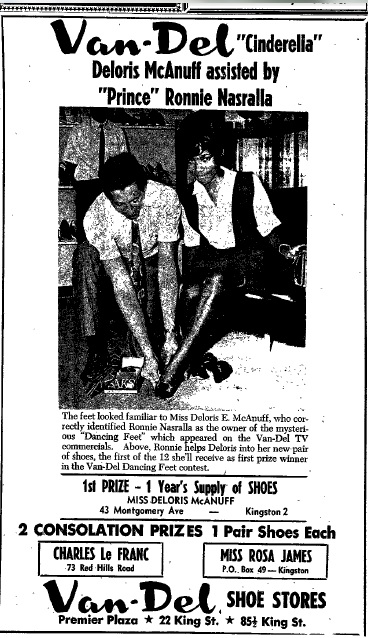
Check this out–Ronnie Nasralla from Ronnie & Jeannette fame, the dancers who taught us how to do the ska through, quite literally, an advertising campaign, is featured on this advertisement for a shoe store. If you read the ad copy, his “Dancing Feet” were featured on the television commercials for the store and this is the winner of the contest to guess whose feet they were. How awesome is this?!

A few words about Mr. Nasralla who is a lovely man and lives today near Atlanta, Georgia and is 83 years old, lucid as ever. He wrote a book called Lessons to Learn that I would HIGHLY recommend. It’s written well and is enjoyable and informative. He talks about his family upbringing, his foray into theater and dance, and, of course, how he helped to promote ska at the request of his good childhood friend, Edward Seaga.

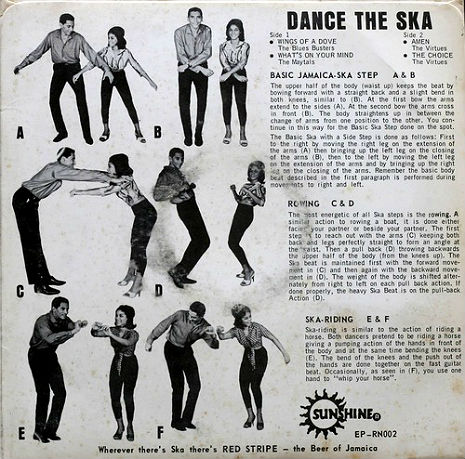
Ronnie Nasralla explained to me a few months ago how he came to showcase the ska with Seaga and Byron Lee. “Let me tell you how it started. One day, Eddie Seaga, who was my close friend, called me. Eddie Seaga was friends with my sister. He was my sister’s boyfriend and he used to come by my house and I help him with his political campaign. Advertising was my forte. So I did all the advertising for the government, Eddie Seaga at that time. I help him with all his promotion. He told me he heard a music that was breaking out in Western Kingston called ska and he asked if I could promote it for him, so I said, ‘Well, I’d like to learn about.’ And we organized and I said, well Byron Lee is the best person to promote it. So we get together with Byron Lee down in Western Kingston and I learned the ska music. Eddie organized a dance at the Chocomo Lawn in Western Kingston—it’s an outdoor nightclub. And Byron played there and all the ska artists performed with Byron and it was a sensation. He [Seaga] said to me, ‘Ronnie, move around the crowd and see what they are doing on the dance floor and see if you can come up with a brochure about how to dance the ska. So I did that, saw the people dancing around and came up with a brochure about a week after, how to dance the ska, give them different steps in the ska, and something that they could use to promote ska worldwide. That brochure was used by the government, they put it in all the record albums and it was sent all over the world and I was asked to go to the states and promote the ska with somebody and I got Jannette Phillips to dance with me. Jannette was a dancer, a belly dancer, a friend of my sister. We took pictures doing the different steps and the brochure was produced and given to the government and it was put in all the ska albums,” says Nasralla.

skaaaaaaaaa

Jannette Phillips, who married business mogul Raymond Miles in November, 1965, doesn’t speak about her days as a ska dancer. She works at her husband’s company, Sun Island Jamaica, but says she doesn’t “want to relive that part of her past. It was a long long time ago.”

Uncategorized

Prince Buster and Federal Records

prince-buster

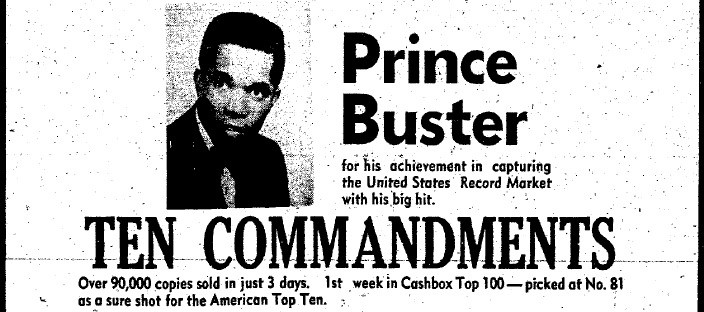
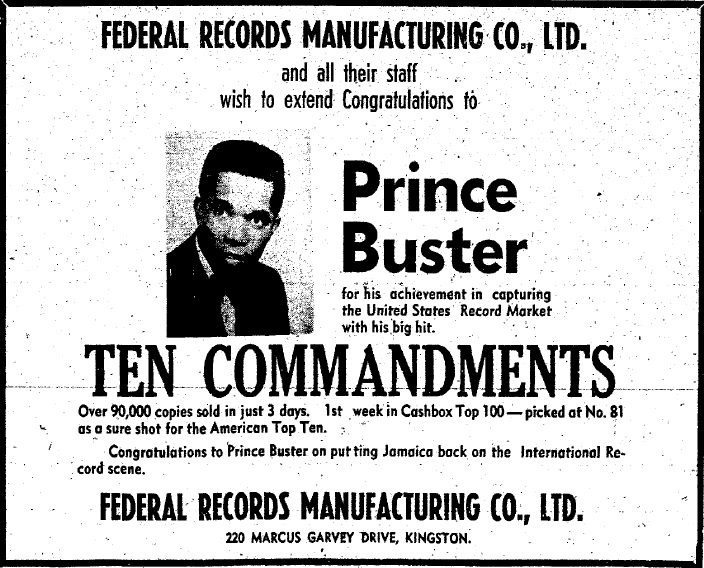
Nothing too pithy this week, just a little advertisement I found while looking through the Daily Gleaner archives. This little gem is from January 23, 1967 edition and is a paid advertisement from Federal Records. It is intriguing on many levels, and I guess it leaves me asking more questions than finding answers.

First, I know that Prince Buster and Ken Khouri had a good relationship. “Prince Buster was always with me in the ska years,” Khouri told David Katz in 2004. And he told Gleaner reporter Balford Henry in 2003, “I liked him [Prince Buster]. He was a Federal man. Nobody could say anything bad about him to me.”

Graeme Goodall, engineer extraordinaire once told me that even though Prince Buster may have had a few idiosyncrasies that may have been common to producers in those days, he was a favorite around Federal. “One of the interesting things was there was a guy, Cecil Campbell (laughs) and he kept on coming into Federal and he and Ken Khouri had this fantastic antagonism (laughs). Prince Buster of course, and he was always owing Ken Khouri money. He’d get soft wax and then he would go see Ken to pay the money. He used to ride on the back of Monty Morris’s Quigley motorcycle. It was a moped. And Monty Morris used to carry Buster around. Buster would go out, sell these records and come back and then he’d want to pay Ken Khouri and he’d want more soft wax and it got to the point where Ken Khouri said, ‘I don’t want him in my place anymore, he’s a samfie man, a con man, I don’t want him near the place.’ But there’s just something about Prince Buster that appealed to me. And I went up to Ken and I said to Ken, ‘He’s alright, he’ll be okay,’ and he said, ‘Samfie man. I don’t want him near the place.’ I said, ‘Ken, please, he’s alright. He’s different, but he’s okay,’ and he said, ‘Alright Goody, I’ll tell you what. He’s yours. He’s yours. If I lose any money I’ll take it out of your pay.’ And I said, ‘Yeah, I’ll take care of him.’ And Prince Buster has never forgotten that. I was the one who stood up for him because I could see something in there,” says Goodall.

The next bit of intrigue for me is that this seems like a lotta lotta records sold in the U.S. Now I’m no collector, I’m the first to admit, but I just find it stunning that 90,000 copies were sold in three days, but that likely includes all markets–JA, UK, and US, although the US is implied. The claim that he captured the United States Record Market is, well, delightful! And that he put Jamaica back on the international record scene! I just chuckle when I read about Prince Buster. I can’t help it. He is such a character! So there is a healthy dose of self-promotion and bravado and boasting going on here for sure, but then there is also, I think, a little stroking and patting on the back from Federal, who no doubt wants his continued business. It is just an interesting piece, don’t you think? What are your thoughts? Please share–I love the dialogue!

Uncategorized

Sound Systems at the Jamaica Festival

JA-street-parade

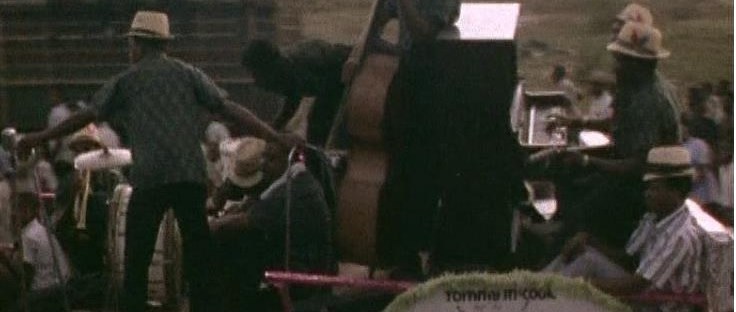
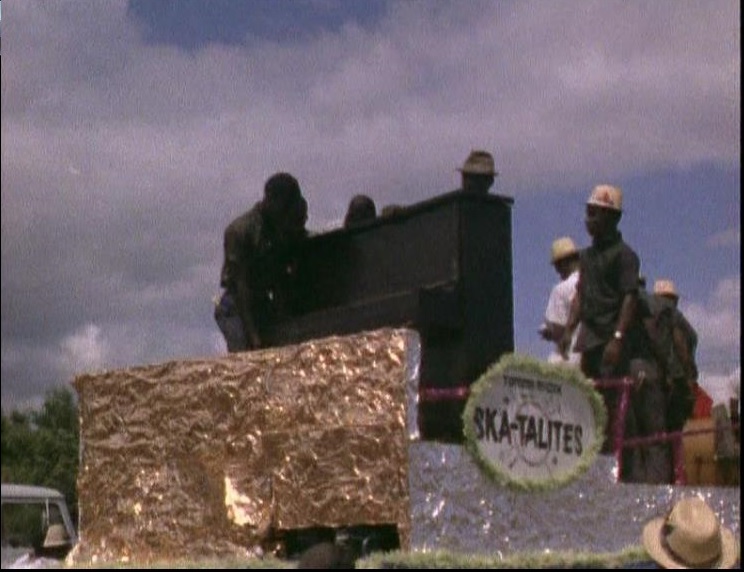
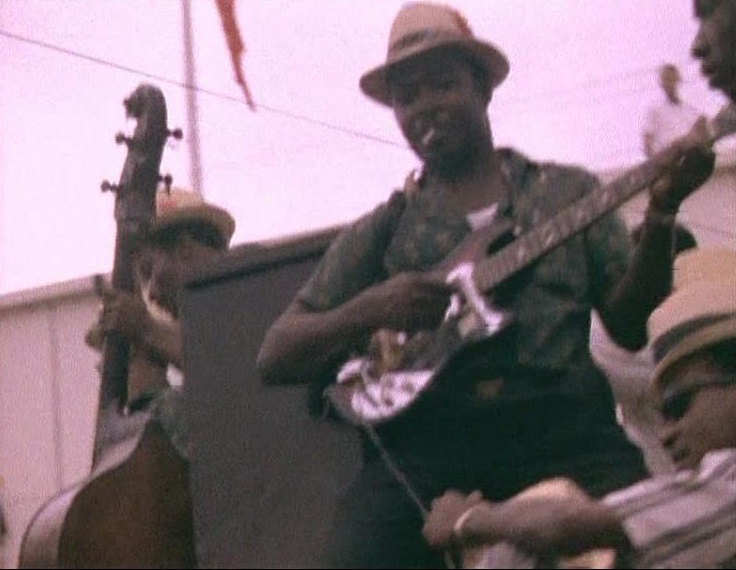
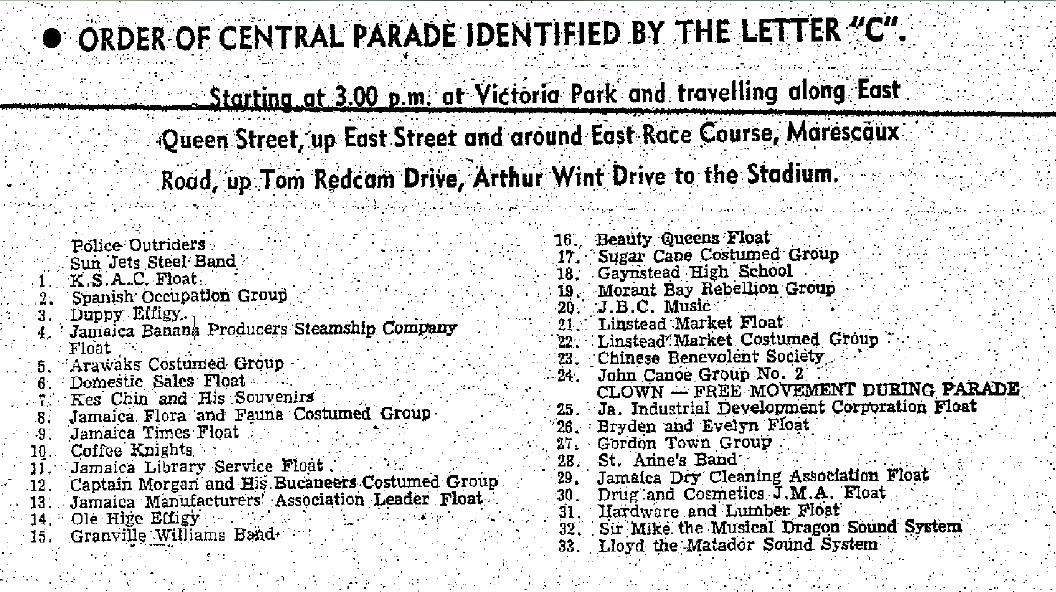
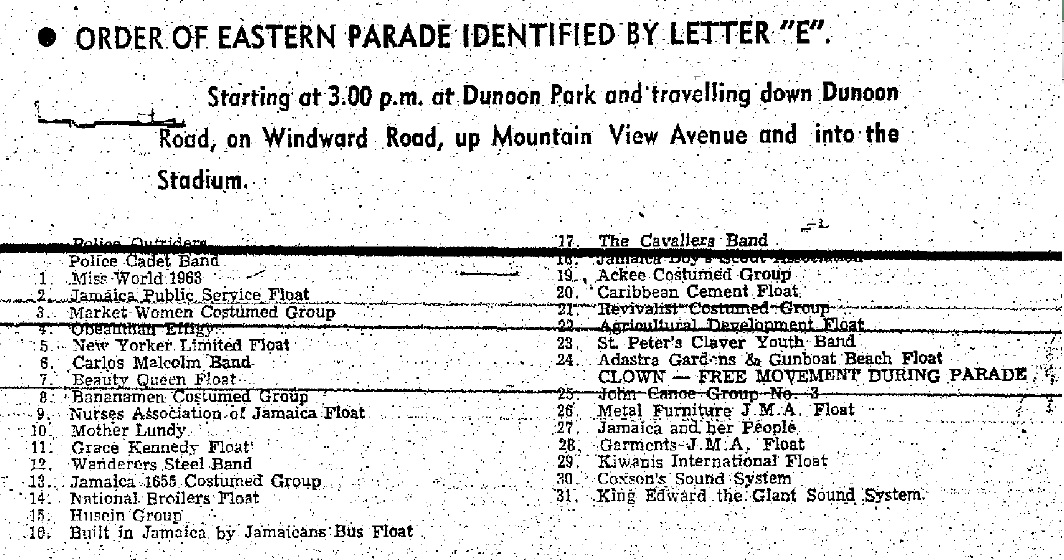
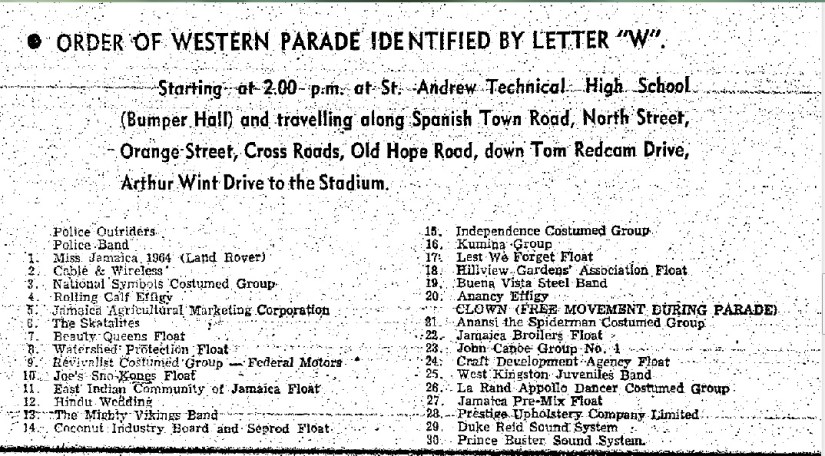
I stumbled across this advertisement from the Daily Gleaner, July 31, 1965 and noticed that a number of sound systems were playing for this celebratory street festival parade, and guests were encouraged to join in the parade at the end. Yes please! Can you even imagine? King Edward “the Giant,” Prince Buster, Lloyd the Matador, and even the Skatalites were in this parade! Geez Louise! If they ever invent a time machine in my lifetime, here’s my first stop! Below are a few stills from that now-famous footage of the Skatalites performing in this parade.

The Festival was founded by Eddie Seaga who pushed hard to promote ska with a deliberate strategy because he saw that ska was connected to the newly independent Jamaica and the nation’s cultural identity, although there are other reasons too. He founded the Jamaica Independence Festival, a showcase of Jamaican arts, which included an all-island ska and mento competition. At the first annual festival, Byron Lee & the Dragonaires performed, of course, and the festival was hosted and funded by the Ministry of Development & Welfare, Seaga’s department. The first festival began in 1962 to celebrate and coincide with the independence. Seaga continued the festival each year after and in 1966 brought the Popular Song Competition into the offerings. Seaga’s meetings of the Parish Festival Committee were broadcast on JBC and RJR so the public was aware of his agenda to promote ska. And he was photographed and appeared in the newspaper as he cut checks to artists like Prince Buster for their help in promoting ska.

In case you don’t have a magnifying glass to see the performers at this Festival, here are the closeups, which I think are immensely interesting:

JA-street-parade3

Uncategorized

The Australian Connection

aussies

My friend Kingsley Goodison, also known as King Omar, puts on a wonderful show in Jamaica each year called Tribute to the Greats. He publishes a magazine and program to accompany this show and the publication in 2012 for the 15th annual Tribute to the Greats show contained a wonderful article on the Australian connection that I would like to share. Kingsley has been in the music industry for decades. He is brother to Bunny Goodison, music historian, and Lorna Goodison, author and professor. Kingsley worked for Studio One for many years and he is a legend.

Here is the article from his program:

The Australian Connection

Jamaica’s music scene has attracted people from all over the world from its early beginnings and Tribute to the Greats has acknowledged this in the past. The Cuban connection was with recognition of Rudolph “Baba Mack” McDonald and other Afro-Cuban artistes. The Caribbean connection which celebrated the contributions of Trinidad and Tobago’s Lyn Taitt, Kenrick “Lord Creator” Patrick, Kenneth Lara, and Barbadian Jackie Opel.

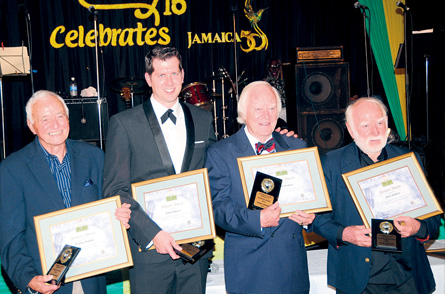
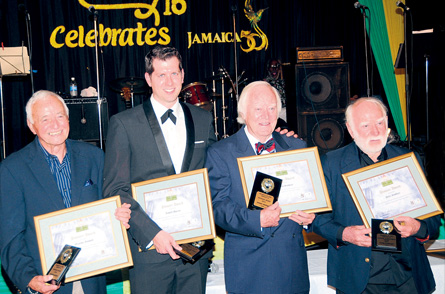
For the 15th Anniversary of Tribute to the Greats, it was decided that the Australian connection would be highlighted. Dennis Syndrey, Graeme Goodall, Peter Stoddart, and Lowell Morris will be recognized at the Awards Show and Dance for their contribution to the Jamaican scene.

Graeme Goodall Graeme Goodall: Born in Melbourne, Australia, Goodall first came to Jamaica in the early 1950s, assisting administrators at the fledgling Radio Jamaica to install its broadcast network.

Goodall was with pioneer music producer when he established his first recording studio in the last 150s. When Chris Blackwell started Island Records in 1959, Goodall and music producer Leslie Kong were partners in the company.

Though Goodall founded Doctor Bird Records when he moved to London in the 1960s, many associate him with his work as a sound engineer, especially at Federal Records where he fine-tuned countless hit songs.

He is also credited with helping to get Jamaican music on British pirate radio in 1965, paving the way for ska and later rock steady to make it on mainstream airwaves in that country.

Dennis Sindrey: Australian born Dennis Sindrey began his musical career playing guitar in various clubs and hotels in Melbourne, Australia along with fellow band members Lowell Morris (drums) and Peter Stoddart (piano). The group’s manager and band leader Max Wildman, accepted invitation to come to Jamaica in 1958 and play at the renowned Glass Bucket Club. They christened themselves the Caribs and began their musical sojourn in Jamaica. When the Glass Bucket closed, the Caribs, now including other local musicians became the house band at the Myrtle Bank Hotel.

The Caribs also established themselves as a backing band and performed duties for many artistes signed with Chris Blackwell’s Island Records. While recording their own records at RJR, they became acquainted with fellow Australian, recording engineer Graeme Goodall, a relationship which continued for several years.

The Caribs broke up some years later when Lowell and Max returned to Australia, but Sindrey remained in Jamaica playing guitar for Byron Lee and the Dragonaires and Kes Chin’s Souvenirs. He continued to record with famous producers including Coxsone, Prince Buster, and Leslie Kong. He has played on recordings for the Skatalites, Millie Small, Laurel Aitken, Owen Grey, Jimmy Cliff, and many others. In 1962, he joined with Stoddart and formed the New Caribs and performed at the Sheraton Hotel.

In 1968 Sindrey moved to the US where he continued to be involved with the music business. He met up with Graeme Goodall when a concert series titled “The Legends of Ska” was held in Toronto, Canada. In 2008, Stoddart, Morris, and Sindry held a Caribs Reunion concert in Melbourne which has a vibrant ska scene. Sindrey continues to make music in South Florida.

Uncategorized

Baby Talk

millie

The first time my friend Michael Turner chatted me up about the way many female singers use a baby voice we were at Gloria’s in Port Royal and I was too distracted by the head and tail still on his red snapper and the froth on my Red Stripe to get past the surface response of, “Yeah, there are a few of them, aren’t there?” We threw out Millie Small of course, and a few others. The second time he mentioned it was recently on instant messenger and he sent me few links to some Hazel & the Jolly Boys tunes, and there it was again. I had to investigate.

Why the baby voice? Why do a number of women in the early 1960s sing like a little tiny girl? It can’t be real, right? It sounds like a falsetto. It’s the difference between the Madonna of “Like a Virgin” and the Madonna of “Like a Prayer.” Two different voices, one contrived, one full and deep. Vocal personas. Of course the most notable of examples is Millie Small’s “My Boy Lollipop,” and considering the popularity of this song, I have come up with a couple of theories on the baby voice and would like your opinions, so chime in at the comment section at the end. And if you’re not sure what I mean, here are a few links:

Millie Small’s Sweet William: http://www.youtube.com/watch?v=qsZ2LMmc8J8

Hazel & the Jolly Boys and the Fugitives: http://www.youtube.com/watch?v=mFZY-qRkxNM

Hazel & the Jolly Boys and the Fugitives: http://www.youtube.com/watch?v=435G6-ISqlY

Okay, so let’s start at the beginning. It has been theorized that the falsetto (and I do believe this is related, as I will show) originated in African folk music. I’m not sure this really translates to Jamaican culture though because the African folk music featuring falsetto came from the Mbube style of South Africa, and the tribes that came to Jamaica through the slave trade came from West Africa, so there may or may not be a connection. But the early American rhythm and blues forms, and the music that preceded that, like blues and gospel, also featured falsetto, and this music definitely influenced Jamaican music.

In the 1930s and 1940, even before those radio broadcasts came to Jamaica via New Orleans, Miami, and Nashville radio airwaves, groups like the Swan Silvertones and the Soul Stirrers used falsetto in their repertoire. One of the most important blues singers, “Howlin’ Wolf who helped to develop the Chicago blues style, combined both falsetto howl and a growling voice to characterize his own sound. Clarence “Frogman” Henry, Jr. had his classic novelty R&B tune “Ain’t Got No Home,” in which he uses a falsetto.

In the 1950s, groups like The Ink Spots, Little Joe & The Thrillers, Jan & Dean, the Flamingos, Frankie Lymon & the Teenagers, and dozens of others used a falsetto for the high tenor to round out the full line-up of harmonic tones. Were these groups an influence on Jamaican vocalists? You betcha they were! Patsy Todd told me herself, “I’m somebody who liked to listen to the radio, and I really got interested in this group, Frankie Lymon & the Teenagers. I used to hear them singing and I used to sing after them.”

We know that a number of Jamaican vocalists over the years then employed the falsetto from time to time, including the Jiving Juniors in 1962 with “Sugar Dandy,” Desmond Dekker in plenty of songs, and of course, Junior Murvin in the classic Police and Thieves in 1976 to name just a few.

How is the falsetto connected to the baby voice? They sure aren’t the same thing. Well I would argue that it is a woman’s attempt at a tiny little voice, like the falsetto. A female voice attempting a falsetto is, well, just a female voice in a way, so perhaps they were trying to minimize their voice in the same style—after all, Jamaican musicians during this era were attempting to emulate the sounds they heard from America with their own take on it.

But I do have a few other thoughts on this subject too. I really do feel that Millie Small’s voice in her “My Boy Lollipop” classic is her singing voice. I just talked to Millie a few months ago and her voice is tiny, even in conversation. That’s not to say that as Millie’s singing voice matured that other deeper qualities didn’t come out, but in 1964 at age 15 when that song was recorded, she was using her little girl voice which can be heard in almost all of her other songs like “We’ll Meet” with Roy Panton in 1962, “Sweet William” in 1964, and “Hey Boy Hey Girl” with Jimmy Cliff in 1966. Considering that a little girl voice was so popular during this era that even the men were trying to use one, Millie sure didn’t try to get rid of it. The heavy tones and gloomy themes of Billie Holliday and female jazz singers were no longer in fashion. It was upbeat, spritely, fresh, and independent. Considering the popularity of this song, which was HUGE, it’s not too farfetched to see that many other vocalists continued in the same vein. In 1967, Hazel Wright recorded “Stop Them” with the Jolly Boys and the Fugitives, with the B side “Deep Down,” both of which feature the baby voice. There are others too so identify some more in the comment section, if you hear one or two.

There is one more thing I want to mention before I finish my end of the discussion here, especially since the form of the duet was so popular during this time. There is the underlying, certainly not overt, image of the female as sweet, demure, needing a strong man for survival, while the male is the strong provider, the savior, the powerful character. This is a traditional and stereotypical role for men and women, especially during this era. Before you cry foul, think about the images portrayed in American television during the late 1950s and early 1960s, the images of sexuality and femininity—they are innocent and wearing pearls. That’s not to say there weren’t other images of women during this time, but the baby-voiced girl certainly fit in with the times.

Just a few of my thoughts. What are yours?

And I am adding this paragraph to my post after reading some EXCELLENT comments made by fellow JA music aficionados. The influence may very well be Shirley & Lee, that duo that has hugely popular in Jamaica during the late 1950s. The vocal team was from New Orleans so not only were Jamaicans getting songs like “Let the Good Times Roll” and “The Flirt” on radio from WNOE, but they also witnessed Shirley & Lee in person since they performed in Kingston a number of times. They performed at the Carib Theater in October, 1957 when they were billed as “The Sweethearts of the Blues.” They returned in August 1961 and performed at the Palace Theater, and again in July, 1962 when they performed at the Ambassador, the Ritz, in Spanish Town, and the Cosmo Race Course and their songs were frequently ranked on Jamaican charts.

For a sample of Shirley & Lee, check this out: http://www.youtube.com/watch?v=uM9yYL6BD-4

Thanks, all, and keep the dialogue going!

Uncategorized

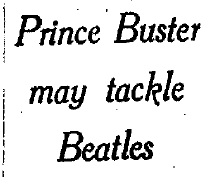
Prince Buster Takes on the Beatles?!

beatles

Daily Gleaner, March 23, 1964

I do love me a good Prince Buster laugh, because he is such a character. He cracks me up with his bravado, his machismo, his brazen balls.

I blogged a few weeks back about his time as a “boxer” and it still makes me chuckle that Prince Buster has even been called a boxer, but it’s because he is such a masterful marketing guru, for himself! In interview after interview he tells journalists and fans that he began as a boxer. He boxed one round in his entire life, and that round was rigged for him to win! Read the blog post for details on that humorous tale.

I also blogged recently about his stirring the pot in the U.S. with other artists who were at the Peppermint Lounge to promote the ska dance and sound. Check out that blog too.

His Judge Dread songs are nothing short of classic. And the whole feud with Derrick Morgan is legendary. Prince Buster’s claims of being the first to invest ska, the first to play ska, the first to create the word ska, etc. just make me smile–really smile, not a sneer, because to me, Prince Buster epitomizes the stick fighting culture that is so much a part of ska. Is there no one who better characterizes the theater of ska than Prince Buster?

So then, without further ado, here is the text of the article. The headline speaks volumes though. And if anyone knows what became of this claim detailed below, please share, as I’d love to know.

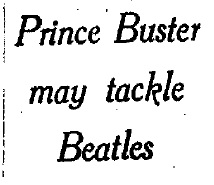
Prince Buster May Tackle the Beatles

Prince Buster, pioneer of the Jamaican sound now known in London as Blue Beat, returned to the island by air on Monday. He had been in London for several weeks, during which he appeared on BBC-TV and ITV, singing his Blue Beat Hit Song, “Wash Wash.”

This was the singer’s fourth visit to London, where he now has an agent, in charge of promoting his records and arranging future personal appearances.

Buster says he plans to return to London in May to do more television and stage shows. He plans to take along a quintet of Jamaican musicians who have backed him in his recordings.

One of the projects which may materialise then for the group is to appear opposite the Beatles at the London Palladium, according to Prince Buster.

Uncategorized

Mutt & Jeff Sound System

Mutt-Jeff


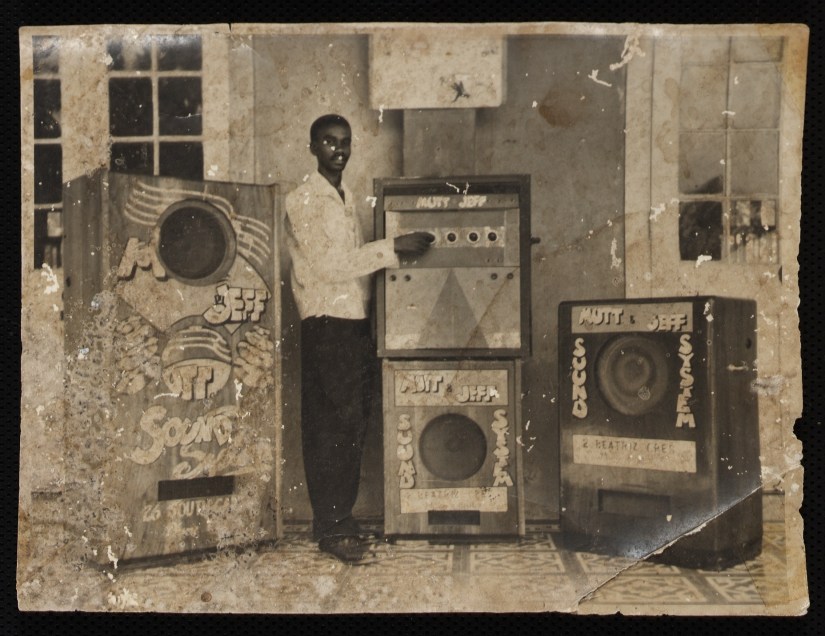
The Mutt & Jeff Sound System wasn’t just any run-of-the-mill sound systems in Kingston during the 50s and 60s. This sound system was vital to the growth of Jamaican music for a number of reasons. Not only was the sound system itself constructed by Alpha boys in the woodshop, but it was overseen by an Alpha teacher and former Alpha boy, and was then given after ample use to the Alpha directress, Sister Mary Ignatius Davies, who used it to instruct additional Alpha boys. In many ways, the Mutt & Jeff Sound System was an Alpha Boys School sound system.

Mutt’s real name was Kenneth Davy and he named his sound system Mutt and Jeff after the popular comic strip of the day which featured a very tall character, Mutt, and a “half-pint” named Jeff. The comic strip was carried in the Jamaica Star, one of the island’s newspapers. Davy, who was over six feet tall, held the Mutt moniker, and Jeff was better known as Leighton Geoff, a short fellow with an appropriate last name.

            Davy attended Alpha Boys School and was a skilled public speaker and debater. After he graduated, Sister Ignatius asked Davy to return to emcee various school events and presentations, such as plays, concerts, and sporting competitions. He did this all without the aid of any amplification, but around 1956 he purchased a microphone, a small amplifier, and two 12 inch speakers. He quickly moved into providing background music at these events and started hosting sound system dances at Alpha. As word of his entertainment skill spread, Davy started hosting dances outside of Alpha and he soon found the need to upgrade his equipment to meet demand. Davy worked his full-time day job in the Alpha Boys School printery, directing the boys in the trade of setting type, inking presses, and printing books that were then bound in the school’s bindery. With the blessing of Sister Ignatius, Davy’s sound system upgrade was a project handled by the school’s woodshop. The boys learned to produce a custom item under the watchful eye of Davy whose printery was adjacent to the woodshop and he would frequently leave his shop to help supervise the boys with their table saws, sanders, and hammers. The woodshop, like the printery and the pottery shop and the garden and the shoe shop, were not only areas of trade instruction for the boys. They were also revenue makers, as they still are today, helping to offset the operational costs of the school. Making custom items for customers was part of the school’s operation, and part of training for the boys.

Davy’s friend Leighton Geoff was an electrical technician at Wonards, a large appliance store located in downtown Kingston which opened in 1948. Staff at Wonards was akin to staff at Radio Shack today in the U.S., knowledgeable about all things electrical. They were vital to helping make the creative ideas of sound system operators into a reality, wiring speakers to amplifiers. Davy then had the woodshop boys build the speakers into towering cabinets known as “Houses of Joy.” Geoff not only built the speaker system, but he also maintained its clarity, continually fine-tuning the sound for precision. Davy now had his sound system, and with his entrepreneurial spirit he also had the means of marketing his system, using the printery and free labor at Alpha to send advertisements for his events which touted, “Mutt & Jeff Clear As a Bell,” as well as promote his wife Gloria’s catering services since she was a fantastic cook of such local dishes as curry goat and green bananas and rice.

The Mutt & Jeff Sound System played holiday music for a Christmas party for needy children in December, 1959 and that same month played as “the disinherited of the earth were not forgotten” as several hundred “inmates at Bellevue Hospital” were given a party. “A poignant note was struck when they expressed the wish for Christmas that everyone should pray for them that they would soon be well again and happy in their own homes,” said the article. These are just two examples of the charitable outreach that the sound system provided and Davy was able to generate a decent amount of revenue from playing at parties and dances. He decided in 1964 to leave the life of the sound system behind to spend more time with his wife and their eleven children. He sold his entire set, equipment and music, to Sister Ignatius who added the records to her already-large collection. Sister Ignatius had hundreds of 78 and 45 records in her collection—everything from classical music to speeches by Malcolm X. This collection was built from not only Davy’s additions, but Sister Ignatius would regularly send her students, such as Floyd Lloyd Seivright, to purchase records from local record shops, giving him money for the acquisition and a list of her selections.