Uncategorized

Ska: A Bum Steer

candidly-yours

We all know those crabby old people that complain that the music is too loud, that rock ‘n’ roll is devil music and corrupting the youth, that the youth who listen to it are mindless and all on drugs. It has been said for decades, for every new creation that hooks the masses, like rock ‘n’ roll, rhythm & blues, soul, punk, heavy metal, and it was certainly said about ska.


One of the factors contributing to the complaints of ska and rocksteady and its corruption of the youth is that in Jamaican culture then, as it is now, there is a stratified class system—the uptown and the downtown. I was stunned to witness this myself on my trips to Kingston and I assure you, it is not a schism created by musicologists for the sake of expounding on why ska never took off across the world the way it should have. This is a topic I address in my books and will continue to write about in my work. However, what I want to address here is one way that schism manifested in a couple of Daily Gleaner articles I found from 1968 that try to lend scientific reasoning to the abhorrence for ska by the upper class, the intellectuals, the crabby old people.


Why is this important? Because today we think about the popularity and success of ska in Jamaica during this era—the producers and the sound system operators who drew in the fans and sold the hits and the radio that finally caught on and started projecting Jamaica’s new sound that would develop into rocksteady and reggae and dancehall, that the world would embrace eventually allowing Jamaica to be known for its musical culture. Twas not always like this. It, like all things Jamaican, was a struggle, even among its own. And the fact that it was embraced and funded, no less, by the newly-formed government was even more suspect. We have heard about some of these struggles, financial and otherwise, but here are some other fascinating reasons, given by columnist Thomas Wright and an anonymous responder, why ska was once called a “bum steer.”


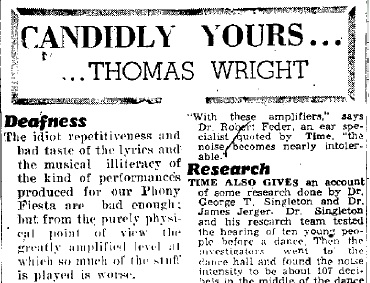
Candidly Yours . . . Thomas Wright from the Daily Gleaner, August 16, 1968


Deafness

The idiot repetitiveness and bad taste of the lyrics find and the musical illiteracy of the kind of performances produced for our Phony Fiesta are bad enough, but from the purely physical point of view the greatly amplified level at which so much of the stuff is played is worse.


This column has long maintained that the amplification, of this so-called music by sound systems, to say nothing of the distortion caused by the overloading of the loudspeakers, is destroying the musical ear of our people. It now turns out that it is also destroying their hearing.


Not only in Jamaica. Time Magazine of August 9th reports that otologists are finding that youngsters are going deaf as a result of blasting their eardrums with electronically amplified rock ‘n’ roll. The human ear is a remarkable mechanism and can protect itself very effectively in ordinary circumstances. Indeed the human body as a whole, having evolved for millions of years with everything else in nature, has developed means of neutralizing, detoxifying, and fighting every hostile poison or external element that attacks it.


Synthetic poisons

THE TROUBLE IS that the last 50 years or so, and particular the last 25, have seen the rapid development of a number of things which are quite new, and not known in nature. A good example is provided by many of the new synthetic pesticides which catching the human liver unawares, so to speak, without suitable enzymes for their destruction are exceedingly dangerous. This also applies to some of the new synthetic drugs. What it comes to is that given a great deal of time, the human organism will eventually evolve a protective mechanism against anything. What it can’t stand is the sudden surprise of something entirely new, or of something old, but in a new intensity.


New sound intensity

OVER THE LAST FEW YEARS the human ear has suddenly been called upon to cope with an intensity of sound which has never had to experience during the whole period of its evolution, and against which in consequence, it is relatively defenseless. This era of intense noise began with the coming of industrialization and the noise in factories and modern technology has now produced noise-makers ranging from city traffic, to pneumatic riveters, to jet engines. Another of these new noisemakers is, of course, electronically produced amplification.


Noise can be measured in decibels. A decibel is an arbitrary unit based on the faintest sound that an average person can hear. Ordinary conversation has a level of about 60 decibels. Every increase of ten decibels means an increase of sound intensity by ten times. A 20 decibel rise means an increase of one hundred times and a 30 decibel rise means a thousand fold increase.

A jet plane 100 ft- away produces 140 decibels, a pneumatic riveter, 130 decibels, and rock music with amplifiers played at the kind of level now prevailing, produces about 120 decibels or one trillion times more than one decibel, the least audible sound. “With these amplifiers,” says Dr. Robert Feder, an ear specialist quoted by Time, “the noise becomes nearly intolerable.”


Research

TIME ALSO GIVES an account of some research done by Dr. George T. Singleton and Dr.

James Jerger. Dr. Singleton and his research team tested the hearing of ten young people before a dance. Then the investigators went to the dance hall and found the noise intensity to be about 107 decibels in the middle of the dance floor, peaking to 120 decibels near the band which was, of course, using electronic amplifiers. After the dance, they tested the hearing of the young people again. All had suffered temporary hearing impairment, with an average loss of 11 decibels. One boy showed a loss of 35 decibels, mostly within the frequency range of human speech.


Dr. Jerger tested the members of a five-man combo which also used amplifiers. One player had suffered a 50 decibel loss. Three had also suffered permanent hearing, damage, though none was older than 23.


Why do young people like to deafen themselves? Time quotes a Florida teenager. “The sounds embalm you. They numb you. You don’t want to hear others talk. You don’t want to talk. You don’t know what to say to each other anyway.”


Mindlessness

SO IT IS IN THE PROCESS of destroying their hearing, the people who drug themselves with noise are, in fact, indulging an idiotic mindlessness which is perfectly expressed by the “music” to which they listen and the withdrawn, jerky and primitive movements with which they dance to it. It is no accident that that real devotees dance away all by themselves. The roots of this dancing can be seen in any mental home amongst a certain category of the mentally disturbed.


La trahison des clercs

YET IN JAMAICA as elsewhere, this kind of thing is commercially encouraged; for the good reason that there are vast fortunes to be made out of it by the purveyors of the “music” and the amplification. Here at home, it is part of our Phony Fiesta, part of the organized and commercial corruption of good taste and good sense on the principle that if you cannot give people bread, well, give them circuses. There are excuses for the vulgar and the ignorant but when our intellectuals who ought to know better defend it all by every argument from those based upon false democracy to specious pleas about “our African heritage” this is the true “treason of

the clerics.”


We have borrowed, as I have said before, the worst aspects American society and poorly done at that; the advertising and commercial exploitation, the most elementary forms of pop music badly and tastelessly performed, the deliberate sacrifice of standards for the purpose of courting popularity, all held against a background of hooliganism, or near-hooliganism, the facts of which we try to suppress. And all this in the name of celebrating an Independence whose significance has not yet been grasped by hundreds of thousands of our people for the simple reason that most of our politicians have corrupted even the idea by selling it as a bonanza and delivering a bum steer.


Candidly Yours . . . Thomas Wright from the Daily Gleaner, August 31, 1968.


Sound Systems

FOR VERY MUCH the same reasons as above, the police take little effective action against sound systems. But here, I believe another factor enters into it, and this is that the average policeman likes the filthy noise of sound systems, having been brought up to them, and fundamentally believes that anyone who complains is being unreasonable. The following letter, from a correspondent who wishes her name withheld, has been chosen from eight complaints received this week alone.


“I was so grateful when you wrote about sound systems again, and the ‘music’ they produce. I am living in a better-classed suburban housing scheme, and it is unbelievable what we and our neighbours have to suffer from this uncivilized ‘Rock Steady’ noise. It starts from Friday afternoon and goes right on unto Saturday night, well into the small hours. This so called music comes from a settlement at least half a mile away where a man runs an open dance yard. Yet,  sound is such a peculiar thing that there is apparently no sound barrier, and we seem to get the full blast of it.


Although it is forbidden by law, the police are either unable or unwilling, or both, to cope with it, or it is for some sinister political reason that they don’t want to do anything in the matter. Are only those people who indulge in that kind of entertainment protected in this Island because of their majority? After all, the politicians make their comfortable living from the heavily overburdened taxpayers.


Your article about the sound systems in the same column some time ago where you said that the civilized people will be driven out of the Island, not because of high taxes, the lousy telephone service or the lousy power service, but because of the nuisance of the sound systems is indeed right. But alas, it is not always so easy to do so, although out of sheer despair, one would like to.
Uncategorized

Statements on the Ska impasse

statements-on-ska

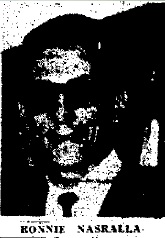
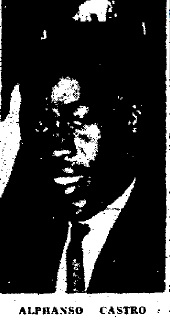
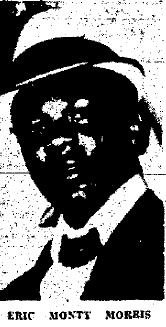
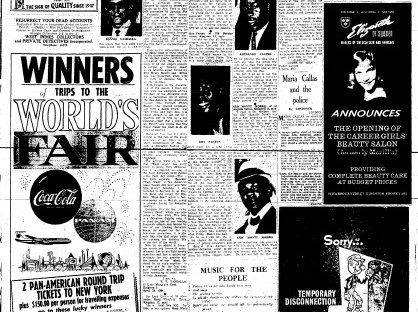
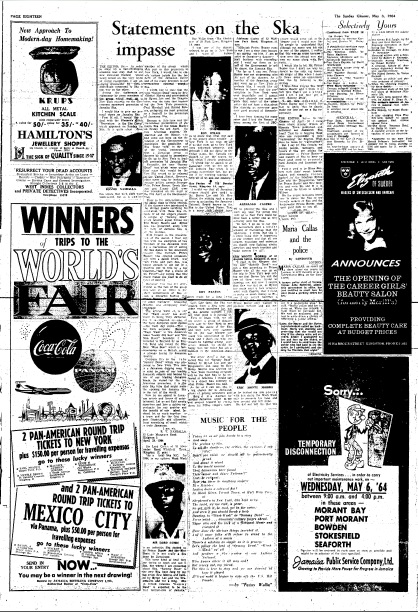
This is the companion piece to last week’s post, Dissension in the Ska Camp, where we find artists responding to the hub-bub created between Prince Buster and Ronnie Nasralla over how ska was promoted in the U.S., specifically at the ska gala in New York at the Shepheard’s Club in April, 1964. Ronnie Nasralla, Roy Willis, Roy Panton, Alphonso Castro, Sir Lord Comic, and Eric Monty Morris all weigh in on this article, Statements on the Ska impasse from the Daily Gleaner, Sunday, May 3, 1964.


But before I do, I just want to take a moment to say why I think these articles are significant today. There was then, as there is now, controversy or conflict over the downtown ska and uptown ska, and Jamaican culture lends itself well to this sort of schism with such stratification of the classes. Having just penned my biography on the great Don Drummond, this class conflict plays out in his life to tragic ends, as I argue in the book. Simply, he was not able to achieve the recognition he deserved, travel to other lands, nor receive the treatment for mental illness that would have perhaps saved him and Margarita, because he was a “downtown musician.” But I am also intrigued by Byron Lee & the Dragonaires and their contributions to bridging this cultural divide, working the music from a different angle to benefit the country in ways that cannot be measured. I prefer to look at all sides of the development of ska, the musical side, the business side, the political side, the struggles and challenges—all this imbues the music with more validity. It is important.


And the fact that this debate still continues, online in blog posts like this, with fans over a pint between sets at a show, in scholarly circles, shows that it is and important conversation, now as it was then. This article addresses the debate, not in terms of what hindsight has shown us, that it may have well been a class divide issues, but that it was a manufactured fight—between the artists and Prince Buster, that rabble-rouser we all know and love!


I’m going to start this article where it ends though, with a poem that appears in the text:


Music for the People


Today let us all join hands in a ring

And sing

The praises of Ska

To all the doubters, the critics, the curious, I say “Ho!”

Don’t you think we should all be patriotically proud

And shout it aloud

To the world around

That Jamaicans have found

Their music and dance National?

Now be rational:

How can there be anything sinister

In a Minister

Laying down a cultural flag!

In Black River, Trench Town, at Half Way Tree, at

Shepheard’s in New York, Ska hold sway,

The twist, we are told, is passé

So get with it, be cool, get in the swim!

And even if you should break a limb

Dancing to the “Wash-Wash” or “Sammy Deaad”—

Never mind . . . Jamaican culture forges ahead.

Those who said the lack of a National Music and resented it

Have done the obvious thing: invented it.

And if some folks still refuse to stand to the Anthem at a movie

There’s a solution as simple as it is groovy:

Let’s follow the lead of “Sammy Dead,” “Wash Wash” an’ all

And produce a Ska version of our Anthem National,

Who knows where it all may end!

But worry not, my friend,

The Ska is here to stay and we are doomed to hear it played

At least until it begins to slide off the U.S. Hit Parade.

–by “Penny Wallie”


Without further ado, here is the rest of the article:


ronnie-nasrala

The editor, Sir—In order to clear up a fast-developing situation that may lead to our new Jamaican musical sound being killed on the very brink of world recognition, I am enclosing statements by various individuals connected to Ska one way or the other.

Among the statements are statements by some members of the group which went up to New York recently on the Government sponsored promotion of Jamaican Ska.

I would like to give my personal views on Jamaica Ska. First of all, I would like to deal with the Gleaner’s article “Dissension in the Ska Camp” which appeared on Sunday the 26th. It is quite clever from this article that both sides were interviewed by as a senior member of the group which took part in this promotion in New York, I would like to clarify certain points for the benefit of the Jamaican public and of the many devotees to our tremendous national sound—Ska.

I would like to state that the tune, “Sammy Dead” sung by Eric (Monty) Morris and accompanied by Byron Lee and the Dragonaires was the tune that impressed the New York promoters, Paul Marshall and Roland Rennie, as having the most potential as a lead-off to the promotion of Jamaican Ska.

Because of this tune and the tremendous presentation of Jamaica Ska at the Glass Bucket on Friday the 3rd April, the two American experts, Mr. Marshall and Mr. Rennie, who had come out here on the invitation of the Government to investigate the possibility of Ska being “sold” to the rest of the world, recommended that a Jamaican group of dancers be asked to immediately fly up to New York to lead off promotion of Jamaican Ska.

Naturally, the tune “Sammy Dead” was given more projection since this would be the first Ska record to be released in the United States. However, other tunes sung by leading Jamaican artists, namely Stranger Cole, Prince Buster, Derrick Morgan, and Jimmy Cliff were also presented on the night of the 15th April at the Shepheard’s Club.

Prior to the demonstration of the dance done to these records, all the dancers were introduced to the invited guests verifying his association with these Ska records all the singers present. A sample of “Sammy Dead” which labelled equal billing for Eric Monty Morris and Byron Lee, was presented along with the story of Jamaica Ska to all the invitees.

With regard to the presentation of the dance, I must say that with the exception of two members of the Jamaican team, did a marvelous job of selling the Ska dance to the Americans present. One member, Prince Buster, who strayed occasionally with a dance that was part Twist and part Ska, was clever enough to get out of a question to put to him by a top reporter—“Isn’t that a cousin of the Twist?”—by saying that Ska music makes one want to do all types of dancing.

However, this was not detrimental as the rest of the group was able at all times to put their presentation of Ska in such a colourful fashion that Prince Buster’s occasional Twist or other members’ occasional Wobble, was completely overshadowed.

The article went on to say that “Wash Was” has every claim to being truly Jamaican, for it is inspired by one of the basic Jamaican show dances—the wash day scene. This is far from accurate. Basically, “Wash Wash” is two American tunes “Lucky Old Sun” and “Old Man River.” Secondly, it was recorded in England by an English Band and called the Blue Beat. “Blue Beat” which is fast developing as a British sound is already losing its Jamaican identity.

Compare this to the tune “Sammy Dead” which was projected in New York. This tune is a Jamaican digging song. It is sung by one of our leading Jamaican singers and backed by one of our leading Jamaican bands. As stated by the top American promoters, it is the only Ska tune that might make the opening for Jamaica Ska in the rest of the world.

Now let me appeal to Jamaican artists and lovers of entertainment. Let us not fight among ourselves and lose a golden opportunity for our country and the benefit of our talent. Instead, let us work together  as a team and for the first time gain financially and otherwise from something of merit which is truly Jamaican.

I am, etc.

R.V. Nasralla

12 Lady Musgrave Road

Kingston 5

April 29, 1964

sir-lord-comic

Sir Lord Comic of 33 Alexander Road, Whitfield Town, Kingston 13 says: As a local Ska M.C. for 1964, in my opinion Wash Wash is an imitation Ska cooked up by Prince Buster and the Blue Beats. It is not really a Ska done by Jamaicans. It’s some kind of beat they are trying to catch and call it Ska, but where I am concerned about Ska, “Sammy Dead” is the new Ska beat sung by our top artist, Eric Morris, and backed by Byron Lee and the Dragonaires and for a long time in record releases, “Sammy Dead” is expected to be the first million-disc of Jamaica.


roy-willis

Roy Willis from 33 Pink Lake, Kingston 14 says: I was one of the dancers selected to go up to New York and I want all Jamaicans to know that what was said in the papers about trouble in New York is not true, as all of us that went up to New York were presented properly and although I did not dance on the Friday night, Mr. Nasralla explained to me the reason for this which I clearly understood. I would like to appeal to all Jamaicans—let us not try to kill Jamaica Ska when it is getting somewhere fast, but assist it by working together to help all of us and our community.


roy-panton

Roy Panton of 77B Beeston Street, Kingston 14 says: I would say that all Jamaican singers should give credit to Mr. Byron Lee and Mr. Ken Khouri for making such a great move in promoting the Jamaican National Sound known as the ska to the United States. That is a move that should have been made for a long long (unreadable). Let’s face facts, the Ska was created from a long time and didn’t reach anywhere far, but at this present moment I can’t see what good it is coming to. First to begin with, we all see where a group of dancers were sent to New York to represent the dance of the ska and they were very successful on the tour because the sound was appreciated in New York and I don’t see why we should be fighting among ourselves. Instead, we should be happy that our music has got a foothold in the American market. The other thing is that the record Ska hit “Sammy Dead” backed by Byron Lee and the Dragonaires and sung by Eric Monty Morris was selected by a New York recording company will be the first Ska to be released in America. I would say it is a direct Ska contract to what Prince Buster has said. As far as I can see, this is a big chance for us Jamaican artists of getting somewhere and I think it is a disgrace for another Jamaican artist to try and project himself by crying down his fellow singer’s tunes.


alphanso-castro

Alphonso Castro of 13 Waltham Park Road, Kingston 11 says: Although Prince Buster come to say that I am a sissy man because I am spying on him. I am an artist in Jamaica—a dancer—I don’t business with recording and I went up there on behalf of the government to see the dance, the Jamaica Ska. As far as I can see, Prince Buster was not cooperating with the rest of the dancers. As a member of the Jamaican group that went up to New York to promote Ska, I would like all Jamaica to know that the presentation in New York went over beautifully and I cannot see how anybody can make reports that some of the other artists did not have a clue about Ska dancing as everyone gave very good account of themselves. I have been dancing for many years and I had the honour of being among the first of JBC TV to present the Ska and I must say that the group that went up to New York could not have been a better one as they certainly sold the Ska. In fact, I go on to say that the newcomers gave a better account of themselves than the old-timers. I think that this is a great thing that is happening in our country and that all our singers, musicians, and entertainers should stop fighting among ourselves and work together and make success for all.


eric-monty-morris

Eric Monty Morris of 42 Asquith Street, Kinston 12 says: I read in the Gleaner that my tune “Sammy Dead” was not a Ska according to Prince Buster who all the way up on the trip to New York kept telling me that Byron Lee and the rest of them were trying to humbug me, and now I realize that this was not so, as Byron has made such a nice arrangement with Capitol, that I stand to make so much money as Byron if my record becomes a (unreadable) Prince Buster only wanted to promote himself and kill me as he tricked me into posting with him doing the Wash Wash only to promote his tune and turn around and kill mine. He did not tell me that this picture would come out in the Gleaner and I would now like the people to understand that although my name was left out in one of the papers, I realize that this was an error because I have seen the record now and seen my  name along with Byron’s. I would like to tell Mr. Prince buster that I don’t see why he should be the only big Jamaican singer of Ska when I nearly threw away an opportunity like this by listening to his stories. I have been singing Ska long before Buster and I think it is full time that I get a break and I see I can now get it with “Sammy Dead.” I am very ashamed of Prince Buster and I would like him to know that he nearly made me lose out on a big opportunity.

Uncategorized

Dissension in the Ska Camp

World-fair1

The premiere of the ska in America was controversial then, as it is now. I recently found an article from 1964 called “Dissension in the Ska Camp” that shows even when musicians were in the thick of it, it was a contested issue of who was included and who was excluded, who created it first and who was following suit. So I today I share this article that appeared in the Sunday Gleaner, April 26, 1964 that shows these topics were just as relevant and talked about then as they are now, even more so. The article has no byline so it is not evident who wrote the piece, but Ronnie Nasralla and Prince Buster chime in with their opinions.

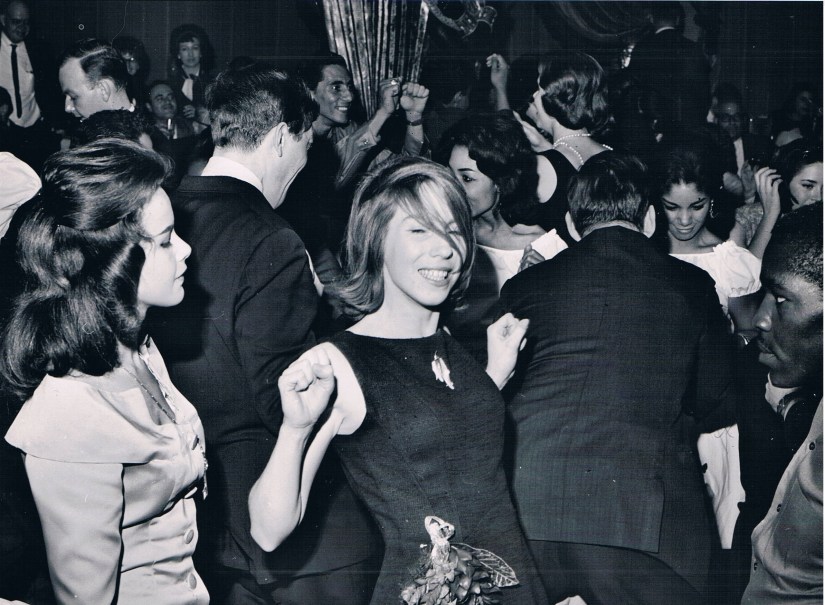
First, let’s set the scene. Referenced in this article is the event at Shepheard’s Club, seen above in the photo. This nightclub was located in the Drake Hotel on Park Avenue in Manhattan. It was a hotspot. It was hip and posh and cool. Big stars stayed at the Drake, including Frank Sinatra and Muhammad Ali and later Led Zeppelin and Slade. But Shepheard’s was also swanky and the hot dances of the day, like the Frug, were not only danced here, but unveiled here. So too was the Ska. Shepheard’s even produced a flyer called, “How to Do the Newest Discotheque Dances at Shepheard’s in New York’s Drake Hotel” with step-by-step instructions to dance the Jerk, Watusi, Frug and the Monkey.

The event at Shepheard’s Club was prior to the World’s Fair. This event was held in April, whereas the World’s Fair wasn’t until August of 1964. However, Jamaica’s tourism efforts began before the World’s Fair in anticipation of creating a buzz and capitalizing on the dance craze trend. You may remember the photo I posted with Arthur Murray’s wife and Ronnie Nasralla from this evening at the Shepheard’s Club, and above is another rare gem.

Without further ado, the article:

National sound hits New York but now the argument flares as to what it is and who started it!

DISSENSION IN THE SKA CAMP

LIKE a raging fire, the promotional tour of the Jamaican National Sound, the Ska, has started a smoldering in the underbrush of the Kingston music world from which this distinctive brand of music was born.

Everyone wants to prove who is the true exponent of the Ska and who originated it? What is the authentic style of the Ska dancing? Successful though the promotional tour to the U.S. was, enthusiastic though the reports which came back treat the appearance of a Jamaican troupe of dancers and artistes at the Shepheard’s Club, there is dissension in the camp.

Some artistes who made the trip say their sound was not promoted as much as certain other sounds. Some of the artistes say that some of the other artistes didn’t have a clue about Ska dancing and in fact did the Monkey, the Wobble, the Twist . . . anything but true Ska.

Reports from the other side say that the moves done at Shepheard’s were moves decided on and rehearsed for several nights, together, before the team left the island.

To the accusation that other records were promoted over others, we discover from Mr. Winston Stona of the Jamaican Tourist Board, a co-sponsor of the promotional venture that:

The junket to the Shepheard’s Ska dancing, backed up over recorded music. Shepheard’s is one of a current crop of New York Clubs called discotheques. In this night spot feature entertainment comes from records played on a large turntable, from an amplification booth much like the Jamaican sound system of the dance halls.

According to the Tourist Board spokesman, the promotional venture for the Ska, as suggested by Henri Paul Marshall and Roland Rennie, the music promotion experts who came to the island last month on the invitation of the Ministry of Development and Welfare, was that Ska records and not personal performances by the artistes, would be projected.

The records which were taken to Shepheard’s therefore, were a selection made on the suggestion of the experts who, on their visit to the island, listened to the work of various Ska exponents. The records chosen for promotion were the ones which the experts deemed most likely to catch on with the American public.

These records included the works of Prince Buster, Derryck Morgan, Eric Morris, and others known to the local Ska followers.

Why should there be dissension? Among the tunes featured at Shepheard’s was “Sammy Dead,” the old Jamaican folk tune restyled as Ska by Byron Lee and the Dragonaires, featuring the voice of Eric Morris. Certain members of the troupe to Shepheard’s say “Sammy Dead” was promoted over other tunes.

According to Mr. Stona, “Sammy Dead” was actually played twice at the beginning and at the end of the programme of Ska records which he presented to the Shepheard’s audience.

It was also revealed that “Sammy Dead” which is to be released on a Capitol label in the States was specifically promoted on the request of Capitol records.

Prince Buster and the other early devotees of the Ska say this should not be so. And they throw in the argument that in their opinion “Sammy Dead” is not a true Ska tune and why should it be played even one more time than any of the others, which are reorganized as real Ska by the real Ska fans?

Prince Buster, who took the Ska to England where it is known now as the Blue Beat, was very expressive about this. He says he is one of the originators of the Ska and sees no reason why he and others, who worked together on the National Sound, should not have got as big billing.

But who really originated the Ska? As Buster tells it, it was back in 1958 that he, Derryck Morgan, Eric Morris and others used to meet on top of an old house situated on Charles Street near Orange Street. The meetings were inspired because “as boys together, we were looking at making a brand.”

He points out that a number of Jamaican musicians had tried adopting American shuffle sounds to their own style, but it didn’t really work. There was need for “our own sound.” So those meetings on top of the house was to find out just how to make things work, how to find a Jamaican sound which the fans would go for.

Down on the ground you might say the big sound system operators Duke Reid and Coxson were evolving their own sound. It was an adaptation of certain American shuffle tunes re-recorded for the sound system dance audiences. It is said that when the experimenters offered Duke Reid and Coxson the new Jamaican sound they would have nothing to do with it.

According to Buster, the new sound when it was evolved was referred to with great disdain by other musicians and by the public as the Boop-Boop. He even earned the name Boop. And when he and Derryck Morgan, for a promotional stunt, launched Boop-Boop songs deriding each other the public really went for their skins.

But out West, the thump of the Boop, later is to be called Sca, then Ska, was catching on. Musicians who had “boxed around” in various musical combos began to be reorganized as “Ska beaters.” Out west and on the east, they could tell you and still tell you about Drumbago who played the drums and Ja Jerry, Theophilus Beckford, and Raymond Harper, Rupert “Blues” Miller, and Stanley Notice.

These according to the fans and on Orange Street and (unreadable) where sound boxes thump through the Saturday night of every week were the original ska men.

As the craze progressed, getting popularity most of all on JBC’s Teenage Dance Party, other musicians joined the parade, cut dies, met for sessions, helped the sound to grow.

The fans began to acclaim Baba Brooks, Roland Alphonso, Lloyd Brevet, Lloyd Tate, Don Drummond, Lester Sterling, Johnny Moore, Lloyd Knibb and the men whose full names nobody remembers but rather a name like Jackie, Charlie, and Campbell. Later they were joined by the acclaimed pure jazz, tenor man, Tommy McCook.

The Ska caught on, spread and grew, most of all in the Saturday night sound system headquarters such as Forrester’s Hall, Jubilee Tile Gardens, Carnival and Gold Coast on Sundays.

Sound system operators worked feverishly to get the latest biscuits on disc. Early on release, they bore no labels, but the dance hall spies got the names eventually and the sound system which didn’t have the new biscuit last week, acquired it this week, to draw the fans.

It is interesting to find a parallel in the discotheques which began in Paris and spread to London and New York.

In the process of finding who should get credit for what, it is eye opening to hear Prince Buster saying that Louise Bennett played her part in the promotion of this peculiarly Jamaican sound and dance. He says that Louise’s life work of keeping alive the folk songs and rhythms of Jamaica is responsible for many of them coming back into popularity, set against the Ska beat.

Many of the musicians and artistes associated with the Ska movement are fairly young men. However, one of the acknowledged originators and Dean of the Sound has been playing music in Kingston for 46 years.

He is Drumbago the drummer who also plays a flute. His real name is Arkland Parks and (unreadable) Mapletoft Poulle and Frankie Bonnitto.

Drumbago, a mild mannered gentleman, says he and Rupert Miller, a bass player for 36 years, were in on the original search to find the sound which came to be called Ska. He explains their best arrangement of the sound as being basically four beats to the bar in eight or twelve measures.

“You get the sound according to how you invert the beats,” says Drumbago.

Another exponent of Ska and its various offshoots feel that the dance called Wash Wash has every claim to being truly Jamaican, for it is inspired by one of the basic Jamaican show dances … the wash day scene. This is a standard with many nightclub rhumba dancers, with many folk lore troupes.

So what constitutes Ska dancing?  According to the fanatics, true Ska motions are the wash wash, the peculiar washing motion of either clothes or the body, the press along, in which the  dancer thumps out the rhythm with his arms at shoulder level, the move (for which we found no

name) of spiraling down to floor level and back up, the one in which you moved the hips and pumped the arms in the opposite direction to the press along.

The fans say that while the extempore movements are allowed dancing the Ska, these are the definite basic movements which one must know to be IN.

Dissenters from the troupe which performed at Shepheard’s say these movements were not used fully or enough and that at one stage they heard a critic saying that what was being done was nothing new, it looked like a first cousin to the Twist. And that the Monkey and the Pony movements which were done were recognized as old hat immediately.

Mr. Stona says this accusation is not true. He found nothing but satisfaction for the presentation at Shepheard’s and is optimistic for the future of Ska promotion in the United States.

We contacted a spokesman for the Byron Lee and the Dragonaires outfit who made “Sammy Dead.”

He told of having heard the feeling expressed by some of the original Ska sound makers that certain orchestras now playing the sound were only cashing in and didn’t know how the sound began.

The Byron Lee spokesman—Mr. Ronnie Nasralla—says:

“For Byron Lee and the Dragonaires it’s not just cashing in. I know Byron feels that it is full time Ska was organized and promoted so that the best can be got out of it for the benefit of the artistes and Jamaica.”

According to Mr. Nasralla:

“Many Ska artistes were not properly protected or organized before Byron Lee has signed up several artistes for recordings and appearances and we’re taking all steps to see that they’re properly presented.”

“I’ve heard that some people say that Byron Lee is just promoting his orchestra. It’s not true. Sure, as a businessman he will look out for his investments, but let us stop quarrelling among ourselves and promote the sound not only for the good of one band but for all Jamaica.”

Whatever comes of it, Ska is going to be a talking point for many more months. Ironically, like most things, it was an art without honour in its own country until it was discovered somewhere else.

Stay tuned for next week’s blog when I will post a response to this article that appeared in the Daily Gleaner the following Sunday. Apparently the comments made by Ronnie Nasralla and Prince Buster struck a chord and a number of musicians responded with their thoughts, including Eric Monty Morris, Roy Panton, Ronnie Nasralla again, Alphanso Castro, Sir Lord Comic, and Roy Willis who respond with comments of their own.


Uncategorized

Duke Reid the Trojan

duke-reid-coxson-kosmic-feb-3-1956

Can you imagine grabbing a Red Stripe and heading into this dance at Shady Grove in 1956? Duke Reid, Coxsone Dodd, Admiral Comic (or here, Kosmic)–what a night this must have been! It was 1956, before ska, so these sound system operators were spinning “rock ‘n roll” as the advertisement states–rhythm and blues secured from American. We know that Duke Reid and Coxsone traveled to the U.S. to obtain their records, but others purchased them from the sailors coming from the states in the ship yard. I wanted to take the opportunity in this blog to talk a little bit about Duke Reid, the one who helped to start it all, and share some advertisements I found from the Daily Gleaner that I find fascinating and hope you will too.

First of all, let me give a little background on Duke Reid, for those who might not be familiar with this Jamaican music hero. This passage from the Jamaica Gleaner, October 1, 1995, was written by journalist Balford Henry:

Arthur Stanley Reid was born in Black Rock, Portland, May 14,1923 [most accounts have his birth as July 21, 1915] . Although his birth certificate shows his mother’s name as Catherine Pearce, there is only a dash where his father’s name was supposed to be. After school, Reid moved to Kingston and joined the police. While in the force he met Lucille Homil and they married. He was kicked out of the police force when his superiors realised that he had moved in with his mother-in-law and was helping to run a grocery on Beeston Street. However, the 30 pounds they paid him off with, turned out to be a blessing in disguise, as he bought a couple of speaker boxes and started playing music outside the store. Friends encouraged him to go into music fully, and he eventually challenged and beat the then sound system King, Tom, the Great Sebastian. Tom moved uptown to the Silver Slipper Club in Cross Roads after this, leaving downtown at the mercy of the new champion sound system -Duke Reid, The Trojan. 

Reid beat back the challenge of numerous other sounds, until he was humiliated by a young upstart named Clement “Sir Coxsone Downbeat” Dodd, who had travelled abroad as a farm worker and returned with some exclusives, including Roscoe Brown’s “Mr. Berry,” Coxsone’s virtual theme song. But, Reid also went on a hunt for the songs in the United States. It was difficult because, like other sound system operators, Dodd had scratched the name from the label. This meant that Reid had to listen to thousands of songs until he found it. Anthony (Duke Reid’s son) said that when his father, eventually, found the record in a Philadelphia shop, “he jumped in the air and laughed like a baby.” When he returned to Kingston, Reid threw out a challenge to Dodd, that he could play all his exclusives. The showdown was planned for Forrester’s Hall. Dodd turned up feeling that Reid was only bluffing. At midnight when Reid played “Mr. Berry” eyewitnesses said that Dodd fainted.

Reid returned to the top of the heap, but a disastrous attempt to develop a construction company, which was supposed to have received a contract to help build the Norman Manley Airport but never did, resulted in him having to declare bankruptcy in 1961. Anthony said that his father lost everything, including his sound system. But, he rebounded with a loan obtained through a home owned by his wife on Mountain View Avenue. Reid returned with a vengeance, formed his own labels, built his own studio, and reopened his liquor store after repurchasing 33 Bond Street. When Tab Smith’s “My Mother’s Eyes” was brought to his attention by a friend named “Cho Cho Mouth”, he made it his theme song.

The name Duke Reid and Treasure Isle are still very much identified with the instrumental. Reid died leaving one of the richest local musical legacies, which was still providing entertainment for millions world-wide, excepting that his family isn’t earning anything from all this success.

Duke Reid’s sound system, and Reid himself, was called  The Trojan, after the make of his imported kit van he used to shuttle his equipment. Reid hosted his dances at the corner of Beeston Street and Pink Lane in the early days and then on Bond Street and Charles Street, as well as at other venues like the Success Club and Forresters Hall. It is to be noted that in the story relayed above by Anthony Reid to the journalist that Coxsone’s theme song was “Mr. Berry.” Other accounts, which have been corroborated, have that song being “Later For Gator” by Willis “Gatortail” Jackson, which Coxsone renamed Coxsone’s Hop,” and the event is to have taken place at Kingston Jubilee Hall with Prince Buster luring him there.

Duke-Reid-sound-system-june-22-1960

Duke-reid-barn-dance-april-28-1956

Duke-Reid-sough-system-june-17-1960

Reid was flashy and attracted attention everywhere he went. He frequently wore a crown on his head along with a red cape trimmed in ermine, bandoliers crisscrossing his chest and two guns at his side, one a shotgun on his left hip and a .45 on his right hip. Sometimes he even arrived to his dances being carried aloft on a gilded throne by his posse. He was known to fire his guns into the air at his shows in a display of his prowess as well as when he liked a song. He was also known to occasionally play with a live grenade. He presented a radio show on RJR called “Treasure Isle Time,” supplying the records from his sound system, promoting those from his studio, and paying for the airtime. The show was actually hosted by Adrian “Duke” Robinson, a J.B.C. disc jockey. From 1956 to 1959, Reid was the “King of Sound and Blues,” known for his rare, even exclusive 78” tunes he played at the sound system dances.

The sound systems had one function in these early days–to sell liquor. Duke Reid and his family owned a liquor store, so too did Coxsone Dodd and his family. Here is an advertisement that shows the duality of the liquor industry which birthed the music industry. Record collectors, what would you give to travel back in time to go to this sale!!?

Duke-Reid-liquor-store-dec-20-1960

I haven’t even talked about the legacy that Duke Reid has left us in the way of recordings, but instead focused here on his early days. Reid produced hundreds of recordings, helping to establish the careers of such greats as Alton Ellis, the Skatalites, Derrick Morgan, Eric Monty Morris, John Holt, Justin Hinds, the Melodians, the Paragons, Phyllis Dillon, the Silvertones, Stranger Cole, the Techniques, Tommy McCook & the Supersonics, and the list goes on and on. Share your memories and thoughts on the legacy of Duke Reid by commenting below. I leave you with this popular photo of Duke Reid in all his glory.

reid-photo

And below is an advertisement for Trojan trucks from the Daily Gleaner, 1959. Duke Reid’s had “Duke Reid – The Trojan King of Sounds” painted on the sides. He not only hauled his sound system equipment and records, but of course, his liquor.

trojan-truck

Uncategorized

Stanley Motta, Recording Pioneer

motta

Stanley Motta is always mentioned as an early pioneer in the ska industry since he had the first recording studio on the island, although they were not pressed there–Motta sent the acetates to the U.K. for duplication. But Motta began the recording industry in Jamaica. His recording studio was opened in 1951 on Hanover Street and his label, M.R.S. (Motta’s Recording Studio), recorded mostly calypso and mento. Motta’s first recorded in 1952 with Lord Fly whose birth name was Rupert Lyon. It is to be noted that in his band on these recordings were Bertie King on clarinet, an Alpha Boys School alumnus who would go on to have a successful jazz career in Europe, as well as Mapletoft Poule who had a big band that employed many early ska musicians and Alpha alumni. Motta also recorded artists like Count Lasher, Monty Reynolds, Eddie Brown, Alerth Bedasse, Jellicoe Barker, Lord Composer, Lord Lebby, Lord Messam, Lord Power, and Lord Melody (good Lord!).


There is a strong ska connection too. While I originally thought and posted that Baba Motta was Stanley Motta’s little brother and got that misinformation from Brian Keyo (here: http://www.soulvendors.com/rolandalphonso.html), I have been corrected by mento scholar Daniel Neely, as you will see from his fantastic and helpful comments below. They, in fact, are not related. Baba Motta was a pianist and trumpeter who also played bongos at times. Roland Alphonso performed with Baba Motta and Stanley then employed Roland to play as a studio musician for many of his calypsonians. Baba Motta had his own orchestra based at the Myrtle Bank Hotel. Baba Motta also recorded for his brother Stanley Motta with Ernest Ranglin. And other ska artists who recorded for Stanley Motta include Laurel Aitken and Lord Tanamo. Rico Rodriguez also says he recorded for Stanley Motta. Theophilus Beckford also performed for other calypsonians that Motta recorded, playing piano before he cut his vital tune “Easy Snapping” for Coxsone, the first recognized ska recording.


So who was this Stanley Motta character and what was his interest in Jamaican music? Well as most Jamaican residents know, Motta was the owner of his eponymous business that sold electronics, camera equipment, recording equipment, and appliances. They also processed film, if you remember that! Motta started his business in 1932 with just two employees. Motta’s grew to hundreds of employees over the years and they sold products from Radio Shack, Poloroid, Hoover, Nokia, and Nintendo, to name a few. Stanley Motta was born in Kingston on October 5, 1915. He was educated at Munro College and St. George’s College. He was married twice and has four sons, Brian, David, Philip, and Robert.


Motta chose to get into recording perhaps because it was a new industry for the island. And as a businessman, he saw that there were tourists who flocked to Jamaica with spending money, and in an effort to capture some of that money, he began recording to send them home with a souvenir. Many of these calypso and mento recordings for MRS were intended to be souvenirs, a take home example of the sounds enjoyed while on the north coast beaches. In fact, later Motta would serve on the board of the Jamaica Tourist Board from 1955 to 1962, so this was a focus for Motta. He recorded 78s, 45s, but also 10 full-length LPs including “Authentic Jamaican Calypsos,” a four volume series targeted at tourists upon which Roland Alphonso is a featured soloist on the song “Reincarnation.” In short, Motta was an entrepreneur, so his interest in recording came from a vision to fill a need, and he quickly moved on into more enterprising endeavors when he saw that need was being met better by others, like Federal Records, a physical pressing plant, and he chose to focus on his retail stores instead, stores which are still in business today.


Motta was also involved in broadcast, but not as you might think. In 1941, after viewing a program that was broadcast on NBC, Motta was so moved by the content of the program titled “Highlights of 1941,” that he wrote to NBC to obtain a recording of this broadcast. He secured the one-hour program which he then showed for audiences at the Glass Bucket Club and he used donations from the screening to support war funds. The program dramatized many of the events of the year interspersed with real footage of Pearl Harbor and the milestones leading up to World War II.


Motta was likely also a supplier for many sound system operators, as you can see from the advertisement above. He sold amplifiers, speakers, and all types of recording equipment so without his influence, the face of Jamaican music would not be the same, in many ways. Share your stories, memories, and research on Stanley Motta here and keep the dialogue going!


Here are a number of links to more information on Stanley Motta and his recording legacy:


http://www.npr.org/templates/story/story.php?storyId=1842828

http://www.mentomusic.com/1scans.htm

http://bigmikeydread.wordpress.com/2010/08/25/stanley-motta-mottas-recording-studio-kingston-mrs/


Uncategorized

The Voice Winner Tessanne Chin and Ska? Big Time!

carnations

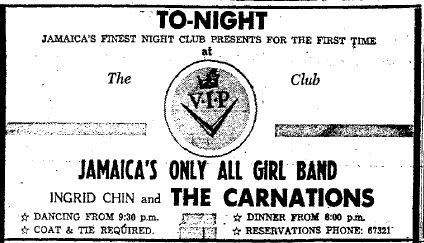
Tessanne Chin’s connection to ska is much more than just her birthplace of Jamaica—it’s her family lineage! Tessanne Chin’s mother (and father) were in world’s first all-girl ska band—The Carnations! I don’t want to disclose all the information that I have uncovered, as The Carnations are featured in my upcoming book Songbirds: Women in Ska. I have interviewed Christine Levy (Tessanne’s mother), Christine’s ex-husband and sole boy in this “all-girl” ska band Richard Chin (Tessanne’s father), Margaret Wong, and Marie Crompton-Nichols and have exclusive photos of this group from family photo albums, but here’s some history that led to the launch of Tessanne Chin’s huge career!


Never heard of The Carnations? That’s because they never recorded and only played live, so perhaps you remember seeing them back in 1966, playing at clubs in Kingston like the VIP Club, the Flamingo Hotel, the Myrtle Bank Hotel, Club Havana, and in Ocho Rios at Club Maracas and the Brown Jug, to name a few. Perhaps you remember when they became The Avengers and added a few men to the lineup and their shows at the Ding-Ho Club (formerly Club Havana) and the Golden Dragon, playing alongside Byron Lee and the Dragonaires. But let’s step back to those early days when Tessanne Chin’s mother, Christine Levy, took up the trumpet and joined her schoolmates to form this interesting group.


Levy was in high school when she began playing the trumpet in the Excelsior High School Band. They performed at school functions, the Manning Cup, an inter-school soccer tournament at Sabina Park, and during independence celebrations throughout Kingston. It was through this school band and through Levy’s knowledge of her instrument that she learned of an opportunity to perform for another new band that was forming—but this one was different than the Excelsior High School Band. In fact, this one was different from any other band that existed. It was an all-girl ska band.


The members of the new all-girl band, The Carnations, included Levy on trumpet and vocals, Ingrid Chin on bass guitar, Jean Levy on steel guitar, Margaret Wong on lead vocals and congo drums, Althea Morais on keyboard, Marie Crompton-Nicholas on guitar, Pam Mosely on guitar, and Richard Chin on drums. Richard was a male in the all-female band and was the brother to Ingrid Chin, the two who put together the entire band. Christine later married Richard. Christine’s mother served as a chaperone for the girls when they played at clubs, but it was Richard who performed alone at times. Why? Because Christine’s mother removed the girls from sets when the exotic dancers performed—dancers like Madame Wasp and Margarita herself. Christine’s mother, Tessanne’s grandmother, found the performances too risqué for teenage girls, although Richard says he didn’t mind them so much!


Richard Chin (Tessanne’s father) had an uncle who helped steer Richard’s career in music. Richard’s uncle was none other than Kes Chin of Kes Chin & the Souvenirs! The ska family tree has many branches and strong roots, my friends! Kes Chin & the Souvenirs was a popular club act, ska with a Latin flavor featuring Chin, Denis Sindrey on guitar, Lowell Morris on drums, Peter Stoddart on keyboard, and Audley Williams on bass and steel guitar. Richard’s father and Kes’s brother, Keyoung Chin, managed The Carnations.


Christine and Richard passed their love of music on to their children, especially Tami and Tessanne, their two youngest daughters. Richard and Christine built a music studio called “The Underground” in their family home and they taught the girls to follow their passion in life. As a result they both have successful musical careers. Tessanne toured with Jimmy Cliff as a backup singer for three years before going solo and opening for Gladys Knight, Patti Labelle, and Peabo Bryson. She has collaborated with Shaggy and on December 17th was crowned the winner of The Voice. Tami, who spells her last name Chynn, has toured with Shaggy as a backup singer and collaborated with Sean Paul, Beenie Man, and Lady Saw. She opened for the New Kids on the Block on their 2008 tour, she has performed on a Pepsi commercial, and she wrote a song that Jennifer Lopez has recorded, “Hypnotico.” She is married to dancehall artist Wayne Marshall and she also designs clothing.


Here comes my shameless plug. My book, Songbirds: Women in Ska, will feature these women along with many other pioneering women who have been gracious enough to share their stories with me—women like Millie Small herself, Yvonne Harrison, Patsy, Janet Enright, Calypso Rose, and numerous others, so stay tuned in 2014 for this book, which is underway. My others, Don Drummond: The Genius and Tragedy of the World’s Greatest Trombonist, Ska: The Rhythm of Liberation, and Ska: An Oral History are available at skabook.com or amazon.com.

Uncategorized

Skaliday Traditions and Song Lists

pitchy-patchy

The winter holidays are upon us, so why not take a look at holiday traditions in Jamaican culture and how these relate to ska? Then, make sure to get your vinyl ready because I have a fairly comprehensive list of holiday-related Jamaican tunes, some ska, some post-ska, for your festive parties!

First of all, here is a little primer on holiday traditions and history in Jamaica, which is very important to ska history, as you will see. Much of the showmanship and competition found in the music industry in Jamaica today and throughout the last century can be traced back to the pomp and swagger of the Caribbean festivals where music and performance combined in a flamboyant display of prowess. These festivals, Carnival in Trinidad, and Jonkunnu in Jamaica, were celebrations that took place during the height of the Great Revival (spiritual traditions that stemmed from African religions–Pukkumina, Zion, Kumina, etc.) and continue today. Jonkunnu in Jamaica has its origins in the Carnival celebration in Trinidad, which, in turn, had its origins in the Masquerade celebrated by Europeans. Carnival began at Christmas time and lasted sometimes until Ash Wednesday. Celebrations included feasting and processions through the streets, the biggest of which took place on Shrove Tuesday, or the Tuesday before Ash Wednesday.

These processions were called canboulay, a derivation of the French words cannes brulees, which translates as burning canes. Slaves carried burning canes as torches to light the way during the night when a plantation owner’s crops caught fire. Slaves from nearby plantations were summoned to help extinguish the fire. Taken to the field by a driver with a whip, the slaves carried flaming torches to light the way. Canboulay processions draw elements from these events, utilizing participants with whips who emulate the slave master, masked characters representing people and animals, in an entertaining lampoon of life. The content of these processions, these marches, were serious, but the tone was lighthearted and enjoyable.

One of the main displays in canboulay during Carnival is kalinda. Kalindas were stick fights, similar to the art of dula meketa in Ethiopia or mousondi in the Congo, and were tests of strength and skill. During Carnival, a group or band of some two dozen men were led by a “big pappy” who directed his crew through the streets until they encountered a rival group. In a spirit of camaraderie and competition, each group threw out boasts to one another, stating their prowess and challenges frequently set to song which was called kalinda, since the warlike song and the stick fight itself were part of the festival procession. Fighters chose their sticks carefully, visiting a region in Trinidad called Gasparillo to select a stick made of Baton Gasparee wood. They then prepared their stick by singeing it over a fire until the bark came off, then they rubbed coconut oil into the wood. The stick was ready to use and when horns or empty bottles were sounded, the bands assembled accompanied by instrumentalists, singers, and dancers who performed a dance called a belair, or bele. The display involved the participation of all and the boasting was competitive in a respectful, boisterous, convivial manner. This spirit of competitive camaraderie continued in the days of sound system clashes in the 1950s and 1960s as producers attempted to one-up each other to appeal to the crowds. And ska recording artists, following the lead of the big pappies, also threw down challenges to each other to boast of their talent–Derrick Morgan and Prince Buster is a classic example, as are the boasts and challenges between producers like Coxsone, Duke Reid, Prince Buster, and King Edwards.

Due to the perceived threat of riot and revolt, canboulay and kalindas were banned by the government and police. The masks used by characters in the procession were also banned in festivals in 1840 by the British governor. Drums and fiddles, associated with Africa, were considered heathen and therefore instruments of the devil, plus they were loud and disturbing late at night. Open letters in local newspapers called the revelers “savages” and spoke of celebrations as “orgies” full of “crime” and “barbarism.” The people resisted, but they were squashed by military troops and were forced to either conform to the establishment or they simply adapted the festival in ways to elude the establishment.

In Jamaica, this festival was called Jonkunnu, named after John Conny, a powerful leader of the Guinea people in the early 1700s. The British spelled his name John Canoe, hence the name Jonkunnu. The white planters allowed their slaves to celebrate this secular festival which took place during the Christmas season. Elaborate street parades began on the island as early as 1774. Like Carnival, Jonkunnu involved masked characters. Performance and music always went hand in hand. The leader of the festival wore cow horns, a cow tail, and sometimes carried swords or wore a mask with tusks. This character was John Canoe. Other characters included those mocking the military, aristocrats, police, sailors, the devil, Horsehead, Jack-in-the-Green, Pitchy-Patchy, Belly Woman, Warrior, Red Indian or Wild Indian, Koo-Koo or Actor Boy, King and Queen, and Red-Set and Blue-Set Girls. These characters did not remove their masks in public, nor did they speak or sing.

Those who did provide the vocal and instrumental accompaniment for the procession included a band of drummers, bamboo fife, banjo, and metal grater performers. Tambour-bamboo bands also provided percussion by banging together lengths of bamboo or using one to knock on the ground. Since they were hollow they produced varying tones. Soon musicians sought other items for their percussion as well, especially since the stick bands were prohibited by the British government. Participants used household items such as spoons, bottles, and metal pans. In Trinidad, this progression soon led to the use of oil drums which were crafted to produce different notes and tones, and the steel bands were born. But everyone was a participant. Jonkunnu was not a spectator event. Everyone performed, everyone played, everyone danced, and this custom was always a part of the people’s music.

The Burru, a group of men who became influential to ska musicians through their association with Rastafarianism, emerged during the days of slavery on the island. Bands of Burru, African drummers, were permitted by slave owners to play drums and sing for the workers in the Jamaican fields to raise the slaves’ spirits—not for emotional reasons, but to impose more productivity. After slavery was abolished, the Burru could not find work and so they congregated in the impoverished areas of Kingston. Their drumming style, like the African vocal styles, exhibited a call-and-response format with a drum leading the rhythm, followed by “licks” from the answering drums.

Each Christmas season, the Burru men gathered to compose their own music with words about local events or about people in the community who had committed an act of wrongdoing. They worked on these songs starting in September and then on the holiday they traveled throughout the community, in a procession not unlike Jonkunnu, going from home to home, playing their bamboo scraper, shakka, and rhumba box for percussion, singing their songs which were intended to purge the evil of the previous year before the new one began. Although the music was composed during the months previous to the event, they also improvised on the spot, a practice that musicians continued in the decades that followed. Because the Burru were mischievous in their songs, and because they lived in the slum areas of the city, they were mistakenly considered by many to be criminals or undesirables. In the 1930s and 1940s, the Burru came to live with the Rastafarians at camps throughout the island’s mountains, especially in Kingston, and the music of the Burru combined with the spirituality of the Rastafarians, as both groups found solace together from society’s rejection. These camps became a refuge for musicians as well during the ska era since they were a place for uninhibited musical communion, a place for performance without restriction or limitations, and a place for retreat from the hardships of oppressive life. The Burru drumming became a part of ska music as Prince Buster recorded Oh Carolina using Count Ossie and his drummers who were informed by the Burru tradition.

So, how can you enjoy this tradition this holiday season? Well queue up a little ska, rocksteady, and reggae–here is a list I compiled using the Roots Knotty Roots database, thanks to good friend Michael Turner. If you prefer something more contemporary, I would recommend Toasters Christmas Ska which is a killer selection of 11 holiday songs: http://www.amazon.com/Christma-ska-The-Toasters/dp/B004198KMG But for those who want to bring a little island flavor to the snow, here you go!

Admiral Bailey, Christmas Style

Al Vassel, Happy Christmas

Albert Morrison, Santa Claus is Coming to Town

Alton Ellis, A Merry Merry Christmas

Alton Ellis, Christmas Coming

Amlak, Christmas Is Here

Angela Stewart and U Brown, Gee Whiz It’s Christmas

Aquizim, Merry Christmas

Arcainians, Christmas In Jamaica

Barrington Levy and Trinity, I Saw Mommy Kiss A Dreadlocks

Black Crucial, Christmas Time

Black Pearls, Babe In Bethlehem

Black Pearls, Christmas Joys

Bob Marley and The Wailers, Christmas Is Here

Bob Marley and The Wailers, White Christmas

Boris Gardiner, The Meaning Of Christmas

Cables, Christmas

Cables, Christmas Is Not A Holiday

Cables, White Christmas (When Christmas Is Here)

Carlene Davis, White Christmas

Carlene Davis and Trinity, Santa Claus (Do You Ever Come To The Ghetto)

Carlos Malcolm and His Afro Jamaican Rhythm, Good King Wenceslas

Carlos Malcolm and His Afro Jamaican Rhythm, Santa Claus Is Coming To Town

Carlton Livingston, Long Cold Winter

Cassandra, What Do The Lonely Do At Christmas

Cedric Bravo and Rico Rodrigues, Merry Christmas

Charmers, Merry Christmas Blues

Charmers, Long Winter

Chatanhoogatin, Christmas Reggae

Cimarons, Holy Christmas

Cimarons, Silent Night White Christmas (Medley)

Claudelle Clarke, Franking Scent and Merry Christmas

Coco Tea, Christmas Is Coming

Cornel Campbell and The Eternals, Christmas Joy

Count Lasher and Lord Tanamo, Christmas Time

Culture, Rudolph the Red-Nosed Reindeer

Cutty Ranks, Christmas Time

Danny Dread, Winter

Dennis Brown, Trinity, Dhaima, Mighty Diamonds, Christmas Rockers

Denzil Dennis, Christmas Message

Derrick Harriott and The Tamlins and Joy White and Reasons and U Brown, Christmas Songbook

Desmond Dekker, Christmas Day

Desmond Tucker, Oh Holy Night

Devon Russell, After Christmas

Diane Lawrence, Have A Merry Christmas

Diane Lawrence, Ring The Bell For Christmas

Dicky Roots, Christmas Rock

Dillinger, Christmas Season

Doreen Schaeffer, Wish You A Merry Christmas

Eek A Mouse, Christmas A Come

Eric Tello, A Child Is Born (When A Child Is Born)

Father Richard Ho Lung, Christmas Mento

Frank Cosmo, Merry Christmas

Frank Cosmo, Merry Christmas

Frankie Paul, Christmas Time

Gable Hall School Choir, Reggae Christmas

Gaylads, Christmas Bells Are Ringing

Gladstone Anderson, Lights of Christmas

Glen Adams, Christmas Rock Reggae

Glen Brown, East Christmas Song

Glen Ricketts, This Christmas

Granville Williams and Orchestra, Santa Claus Is Skaing To Town

Granville Williams and Orchestra, Silver Bells

Heptones, Christmas Time (Give Me)

Home T 4, Rock It For Christmas

Home T and Trinity, Dub It For Christmas

Hopeton Lewis, Happy Christmas

Horace Andy, Christmas Time

I Roy, Christmas Dubwise

Inventor and Studio One Band, Caribbean Christmas

Iron Phoenix, Natty Dread Christmas

Jackie Edwards, Bright Christmas

Jackie Edwards, White Christmas

Jackie Mittoo, Christmas Rock

Jackie Mittoo, Joy Joy (Ghetto Child)

Jah Walton, DJ Christmas

Jamaican Folk Singers, A Christmas Carol

Jamaican Folk Singers, John Canoe Medley (Christmas A Come, Tenk Yu For De Christmas)

Jays, Dancehall Christmas Medley

Johnny Clarke, I Saw Mommy Kissing Santa Claus

Judge Dread, Christmas In Dreadland

Judge Dread, Merry Christmas Mr. Dread

Junior Soul, Christmas Party

Karl Bryan, Christmas Version

King Everald, Santa Claus

King Kong, Nice Christmas

Kingstonians, Merry Christmas

Kojak, Christmas Style

Laurel Aitken, Rock Santa Rock

Lee Perry and Sandra Robinson, Merry Christmas Happy New Year

Little John, It’s Christmas Time

Little John, Save A Little For Christmas

Lord Creator, Merry Christmas To You

Lord Kitchener, Party For Santa Claus

Lord Nelson, Party For Santa Claus

Lucy Myers, Christmas Day

Maytals, Christmas Season (Christmas Feeling)

Maytals, Happy Christmas (Christmas Song)

Mel Turner and Souvenirs, White Christmas

Methodist Male Voice Choir, A Christmas Medley

Methodist Male Voice Choir, Silent Night

Michael Palmer, Christmas Time Again (Happy Merry Xmas)

Michael Powell, Christmas Time

Mikey Dread, Herbal Christmas Gift

Miss Misty, Merry Christmas

Mr. and Mrs. Yellowman, Where Is Santa Claus

Mutabaruka, Postpone Christmas

Neville Willoughby, Christmas Jamaica

Neville Willoughby, J.A. Xmas Day

Nicodemus, Winter Wonderland

Nora Dean, Merry Christmas

Norma Isaacs, Christmas Time

Norman T Washington, It’s Christmas Time Again

Norman T Washington and Lloyd Clarke, Happy Christmas

Nyah and The Sunflakes, Merry Christmas

Nyah and The Sunflakes, White Christmas

One Blood, The Christmas Present

Pablove Black and Bagg, God Rest Ye Merry Gentlemen

Palemina, Faith D’Aguilar and Cedric Brooks, Santa Ketch Up Eena Mango Tree

Pat Rhoden, Christmas Song

Pat Rhoden, It Must Be Santa Claus

Phillip Fraser, Rub A Dub Christmas

Raymond Harper, White Christmas

Reuben Anderson, Christmas Time Again

Rhythm Aces, Christmas (C-H-R-I-S-T-M-A-S)

Richard Ace, Christmas Reggae

Rio Guava, Christmas Day Is Coming

Robert French, Have A Merry Christmas

Roman Stewart, Christmas Affair

Roman Stewart and Glen Brown and Dean Beckford and Charley, Christmas Song

Ruddy Grant and Sketto Richard, Christmas Blues

Ruddy Thomas, Roots Christmas

Ruddy Thomas, What A Happy Christmas

Rupie Edwards,                 Christmas Rush (Christmas Parade)

Sammy Dread, Christmas Jamboree

Sheridons, Merry Christmas (And A Happy New Year)

Sheridons, Silent Night

Shorty The President, Natty Christmas

Sir Jablonski, Merry Christmas Day

Sonie and Pretty Boy Floyd, It May Be Winter Outside

Steve Golding, Strictly Rock Christmas

Sugar Minott, Christmas Holiday

Sugar Minott, Christmas Jamboree

Sugar Minott, Christmas Time

Tappa Zukie, Red Rose (Archie The Red Nose Reindeer)

Teddy Davis, Christmas Bells

Tim Chandell, Christmas Time

Tony J and The Toys, Christmas Dragon

Top Grant, A Christmas Drink

Trinity, Video Christmas

Trinity and the Mighty Diamonds, Christmas Carol

Triston Palmer, Christmas Jamboree

Tyrone Evans, International Christmas Medley

Ugliman, Christmas Boogie Christmas Is Here)

Vibrators, Merry Christmas (Merry Christmas Is Here)

Wain Nelson, Christmas Time

Wain Nelson, Santa Claus

Winston Groovy, Merry Christmas

Winston Jones, Joyful Christmas

Zoot Simms and Roy Robinson, White Christmas

Uncategorized

Nelson Mandela, Jerry Dammers, and JA History

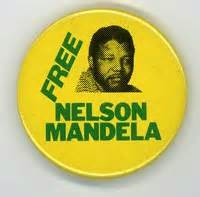
mandela-button

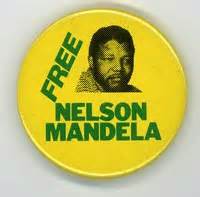
Since the death of Nelson Mandela on December 5th, I wanted to turn discussion to the connection between Mandela and Jamaican and ska culture.

IN THE U.K.

Most ska fans will remember the glorious ska tune penned by Jerry Dammers of The Specials, “Free Nelson Mandela,” recorded by The Special A.K.A. whose lyrics are listed above. I always liked this song, but I also like the Chicken Song and I think the two remind me of each other a tad. The song charted at number nine in March 1984 and led to an awareness of the South African leader. It brought attention to a hero who was previously considered a terrorist by the Tory government in England. Dammers wrote the song after attending a 65th birthday concert at Alexandria Palace in 1983. The song was produced by Elvis Costello and The Beat’s Dave Wakeling and Ranking Roger sang backup vocals, along with other vocalists.

One of those artists, Rhoda Dakar of The Bodysnatchers, The Special AKA, and Skaville UK, recalled her memories of recording this song in an interview on marcoonthebass.blogspot.com. She says that she had fond memories of “recording ‘Mandela’ with Elvis Costello. I’m a huge fan of his and could barely speak to him, I was so starstruck. . . I am, of course, immensely proud of ‘Mandela’.”

Dammers helped to organize Artists Against Apartheid and was asked to head up a festival by Dali Tambo, the son of Oliver Tambo who was, at the time, the leader of the African National Congress in South Africa. The first concert, called Freedom Beat, took place on Clapham Common in London in 1986. Artists such as Peter Gabriel, Sting, Sade, The Smiths, and Big Audio Dynamite, Mick Jones’s new band since the breakup of The Clash, performed. Some 250,000 people attended the concert which was preceded by a march to the concert grounds. After the success of Freedom Beat, a much bigger concert was organized to celebrate Mandela’s 70th birthday, and so on June 11, 1988 a massive concert took place at Wembley Stadium. Some 72,000 people attended live at Wembley Stadium and more than 600 million people from 60 countries watched the broadcast on television. An enormous list of artists performed, including Stevie Wonder, Sly & Robbie, UB40, Harry Belafonte, Phil Collins, Whitney Houston, and Chrissie Hynde. Numerous celebrities attended and lent their support.

BBC News has run a fantastic article on Jerry Dammers and his role in Nelson Mandela’s fight for freedom. Of course in true Jerry Dammers’ style, he claims that “there was little awareness of Nelson Mandela’s imprisonment before his song,” but that is debatable. Here is the article: http://www.bbc.co.uk/news/uk-england-coventry-warwickshire-23064733

I want to post the lyrics here because I think they are tremendously important:

Free Nelson Mandela / Free, Free, Free, Nelson Mandela/ Free Nelson Mandela/ Twenty-one years in captivity/ His shoes too small to fit his feet/ His body abused but his mind is still free/ Are you so blind that you cannot see/  I say Free Nelson Mandela / I’m begging you/ Free Nelson Mandela / He pleaded the causes of the ANC/ Only one man in a large army/ Are you so blind that you cannot see/ Are you so deaf that you cannot hear his plea/  Free Nelson Mandela / I’m begging you Free Nelson Mandela/  Twenty-one years in captivity/ Are you so blind that you cannot see/ Are you so deaf that you cannot hear / Are you so dumb that you cannot speak/ I say Free Nelson Mandela/ I’m begging you/ Oh free Nelson Mandela, free/ Nelson Mandela I’m begging you begging you / Please free Nelson Mandela/ free Nelson Mandela/ I’m telling you, you’ve got to free Nelson Mandela.

Here is footage of “Free Nelson Mandela” performed on Top of the Pops:

IN JAMAICA

Nelson Mandela first visited Jamaica on July 24, 1991. There was obviously great excitement about his visit and before he departed, Mandela visited National Heroes Park in Kingston where he laid wreaths at the shrines of Marcus Garvey, Sir Alexander Bustamante, and Norman Manley. The headline of the Daily Gleaner on July 25th stated, “Emotionally charged J’cans greet Mandelas.” The article stated, “Yesterday’s crowds in Kingston and the outpouring of emotion drew comparisons to the visit by Emperor Haile Selassie in 1967 [sic. Selassie actually visited on April 21, 1966]. People from all walks of life took whatever vantage points they could—tops of trees or buildings—to catch a glimpse of the Mandelas but heavy security and sometimes confusion over routes to be used left many disappointed though caught up in the moment of the historic visit. Thousands ringed Heroes Circle from about mid-afternoon even while Mr. Mandela was at Vale Royal for lunch and waited for more than three hours to see them. A crowd had gone to the National Stadium from as early as noon with hundreds taking water bottles and food and vendors camped around the ground as people marked out their positions. All the car parks were full spilling over onto neighbouring streets backing up hundreds of yards. To Rex Nettleford’s ears the people on the streets were paying their tribute by saying ‘Mandela’ as ‘Man de ya’ or ‘The man is here.’”

The article later says that poet and historian, Lorna Goodison, sister to musicologists Bunny and Kingsley Goodison, read a poem to the Mandelas. “It was tears at the Pegasus Hotel luncheon when Lorna Goodison read ‘The Bedspread,’ a poem about South African police taking into custody Mrs. Mandela’s bedspread which was in the colour of the ANC. Miss Goodison went through the poem with her eves closed and her face pained. At its end she burst into tears and was hugged thrice by the wife of the ANC leader who later spilled a tear,” read the article.

Minister of Foreign Affairs Senator David Coore who organized the visit said, “Nelson Mandela is a man who has become a symbol of resistance to oppression, a man who has symbolized the fight against the cruel injustice of apartheid, and a man whose courage and example has been an inspiration to the whole world. It is our way as a people in Jamaica and the Caribbean of saying to him that we appreciate and recognise what he has accomplished: that we have always stood with him and the black people of South Africa — the non-white people of South Africa — in their struggle against apartheid, and to let them know that that support continues and will continue until apartheid is totally abolished.”

Tommy McCook recorded a fantastic homage to Nelson Mandela in 1981 with his “Mandella” [sic. Mandela] and numerous reggae artists like Sugar Minott, Carlene Davis, Danny Dread, Jah Wally Stars, and Rupie Culture also paid their respects to the great freedom fighter and leader.

ON FILM

On another note, Music Producer and Island Records Founder Chris Blackwell, who launched the careers of Millie Small and Bob Marley, among others, hosted a screening of his new Island Pictures film Mandela at his Strawberry Hill property in January 1997. The film tells the story of Nelson Mandela’s struggle against the tyranny of Apartheid in South Africa and creates an important link between Jamaica and South Africa. Historian Rex Nettleford said that “Nelson Mandela’s story encapsulates a spirit not unknown to the Jamaican people which must have prompted Chris Blackwell to want to tell the story of this great man, no doubt with the echoes of ‘One Love, one heart, let’s get together and feel alright.’”

The film is available on Netflix. Here is an NPR story featuring Chris Blackwell that ran on the Mandela documentary in 2006: http://www.npr.org/templates/story/story.php?storyId=5565131

Uncategorized

JFK and Ska

busta

The 50th anniversary of the assassination of John F. Kennedy on November 22nd reminded a friend of mine of ska. Intrigued, I asked him why. He responded with the songs that are related to the JFK assassination and, because I am not a record collector nor a matrix cruncher, I hadn’t been able to see the forest for the trees. Michael Turner of the Roots Knotty Roots database complied this list of ska songs related to the assassination:

Bongo Man “Jack Ruby Bound To Die (Kennedy’s Grave)”

Dee’s Group  “President Kennedy”

Roland Alphonso and His Group “Tribute To Kennedy”

Don Drummond  “JFK’s Memory”

Roland Alphonso and Lester Sterling “Lee Harvey Oswald”

Don Drummond  “Lee Harvey Oswald Junior”

Roland Alphonso and His Group “Jack Ruby (Crime Wave)”

It made me curious, what did Jamaica think of the JFK assassination? How did this newly independent nation experience the death of this leader? Here’s what I found.

The Daily Gleaner on November 26, 1963 wrote of Sir Alexander Bustamante’s reaction as the prime minister of Jamaica during this time. It was a story that ran on the Associated Press and Reuters newswires.

Sir Alexander Bustamante, prime minister of Jamaica, said today the assassination of President Kennedy means “we have all lost a true and great friend.” Sir Alexander, the ranking man of the Caribbean at the funeral services for Kennedy, arrived in Washington early today. He was given top protocol position for the nations south of the border, some of which have constitutional provisions restricting travel of their chief executives outside the country. Mexico, for example, forbids its president from leaving the country without specific approval of Congress. In some others internal political conditions may have been a factor. The Jamaican leader, tall and impressive despite his 79 years, seemed deeply moved by the death of Kennedy. “In Jamaica we all loved him and anyone could see it in the faces of the people,” Sir Alexander said. “Jamaica is a true and loyal friend of the United States and the West.” The little Caribbean island became the newest independent nation in the Western hemisphere in August, 1962 in a ceremony witnessed by Lyndon B. Johnson, then Vice-President of the United States and Prince Margaret of Great Britain. Sir Alexander came to know Johnson well during the Jamaican visit and had met Kennedy on various occasions, the last in June of this year when the Jamaican came to Washington on an unofficial visit. Despite the unofficial character of his trip, however, Kennedy received him at the White House and expressed a desire to visit Jamaica someday. The prime minister said government offices and schools in Jamaica closed today in official mourning for Kennedy.  “Our mourning, however something more than official,” Sir Alexander commented “The people of Jamaica mourn the passing of a true friend of our country, and today stores and businesses in Jamaica, although under no official requirement to close, have done so in tribute to the man whose memory we have all come here to honour on this sad day.” Sir Alexander was a prominent figure among the mourners later as the funeral procession left the White House grounds. Wearing a long tailed grey coat and a black armband he hurried to catch up with the other foreign dignitaries. He had apparently been cut off briefly as the mourners began their solemn walk to the cathedral.

manley

The leader of the opposition, Mr. Norman Manley, who had just served as prime minister of Jamaica and left office about a year and half prior to the assassination, had been in Philadelphia with his wife on business when the assassination took place. He issued the following statement in the Daily Gleaner on November 26, 1963.

It was a sad but moving and unforgettable experience to be in America on Friday and there the last two days. I was at the great Concert Hall in Philadelphia listening to their famous orchestra when the news of the assassination of President Kennedy came. The conductor soon announced that the concert would stop and we were all silently agreed. Outside there was an atmosphere of shock and grief and many were weeping as they went their ways. Everyone has felt it deeply. The driver in the taxicab, the waiter at the table, the businessmen in the conference room, all alike showed how profoundly this has hurt and amazed and disturbed them all. It was like when Abraham Lincoln was shot there almost exactly 100 years ago. It is natural that comparisons are made since Lincoln will for all time be remembered as the champion of freedom and today men associate Kennedy’s name with his fearless stand for civil rights and human freedom. Already men begin to measure the stature of a man as the President who first and best embodied the concept of America as a young man thrust into world leadership. It is true to say that not only has he been the greatest presidential champion of freedom in America since Lincoln lived but also since he had begun to give America a new dimension to American political life in two vital and important ways. He was consciously shaping the American mind to understand and accept her place in the modern world and as one of the two great nations in world leadership today. And he had begun to make the young people of America aware of the importance of political life and right judgment in political images and willing to contribute to their country even at the cost of personal sacrifice. I had the privilege of meeting him and I know that he was deeply interested in the West Indies and in Jamaica. Indeed, I was astonished at his quick grasp of our problems. We have lost a good friend.

Of particular note is coverage in the Daily Gleaner of Fidel Castro’s comments on the assassination. This story also ran on the wire, so it is likely that the U.S. also reported on the story, but Jamaicans likely had additional interest due to the geographical proximity and cultural importance of Cuba to Jamaica. Of course there are also links between Cuba and ska, and Castro and ska, but perhaps another day for that conversation. Here is a section of the in the November 25, 1963 issue of the Daily Gleaner  with the headline “Kennedy Carried World to Brink of War—Castro:”

The Cuban Prime Minister told his people by radio and television that despite Kennedy’s “hostile . . . policies toward us” the news of his assassination is “grave and bad.” “People feel repugnance to such a slaying because we should not consider this method a correct form of battle,” he said.

Dozens of  articles also appeared about local community groups expressing their condolences and their responses to the event, such as tributes and closures. Correspondents from towns across the country wrote their official statements of mourning and visits of town officials to Kingston were postponed due to the death. Certainly the events in the U.S. have always had an impact on American culture in a number of ways—even the death of John F. Kennedy. From destruction comes creation, and in the case of the JFK assassination, the musicians contributed to the conversation with their compositions.

Enjoy a listen–Don Drummond’s JFK Memories, one of my personal favorites.

Uncategorized

Prince Buster the Boxer

prince-buster-boxing

After hearing from some readers of last week’s post that they would like to see some history on Prince Buster and his foray into boxing, I decided to delve into the archives and see what I could find. And it’s pretty interesting, I think you’ll agree.

First, we know that Prince Buster is a man of flash and prowess, so why not start with a little flair. From the Daily Gleaner, October 5, 1964:

Monograms on the dressing gowns worn by boxers are always a source of interest and sometimes amusement. Saturday night, Prince Buster’s glowing scarlet and white robe had inscribed on the back in bold letters of black “Prince Mohammed the Great,” the inscription on Joe Brown’s robe read “Joltin Joe,” Bunny Grant’s read “Bunny Grant — The Whip;” and Vincent Ramsay had to addition to his name the spiritual acknowledgement “In God I Trust.”

Despite the fact that his first fight ended on a “sour note,” Prince Buster had quite a lot of fun before, during and after the bout. Amidst a thunderous ovation he made a grand entry, followed by an entourage of about 20 supporters. His entry into the ring was dramatic and he did quite a bit of shadow-boxing a la Cassius Clay his “Big brother,” before resting briefly on the not too regal stool provided for him. His antics during the fight again drew laughter and applause and at the end he spent about half a minute in the centre of the ring, arms high over ha head and gazing intently at the sky.

Prince Buster, born Cecil Bustamante Campbell, grew up on Orange Street in a rough neighborhood in Kingston and only ended up in the music industry after literally fighting his way in. He received nickname “Buster” after his middle name Bustamante, but “Prince” was the nickname he received while boxing. He learned the skill as a teenager from Jamaican boxing greats Kid Chocolate and Speedy Baker. Prince Buster told me in a never-before-published interview from July 14, 1997 that he wanted to be a boxer initially. “I was in a dance troupe and would sing solo. I used to have problems going to school in the day because I stayed up so late at night. I paid less attention to singing and was more into boxing and wanted to be in fights but really there was no money in boxing. You’d get punched up and then there was no money. So I leave that and go back to singing and started recording. From day one, I started for me.”

Prince Buster’s first fight was on October 3, 1964. Daily Gleaner sportswriter L.D. Roberts wrote in anticipation of the debut, “Prince Buster is to make his ring debut in four rounder and this in itself should be a treat. But if the Prince forgets he is in the ring and starts to do the ska instead of throwing leather he may get his block knocked off.”

The connection between Prince Buster and Cassius Clay, who by this time was known as Muhammad Ali (Clay changed his name on February 26, 1964), is evident in the comparisons between the two fighters and likely because Prince Buster had begun a relationship with Muhammad Ali and due to his influence converted to Islam himself. Prince Buster changed his name Yusef Muhammad Ali although he still went by the stage name Prince Buster. The two fighters met during a trip to London where Prince Buster was transformed by Ali’s faith in the Nation of Islam. During Prince Buster’s trip to the 1964 World’s Fair with Bryon Lee & the Dragonaires, Ronnie Nasrala, and entourage, Prince Buster took Jimmy Cliff and his friends to a nightclub in Harlem to meet his comrade Muhammad Ali. Prince Buster had also been with Muhammad Ali in Miami when Ali invited him to attend a Nation of Islam talk at Mosque 29. So the two were connected by a friendship and faith.

prince-buster-boxing-with-ali

The Daily Gleaner on September 19, 1964 discusses Prince Buster’s planned debut in the boxing ring:

With all the flair and the gimmicks of deposed world heavyweight king Cassius Clay, Prince Buster bows into the ring with a song on his lips on Lucien Chen’s October 3rd promotion. The promotion is with the cooperation of David A. Lindo Ltd.

The ska singing sensation, more popular in the areas of ‘Wash Wash,’ claims intimate association with his ‘big brother’ Clay. No opponent he says, will last four. He fights in the first-round opening bout on the October 3 promotion. Like Clay, the Mighty Prince Buster claims to be Black Muslim. He has dubbed himself The Mighty Prince Buster Mohammed I in keeping with the Mohammed All, the name assumed by Cassius Clay after his seventh round TKO victory over Sonny Liston for the world heavyweight title. Buster returned to the Island recently from a tour of the USA, where he had ‘the advantage ‘ of meeting and hobnobbing with some of the biggest names in boxing in the country, among them, Sonny Liston. “Going from gym to gym in the USA, I decided to become a professional boxer.” Mohammad I said after his return. He is currently undergoing training at the Liberty Hall gym. And like Clay, Jamaica’s newest professional has this to say in verse.

                I Mighty Prince Buster, Mohammed the first,

Predict my first fight will end in the first

When the gong sounds for the first round,

My opponent will already be on the ground,

I have no time for fooling around,

There must be better herring around.

Prince Buster said that there was “no money” in boxing and certainly that was true—not because Prince Buster didn’t win, and not because it wasn’t offered, but because he didn’t receive the money because there was suspicion the fight was not fair. The Daily Gleaner on October 5, 1964 tells of that first fight against Gene Coy in an article entitled “Prince Buster’s purse withheld.”  The article states, “The Jamaica Boxing Board of Control announced Saturday night after the Prince Buster-Gene Coy scheduled tour found at the National Stadium, that the purses of both boxers would be withheld and an investigation made on Wednesday. Ska singing Prince Buster recently turned boxer was making his fight debut, so too was Coy. After a light flurry to the midsection in the first round, Coy hit the canvas and was counted out, as Buster had predicted in a poem. The 15,000 strong crowd that had cheered him into the ring five minutes earlier, booed as Coy lay on the canvas.”

But Prince Buster did get his money after all amid the spectacle.  The Daily Gleaner on November 5, 1964, over a month after the bout, states:

The Jamaica Boxing Board of Control, yesterday announced that ska-singing lightweight, professional boxer Prince Buster and Gene Coy whom he floored in the first round on October 3, will receive their purses. The Board had withheld the purses of both boxers after a questionable performance in the four-round bout promoted by Lucien Chen at the National Stadium. Principals of the five fight card were Bunny Grant vs. Kid Bassey for the Jamaica Welterweight title and Percy Hayles vs. former world lightweight title holder Joe Brown.

Boxing Board Secretary George Abrahams said through a release after a meeting of the committee set up to investigate the fight. “It was decided that in consideration of all the circumstances the purses of both boxers, which was previously withheld, should be paid and that severe reprimand be issued to Coy’s trainer.”

Coy, who trained at Liberty Hall, maintained that he was sick and that his trainer said he should fight.

Coy was floored by a light flurry to the mid-section seconds from the end of the first round as Buster had predicted in his poem.

Prince Buster has recently returned from Miami where he watched world heavy-weight boxing champion Cassius Clay’s early training for his title defense with former champion Charles (Sonny) Liston in Boston, Massachusetts on November 10. Buster says that he is going to Boston to be in Clay’s corner for his return bout with Liston.

Although Prince Buster continued for a short time to help support other boxers by appearing at their bouts, such as his mentor Muhammad Ali, Bunny Grant, and Grady Ponder, whom he helped convert to Islam, the October 3, 1964 boxing match against Coy was the only professional fight that Prince Buster ever fought.