Uncategorized

Skaliday Traditions and Song Lists

pitchy-patchy

The winter holidays are upon us, so why not take a look at holiday traditions in Jamaican culture and how these relate to ska? Then, make sure to get your vinyl ready because I have a fairly comprehensive list of holiday-related Jamaican tunes, some ska, some post-ska, for your festive parties!

First of all, here is a little primer on holiday traditions and history in Jamaica, which is very important to ska history, as you will see. Much of the showmanship and competition found in the music industry in Jamaica today and throughout the last century can be traced back to the pomp and swagger of the Caribbean festivals where music and performance combined in a flamboyant display of prowess. These festivals, Carnival in Trinidad, and Jonkunnu in Jamaica, were celebrations that took place during the height of the Great Revival (spiritual traditions that stemmed from African religions–Pukkumina, Zion, Kumina, etc.) and continue today. Jonkunnu in Jamaica has its origins in the Carnival celebration in Trinidad, which, in turn, had its origins in the Masquerade celebrated by Europeans. Carnival began at Christmas time and lasted sometimes until Ash Wednesday. Celebrations included feasting and processions through the streets, the biggest of which took place on Shrove Tuesday, or the Tuesday before Ash Wednesday.

These processions were called canboulay, a derivation of the French words cannes brulees, which translates as burning canes. Slaves carried burning canes as torches to light the way during the night when a plantation owner’s crops caught fire. Slaves from nearby plantations were summoned to help extinguish the fire. Taken to the field by a driver with a whip, the slaves carried flaming torches to light the way. Canboulay processions draw elements from these events, utilizing participants with whips who emulate the slave master, masked characters representing people and animals, in an entertaining lampoon of life. The content of these processions, these marches, were serious, but the tone was lighthearted and enjoyable.

One of the main displays in canboulay during Carnival is kalinda. Kalindas were stick fights, similar to the art of dula meketa in Ethiopia or mousondi in the Congo, and were tests of strength and skill. During Carnival, a group or band of some two dozen men were led by a “big pappy” who directed his crew through the streets until they encountered a rival group. In a spirit of camaraderie and competition, each group threw out boasts to one another, stating their prowess and challenges frequently set to song which was called kalinda, since the warlike song and the stick fight itself were part of the festival procession. Fighters chose their sticks carefully, visiting a region in Trinidad called Gasparillo to select a stick made of Baton Gasparee wood. They then prepared their stick by singeing it over a fire until the bark came off, then they rubbed coconut oil into the wood. The stick was ready to use and when horns or empty bottles were sounded, the bands assembled accompanied by instrumentalists, singers, and dancers who performed a dance called a belair, or bele. The display involved the participation of all and the boasting was competitive in a respectful, boisterous, convivial manner. This spirit of competitive camaraderie continued in the days of sound system clashes in the 1950s and 1960s as producers attempted to one-up each other to appeal to the crowds. And ska recording artists, following the lead of the big pappies, also threw down challenges to each other to boast of their talent–Derrick Morgan and Prince Buster is a classic example, as are the boasts and challenges between producers like Coxsone, Duke Reid, Prince Buster, and King Edwards.

Due to the perceived threat of riot and revolt, canboulay and kalindas were banned by the government and police. The masks used by characters in the procession were also banned in festivals in 1840 by the British governor. Drums and fiddles, associated with Africa, were considered heathen and therefore instruments of the devil, plus they were loud and disturbing late at night. Open letters in local newspapers called the revelers “savages” and spoke of celebrations as “orgies” full of “crime” and “barbarism.” The people resisted, but they were squashed by military troops and were forced to either conform to the establishment or they simply adapted the festival in ways to elude the establishment.

In Jamaica, this festival was called Jonkunnu, named after John Conny, a powerful leader of the Guinea people in the early 1700s. The British spelled his name John Canoe, hence the name Jonkunnu. The white planters allowed their slaves to celebrate this secular festival which took place during the Christmas season. Elaborate street parades began on the island as early as 1774. Like Carnival, Jonkunnu involved masked characters. Performance and music always went hand in hand. The leader of the festival wore cow horns, a cow tail, and sometimes carried swords or wore a mask with tusks. This character was John Canoe. Other characters included those mocking the military, aristocrats, police, sailors, the devil, Horsehead, Jack-in-the-Green, Pitchy-Patchy, Belly Woman, Warrior, Red Indian or Wild Indian, Koo-Koo or Actor Boy, King and Queen, and Red-Set and Blue-Set Girls. These characters did not remove their masks in public, nor did they speak or sing.

Those who did provide the vocal and instrumental accompaniment for the procession included a band of drummers, bamboo fife, banjo, and metal grater performers. Tambour-bamboo bands also provided percussion by banging together lengths of bamboo or using one to knock on the ground. Since they were hollow they produced varying tones. Soon musicians sought other items for their percussion as well, especially since the stick bands were prohibited by the British government. Participants used household items such as spoons, bottles, and metal pans. In Trinidad, this progression soon led to the use of oil drums which were crafted to produce different notes and tones, and the steel bands were born. But everyone was a participant. Jonkunnu was not a spectator event. Everyone performed, everyone played, everyone danced, and this custom was always a part of the people’s music.

The Burru, a group of men who became influential to ska musicians through their association with Rastafarianism, emerged during the days of slavery on the island. Bands of Burru, African drummers, were permitted by slave owners to play drums and sing for the workers in the Jamaican fields to raise the slaves’ spirits—not for emotional reasons, but to impose more productivity. After slavery was abolished, the Burru could not find work and so they congregated in the impoverished areas of Kingston. Their drumming style, like the African vocal styles, exhibited a call-and-response format with a drum leading the rhythm, followed by “licks” from the answering drums.

Each Christmas season, the Burru men gathered to compose their own music with words about local events or about people in the community who had committed an act of wrongdoing. They worked on these songs starting in September and then on the holiday they traveled throughout the community, in a procession not unlike Jonkunnu, going from home to home, playing their bamboo scraper, shakka, and rhumba box for percussion, singing their songs which were intended to purge the evil of the previous year before the new one began. Although the music was composed during the months previous to the event, they also improvised on the spot, a practice that musicians continued in the decades that followed. Because the Burru were mischievous in their songs, and because they lived in the slum areas of the city, they were mistakenly considered by many to be criminals or undesirables. In the 1930s and 1940s, the Burru came to live with the Rastafarians at camps throughout the island’s mountains, especially in Kingston, and the music of the Burru combined with the spirituality of the Rastafarians, as both groups found solace together from society’s rejection. These camps became a refuge for musicians as well during the ska era since they were a place for uninhibited musical communion, a place for performance without restriction or limitations, and a place for retreat from the hardships of oppressive life. The Burru drumming became a part of ska music as Prince Buster recorded Oh Carolina using Count Ossie and his drummers who were informed by the Burru tradition.

So, how can you enjoy this tradition this holiday season? Well queue up a little ska, rocksteady, and reggae–here is a list I compiled using the Roots Knotty Roots database, thanks to good friend Michael Turner. If you prefer something more contemporary, I would recommend Toasters Christmas Ska which is a killer selection of 11 holiday songs: http://www.amazon.com/Christma-ska-The-Toasters/dp/B004198KMG But for those who want to bring a little island flavor to the snow, here you go!

Admiral Bailey, Christmas Style

Al Vassel, Happy Christmas

Albert Morrison, Santa Claus is Coming to Town

Alton Ellis, A Merry Merry Christmas

Alton Ellis, Christmas Coming

Amlak, Christmas Is Here

Angela Stewart and U Brown, Gee Whiz It’s Christmas

Aquizim, Merry Christmas

Arcainians, Christmas In Jamaica

Barrington Levy and Trinity, I Saw Mommy Kiss A Dreadlocks

Black Crucial, Christmas Time

Black Pearls, Babe In Bethlehem

Black Pearls, Christmas Joys

Bob Marley and The Wailers, Christmas Is Here

Bob Marley and The Wailers, White Christmas

Boris Gardiner, The Meaning Of Christmas

Cables, Christmas

Cables, Christmas Is Not A Holiday

Cables, White Christmas (When Christmas Is Here)

Carlene Davis, White Christmas

Carlene Davis and Trinity, Santa Claus (Do You Ever Come To The Ghetto)

Carlos Malcolm and His Afro Jamaican Rhythm, Good King Wenceslas

Carlos Malcolm and His Afro Jamaican Rhythm, Santa Claus Is Coming To Town

Carlton Livingston, Long Cold Winter

Cassandra, What Do The Lonely Do At Christmas

Cedric Bravo and Rico Rodrigues, Merry Christmas

Charmers, Merry Christmas Blues

Charmers, Long Winter

Chatanhoogatin, Christmas Reggae

Cimarons, Holy Christmas

Cimarons, Silent Night White Christmas (Medley)

Claudelle Clarke, Franking Scent and Merry Christmas

Coco Tea, Christmas Is Coming

Cornel Campbell and The Eternals, Christmas Joy

Count Lasher and Lord Tanamo, Christmas Time

Culture, Rudolph the Red-Nosed Reindeer

Cutty Ranks, Christmas Time

Danny Dread, Winter

Dennis Brown, Trinity, Dhaima, Mighty Diamonds, Christmas Rockers

Denzil Dennis, Christmas Message

Derrick Harriott and The Tamlins and Joy White and Reasons and U Brown, Christmas Songbook

Desmond Dekker, Christmas Day

Desmond Tucker, Oh Holy Night

Devon Russell, After Christmas

Diane Lawrence, Have A Merry Christmas

Diane Lawrence, Ring The Bell For Christmas

Dicky Roots, Christmas Rock

Dillinger, Christmas Season

Doreen Schaeffer, Wish You A Merry Christmas

Eek A Mouse, Christmas A Come

Eric Tello, A Child Is Born (When A Child Is Born)

Father Richard Ho Lung, Christmas Mento

Frank Cosmo, Merry Christmas

Frank Cosmo, Merry Christmas

Frankie Paul, Christmas Time

Gable Hall School Choir, Reggae Christmas

Gaylads, Christmas Bells Are Ringing

Gladstone Anderson, Lights of Christmas

Glen Adams, Christmas Rock Reggae

Glen Brown, East Christmas Song

Glen Ricketts, This Christmas

Granville Williams and Orchestra, Santa Claus Is Skaing To Town

Granville Williams and Orchestra, Silver Bells

Heptones, Christmas Time (Give Me)

Home T 4, Rock It For Christmas

Home T and Trinity, Dub It For Christmas

Hopeton Lewis, Happy Christmas

Horace Andy, Christmas Time

I Roy, Christmas Dubwise

Inventor and Studio One Band, Caribbean Christmas

Iron Phoenix, Natty Dread Christmas

Jackie Edwards, Bright Christmas

Jackie Edwards, White Christmas

Jackie Mittoo, Christmas Rock

Jackie Mittoo, Joy Joy (Ghetto Child)

Jah Walton, DJ Christmas

Jamaican Folk Singers, A Christmas Carol

Jamaican Folk Singers, John Canoe Medley (Christmas A Come, Tenk Yu For De Christmas)

Jays, Dancehall Christmas Medley

Johnny Clarke, I Saw Mommy Kissing Santa Claus

Judge Dread, Christmas In Dreadland

Judge Dread, Merry Christmas Mr. Dread

Junior Soul, Christmas Party

Karl Bryan, Christmas Version

King Everald, Santa Claus

King Kong, Nice Christmas

Kingstonians, Merry Christmas

Kojak, Christmas Style

Laurel Aitken, Rock Santa Rock

Lee Perry and Sandra Robinson, Merry Christmas Happy New Year

Little John, It’s Christmas Time

Little John, Save A Little For Christmas

Lord Creator, Merry Christmas To You

Lord Kitchener, Party For Santa Claus

Lord Nelson, Party For Santa Claus

Lucy Myers, Christmas Day

Maytals, Christmas Season (Christmas Feeling)

Maytals, Happy Christmas (Christmas Song)

Mel Turner and Souvenirs, White Christmas

Methodist Male Voice Choir, A Christmas Medley

Methodist Male Voice Choir, Silent Night

Michael Palmer, Christmas Time Again (Happy Merry Xmas)

Michael Powell, Christmas Time

Mikey Dread, Herbal Christmas Gift

Miss Misty, Merry Christmas

Mr. and Mrs. Yellowman, Where Is Santa Claus

Mutabaruka, Postpone Christmas

Neville Willoughby, Christmas Jamaica

Neville Willoughby, J.A. Xmas Day

Nicodemus, Winter Wonderland

Nora Dean, Merry Christmas

Norma Isaacs, Christmas Time

Norman T Washington, It’s Christmas Time Again

Norman T Washington and Lloyd Clarke, Happy Christmas

Nyah and The Sunflakes, Merry Christmas

Nyah and The Sunflakes, White Christmas

One Blood, The Christmas Present

Pablove Black and Bagg, God Rest Ye Merry Gentlemen

Palemina, Faith D’Aguilar and Cedric Brooks, Santa Ketch Up Eena Mango Tree

Pat Rhoden, Christmas Song

Pat Rhoden, It Must Be Santa Claus

Phillip Fraser, Rub A Dub Christmas

Raymond Harper, White Christmas

Reuben Anderson, Christmas Time Again

Rhythm Aces, Christmas (C-H-R-I-S-T-M-A-S)

Richard Ace, Christmas Reggae

Rio Guava, Christmas Day Is Coming

Robert French, Have A Merry Christmas

Roman Stewart, Christmas Affair

Roman Stewart and Glen Brown and Dean Beckford and Charley, Christmas Song

Ruddy Grant and Sketto Richard, Christmas Blues

Ruddy Thomas, Roots Christmas

Ruddy Thomas, What A Happy Christmas

Rupie Edwards,                 Christmas Rush (Christmas Parade)

Sammy Dread, Christmas Jamboree

Sheridons, Merry Christmas (And A Happy New Year)

Sheridons, Silent Night

Shorty The President, Natty Christmas

Sir Jablonski, Merry Christmas Day

Sonie and Pretty Boy Floyd, It May Be Winter Outside

Steve Golding, Strictly Rock Christmas

Sugar Minott, Christmas Holiday

Sugar Minott, Christmas Jamboree

Sugar Minott, Christmas Time

Tappa Zukie, Red Rose (Archie The Red Nose Reindeer)

Teddy Davis, Christmas Bells

Tim Chandell, Christmas Time

Tony J and The Toys, Christmas Dragon

Top Grant, A Christmas Drink

Trinity, Video Christmas

Trinity and the Mighty Diamonds, Christmas Carol

Triston Palmer, Christmas Jamboree

Tyrone Evans, International Christmas Medley

Ugliman, Christmas Boogie Christmas Is Here)

Vibrators, Merry Christmas (Merry Christmas Is Here)

Wain Nelson, Christmas Time

Wain Nelson, Santa Claus

Winston Groovy, Merry Christmas

Winston Jones, Joyful Christmas

Zoot Simms and Roy Robinson, White Christmas
Uncategorized

Nelson Mandela, Jerry Dammers, and JA History

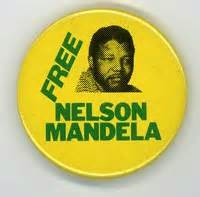
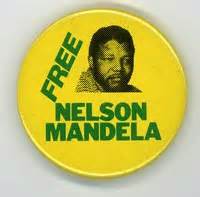
mandela-button

Since the death of Nelson Mandela on December 5th, I wanted to turn discussion to the connection between Mandela and Jamaican and ska culture.

IN THE U.K.

Most ska fans will remember the glorious ska tune penned by Jerry Dammers of The Specials, “Free Nelson Mandela,” recorded by The Special A.K.A. whose lyrics are listed above. I always liked this song, but I also like the Chicken Song and I think the two remind me of each other a tad. The song charted at number nine in March 1984 and led to an awareness of the South African leader. It brought attention to a hero who was previously considered a terrorist by the Tory government in England. Dammers wrote the song after attending a 65th birthday concert at Alexandria Palace in 1983. The song was produced by Elvis Costello and The Beat’s Dave Wakeling and Ranking Roger sang backup vocals, along with other vocalists.

One of those artists, Rhoda Dakar of The Bodysnatchers, The Special AKA, and Skaville UK, recalled her memories of recording this song in an interview on marcoonthebass.blogspot.com. She says that she had fond memories of “recording ‘Mandela’ with Elvis Costello. I’m a huge fan of his and could barely speak to him, I was so starstruck. . . I am, of course, immensely proud of ‘Mandela’.”

Dammers helped to organize Artists Against Apartheid and was asked to head up a festival by Dali Tambo, the son of Oliver Tambo who was, at the time, the leader of the African National Congress in South Africa. The first concert, called Freedom Beat, took place on Clapham Common in London in 1986. Artists such as Peter Gabriel, Sting, Sade, The Smiths, and Big Audio Dynamite, Mick Jones’s new band since the breakup of The Clash, performed. Some 250,000 people attended the concert which was preceded by a march to the concert grounds. After the success of Freedom Beat, a much bigger concert was organized to celebrate Mandela’s 70th birthday, and so on June 11, 1988 a massive concert took place at Wembley Stadium. Some 72,000 people attended live at Wembley Stadium and more than 600 million people from 60 countries watched the broadcast on television. An enormous list of artists performed, including Stevie Wonder, Sly & Robbie, UB40, Harry Belafonte, Phil Collins, Whitney Houston, and Chrissie Hynde. Numerous celebrities attended and lent their support.

BBC News has run a fantastic article on Jerry Dammers and his role in Nelson Mandela’s fight for freedom. Of course in true Jerry Dammers’ style, he claims that “there was little awareness of Nelson Mandela’s imprisonment before his song,” but that is debatable. Here is the article: http://www.bbc.co.uk/news/uk-england-coventry-warwickshire-23064733

I want to post the lyrics here because I think they are tremendously important:

Free Nelson Mandela / Free, Free, Free, Nelson Mandela/ Free Nelson Mandela/ Twenty-one years in captivity/ His shoes too small to fit his feet/ His body abused but his mind is still free/ Are you so blind that you cannot see/  I say Free Nelson Mandela / I’m begging you/ Free Nelson Mandela / He pleaded the causes of the ANC/ Only one man in a large army/ Are you so blind that you cannot see/ Are you so deaf that you cannot hear his plea/  Free Nelson Mandela / I’m begging you Free Nelson Mandela/  Twenty-one years in captivity/ Are you so blind that you cannot see/ Are you so deaf that you cannot hear / Are you so dumb that you cannot speak/ I say Free Nelson Mandela/ I’m begging you/ Oh free Nelson Mandela, free/ Nelson Mandela I’m begging you begging you / Please free Nelson Mandela/ free Nelson Mandela/ I’m telling you, you’ve got to free Nelson Mandela.

Here is footage of “Free Nelson Mandela” performed on Top of the Pops:

IN JAMAICA

Nelson Mandela first visited Jamaica on July 24, 1991. There was obviously great excitement about his visit and before he departed, Mandela visited National Heroes Park in Kingston where he laid wreaths at the shrines of Marcus Garvey, Sir Alexander Bustamante, and Norman Manley. The headline of the Daily Gleaner on July 25th stated, “Emotionally charged J’cans greet Mandelas.” The article stated, “Yesterday’s crowds in Kingston and the outpouring of emotion drew comparisons to the visit by Emperor Haile Selassie in 1967 [sic. Selassie actually visited on April 21, 1966]. People from all walks of life took whatever vantage points they could—tops of trees or buildings—to catch a glimpse of the Mandelas but heavy security and sometimes confusion over routes to be used left many disappointed though caught up in the moment of the historic visit. Thousands ringed Heroes Circle from about mid-afternoon even while Mr. Mandela was at Vale Royal for lunch and waited for more than three hours to see them. A crowd had gone to the National Stadium from as early as noon with hundreds taking water bottles and food and vendors camped around the ground as people marked out their positions. All the car parks were full spilling over onto neighbouring streets backing up hundreds of yards. To Rex Nettleford’s ears the people on the streets were paying their tribute by saying ‘Mandela’ as ‘Man de ya’ or ‘The man is here.’”

The article later says that poet and historian, Lorna Goodison, sister to musicologists Bunny and Kingsley Goodison, read a poem to the Mandelas. “It was tears at the Pegasus Hotel luncheon when Lorna Goodison read ‘The Bedspread,’ a poem about South African police taking into custody Mrs. Mandela’s bedspread which was in the colour of the ANC. Miss Goodison went through the poem with her eves closed and her face pained. At its end she burst into tears and was hugged thrice by the wife of the ANC leader who later spilled a tear,” read the article.

Minister of Foreign Affairs Senator David Coore who organized the visit said, “Nelson Mandela is a man who has become a symbol of resistance to oppression, a man who has symbolized the fight against the cruel injustice of apartheid, and a man whose courage and example has been an inspiration to the whole world. It is our way as a people in Jamaica and the Caribbean of saying to him that we appreciate and recognise what he has accomplished: that we have always stood with him and the black people of South Africa — the non-white people of South Africa — in their struggle against apartheid, and to let them know that that support continues and will continue until apartheid is totally abolished.”

Tommy McCook recorded a fantastic homage to Nelson Mandela in 1981 with his “Mandella” [sic. Mandela] and numerous reggae artists like Sugar Minott, Carlene Davis, Danny Dread, Jah Wally Stars, and Rupie Culture also paid their respects to the great freedom fighter and leader.

ON FILM

On another note, Music Producer and Island Records Founder Chris Blackwell, who launched the careers of Millie Small and Bob Marley, among others, hosted a screening of his new Island Pictures film Mandela at his Strawberry Hill property in January 1997. The film tells the story of Nelson Mandela’s struggle against the tyranny of Apartheid in South Africa and creates an important link between Jamaica and South Africa. Historian Rex Nettleford said that “Nelson Mandela’s story encapsulates a spirit not unknown to the Jamaican people which must have prompted Chris Blackwell to want to tell the story of this great man, no doubt with the echoes of ‘One Love, one heart, let’s get together and feel alright.’”

The film is available on Netflix. Here is an NPR story featuring Chris Blackwell that ran on the Mandela documentary in 2006: http://www.npr.org/templates/story/story.php?storyId=5565131

Uncategorized

JFK and Ska

busta

The 50th anniversary of the assassination of John F. Kennedy on November 22nd reminded a friend of mine of ska. Intrigued, I asked him why. He responded with the songs that are related to the JFK assassination and, because I am not a record collector nor a matrix cruncher, I hadn’t been able to see the forest for the trees. Michael Turner of the Roots Knotty Roots database complied this list of ska songs related to the assassination:

Bongo Man “Jack Ruby Bound To Die (Kennedy’s Grave)”

Dee’s Group  “President Kennedy”

Roland Alphonso and His Group “Tribute To Kennedy”

Don Drummond  “JFK’s Memory”

Roland Alphonso and Lester Sterling “Lee Harvey Oswald”

Don Drummond  “Lee Harvey Oswald Junior”

Roland Alphonso and His Group “Jack Ruby (Crime Wave)”

It made me curious, what did Jamaica think of the JFK assassination? How did this newly independent nation experience the death of this leader? Here’s what I found.

The Daily Gleaner on November 26, 1963 wrote of Sir Alexander Bustamante’s reaction as the prime minister of Jamaica during this time. It was a story that ran on the Associated Press and Reuters newswires.

Sir Alexander Bustamante, prime minister of Jamaica, said today the assassination of President Kennedy means “we have all lost a true and great friend.” Sir Alexander, the ranking man of the Caribbean at the funeral services for Kennedy, arrived in Washington early today. He was given top protocol position for the nations south of the border, some of which have constitutional provisions restricting travel of their chief executives outside the country. Mexico, for example, forbids its president from leaving the country without specific approval of Congress. In some others internal political conditions may have been a factor. The Jamaican leader, tall and impressive despite his 79 years, seemed deeply moved by the death of Kennedy. “In Jamaica we all loved him and anyone could see it in the faces of the people,” Sir Alexander said. “Jamaica is a true and loyal friend of the United States and the West.” The little Caribbean island became the newest independent nation in the Western hemisphere in August, 1962 in a ceremony witnessed by Lyndon B. Johnson, then Vice-President of the United States and Prince Margaret of Great Britain. Sir Alexander came to know Johnson well during the Jamaican visit and had met Kennedy on various occasions, the last in June of this year when the Jamaican came to Washington on an unofficial visit. Despite the unofficial character of his trip, however, Kennedy received him at the White House and expressed a desire to visit Jamaica someday. The prime minister said government offices and schools in Jamaica closed today in official mourning for Kennedy.  “Our mourning, however something more than official,” Sir Alexander commented “The people of Jamaica mourn the passing of a true friend of our country, and today stores and businesses in Jamaica, although under no official requirement to close, have done so in tribute to the man whose memory we have all come here to honour on this sad day.” Sir Alexander was a prominent figure among the mourners later as the funeral procession left the White House grounds. Wearing a long tailed grey coat and a black armband he hurried to catch up with the other foreign dignitaries. He had apparently been cut off briefly as the mourners began their solemn walk to the cathedral.

manley

The leader of the opposition, Mr. Norman Manley, who had just served as prime minister of Jamaica and left office about a year and half prior to the assassination, had been in Philadelphia with his wife on business when the assassination took place. He issued the following statement in the Daily Gleaner on November 26, 1963.

It was a sad but moving and unforgettable experience to be in America on Friday and there the last two days. I was at the great Concert Hall in Philadelphia listening to their famous orchestra when the news of the assassination of President Kennedy came. The conductor soon announced that the concert would stop and we were all silently agreed. Outside there was an atmosphere of shock and grief and many were weeping as they went their ways. Everyone has felt it deeply. The driver in the taxicab, the waiter at the table, the businessmen in the conference room, all alike showed how profoundly this has hurt and amazed and disturbed them all. It was like when Abraham Lincoln was shot there almost exactly 100 years ago. It is natural that comparisons are made since Lincoln will for all time be remembered as the champion of freedom and today men associate Kennedy’s name with his fearless stand for civil rights and human freedom. Already men begin to measure the stature of a man as the President who first and best embodied the concept of America as a young man thrust into world leadership. It is true to say that not only has he been the greatest presidential champion of freedom in America since Lincoln lived but also since he had begun to give America a new dimension to American political life in two vital and important ways. He was consciously shaping the American mind to understand and accept her place in the modern world and as one of the two great nations in world leadership today. And he had begun to make the young people of America aware of the importance of political life and right judgment in political images and willing to contribute to their country even at the cost of personal sacrifice. I had the privilege of meeting him and I know that he was deeply interested in the West Indies and in Jamaica. Indeed, I was astonished at his quick grasp of our problems. We have lost a good friend.

Of particular note is coverage in the Daily Gleaner of Fidel Castro’s comments on the assassination. This story also ran on the wire, so it is likely that the U.S. also reported on the story, but Jamaicans likely had additional interest due to the geographical proximity and cultural importance of Cuba to Jamaica. Of course there are also links between Cuba and ska, and Castro and ska, but perhaps another day for that conversation. Here is a section of the in the November 25, 1963 issue of the Daily Gleaner  with the headline “Kennedy Carried World to Brink of War—Castro:”

The Cuban Prime Minister told his people by radio and television that despite Kennedy’s “hostile . . . policies toward us” the news of his assassination is “grave and bad.” “People feel repugnance to such a slaying because we should not consider this method a correct form of battle,” he said.

Dozens of  articles also appeared about local community groups expressing their condolences and their responses to the event, such as tributes and closures. Correspondents from towns across the country wrote their official statements of mourning and visits of town officials to Kingston were postponed due to the death. Certainly the events in the U.S. have always had an impact on American culture in a number of ways—even the death of John F. Kennedy. From destruction comes creation, and in the case of the JFK assassination, the musicians contributed to the conversation with their compositions.

Enjoy a listen–Don Drummond’s JFK Memories, one of my personal favorites.

Uncategorized

Prince Buster the Boxer

prince-buster-boxing

After hearing from some readers of last week’s post that they would like to see some history on Prince Buster and his foray into boxing, I decided to delve into the archives and see what I could find. And it’s pretty interesting, I think you’ll agree.

First, we know that Prince Buster is a man of flash and prowess, so why not start with a little flair. From the Daily Gleaner, October 5, 1964:

Monograms on the dressing gowns worn by boxers are always a source of interest and sometimes amusement. Saturday night, Prince Buster’s glowing scarlet and white robe had inscribed on the back in bold letters of black “Prince Mohammed the Great,” the inscription on Joe Brown’s robe read “Joltin Joe,” Bunny Grant’s read “Bunny Grant — The Whip;” and Vincent Ramsay had to addition to his name the spiritual acknowledgement “In God I Trust.”

Despite the fact that his first fight ended on a “sour note,” Prince Buster had quite a lot of fun before, during and after the bout. Amidst a thunderous ovation he made a grand entry, followed by an entourage of about 20 supporters. His entry into the ring was dramatic and he did quite a bit of shadow-boxing a la Cassius Clay his “Big brother,” before resting briefly on the not too regal stool provided for him. His antics during the fight again drew laughter and applause and at the end he spent about half a minute in the centre of the ring, arms high over ha head and gazing intently at the sky.

Prince Buster, born Cecil Bustamante Campbell, grew up on Orange Street in a rough neighborhood in Kingston and only ended up in the music industry after literally fighting his way in. He received nickname “Buster” after his middle name Bustamante, but “Prince” was the nickname he received while boxing. He learned the skill as a teenager from Jamaican boxing greats Kid Chocolate and Speedy Baker. Prince Buster told me in a never-before-published interview from July 14, 1997 that he wanted to be a boxer initially. “I was in a dance troupe and would sing solo. I used to have problems going to school in the day because I stayed up so late at night. I paid less attention to singing and was more into boxing and wanted to be in fights but really there was no money in boxing. You’d get punched up and then there was no money. So I leave that and go back to singing and started recording. From day one, I started for me.”

Prince Buster’s first fight was on October 3, 1964. Daily Gleaner sportswriter L.D. Roberts wrote in anticipation of the debut, “Prince Buster is to make his ring debut in four rounder and this in itself should be a treat. But if the Prince forgets he is in the ring and starts to do the ska instead of throwing leather he may get his block knocked off.”

The connection between Prince Buster and Cassius Clay, who by this time was known as Muhammad Ali (Clay changed his name on February 26, 1964), is evident in the comparisons between the two fighters and likely because Prince Buster had begun a relationship with Muhammad Ali and due to his influence converted to Islam himself. Prince Buster changed his name Yusef Muhammad Ali although he still went by the stage name Prince Buster. The two fighters met during a trip to London where Prince Buster was transformed by Ali’s faith in the Nation of Islam. During Prince Buster’s trip to the 1964 World’s Fair with Bryon Lee & the Dragonaires, Ronnie Nasrala, and entourage, Prince Buster took Jimmy Cliff and his friends to a nightclub in Harlem to meet his comrade Muhammad Ali. Prince Buster had also been with Muhammad Ali in Miami when Ali invited him to attend a Nation of Islam talk at Mosque 29. So the two were connected by a friendship and faith.

prince-buster-boxing-with-ali

The Daily Gleaner on September 19, 1964 discusses Prince Buster’s planned debut in the boxing ring:

With all the flair and the gimmicks of deposed world heavyweight king Cassius Clay, Prince Buster bows into the ring with a song on his lips on Lucien Chen’s October 3rd promotion. The promotion is with the cooperation of David A. Lindo Ltd.

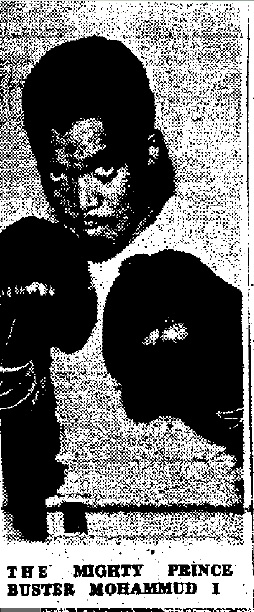
The ska singing sensation, more popular in the areas of ‘Wash Wash,’ claims intimate association with his ‘big brother’ Clay. No opponent he says, will last four. He fights in the first-round opening bout on the October 3 promotion. Like Clay, the Mighty Prince Buster claims to be Black Muslim. He has dubbed himself The Mighty Prince Buster Mohammed I in keeping with the Mohammed All, the name assumed by Cassius Clay after his seventh round TKO victory over Sonny Liston for the world heavyweight title. Buster returned to the Island recently from a tour of the USA, where he had ‘the advantage ‘ of meeting and hobnobbing with some of the biggest names in boxing in the country, among them, Sonny Liston. “Going from gym to gym in the USA, I decided to become a professional boxer.” Mohammad I said after his return. He is currently undergoing training at the Liberty Hall gym. And like Clay, Jamaica’s newest professional has this to say in verse.

                I Mighty Prince Buster, Mohammed the first,

Predict my first fight will end in the first

When the gong sounds for the first round,

My opponent will already be on the ground,

I have no time for fooling around,

There must be better herring around.

Prince Buster said that there was “no money” in boxing and certainly that was true—not because Prince Buster didn’t win, and not because it wasn’t offered, but because he didn’t receive the money because there was suspicion the fight was not fair. The Daily Gleaner on October 5, 1964 tells of that first fight against Gene Coy in an article entitled “Prince Buster’s purse withheld.”  The article states, “The Jamaica Boxing Board of Control announced Saturday night after the Prince Buster-Gene Coy scheduled tour found at the National Stadium, that the purses of both boxers would be withheld and an investigation made on Wednesday. Ska singing Prince Buster recently turned boxer was making his fight debut, so too was Coy. After a light flurry to the midsection in the first round, Coy hit the canvas and was counted out, as Buster had predicted in a poem. The 15,000 strong crowd that had cheered him into the ring five minutes earlier, booed as Coy lay on the canvas.”

But Prince Buster did get his money after all amid the spectacle.  The Daily Gleaner on November 5, 1964, over a month after the bout, states:

The Jamaica Boxing Board of Control, yesterday announced that ska-singing lightweight, professional boxer Prince Buster and Gene Coy whom he floored in the first round on October 3, will receive their purses. The Board had withheld the purses of both boxers after a questionable performance in the four-round bout promoted by Lucien Chen at the National Stadium. Principals of the five fight card were Bunny Grant vs. Kid Bassey for the Jamaica Welterweight title and Percy Hayles vs. former world lightweight title holder Joe Brown.

Boxing Board Secretary George Abrahams said through a release after a meeting of the committee set up to investigate the fight. “It was decided that in consideration of all the circumstances the purses of both boxers, which was previously withheld, should be paid and that severe reprimand be issued to Coy’s trainer.”

Coy, who trained at Liberty Hall, maintained that he was sick and that his trainer said he should fight.

Coy was floored by a light flurry to the mid-section seconds from the end of the first round as Buster had predicted in his poem.

Prince Buster has recently returned from Miami where he watched world heavy-weight boxing champion Cassius Clay’s early training for his title defense with former champion Charles (Sonny) Liston in Boston, Massachusetts on November 10. Buster says that he is going to Boston to be in Clay’s corner for his return bout with Liston.

Although Prince Buster continued for a short time to help support other boxers by appearing at their bouts, such as his mentor Muhammad Ali, Bunny Grant, and Grady Ponder, whom he helped convert to Islam, the October 3, 1964 boxing match against Coy was the only professional fight that Prince Buster ever fought.

Uncategorized

Ska, Rocksteady, and Boxing?

Bunny_grant

Bunny Grant

Alton Ellis’s classic 1965 song Dance Crasher features the following lyrics in a warning to rude boys to mash up sound system dances:Don’t break it up, please don’t make a fuss, go to a gym, get yourself in trim, be a prize fighter, instead of a dance crasher, let me tell you, be a gentleman, you could be a champion, like Mr. Bunny Grant.”. Ever wonder who Bunny Grant was and why boxing was such a big deal in this Alton Ellis song? I mean, sure we know about dance crashers and rude boys, but boxers?

Ever wonder who Bunny Grant was? Reggae Archives tells us that “Leslie “Bunny” Grant was a Jamaican light-welterweight boxing champion active during the early 1960s. Whilst there have been many Jamaican-born boxers on the international scene before and since, most fought under the flag of an adopted country such as USA, Canada or Great Britain. Grant was revered in Jamaica largely because he fought as a Jamaican.”

The Jamaica Gleaner, on November 7, 1999, in a series of the 20 Greatest Jamaican athletes of the Century, profiled Bunny Grant. Here is the feature:

BUNNY GRANT has the distinction of being the first Jamaican boxer to fight for a world title.

He fought the American champion Eddie Perkins for the world junior welterweight boxing title at the National Stadium on April 18, 1964, but lost in a unanimous points decision.

In 1962, Grant held as many as four titles simultaneously – the Latin American junior welterweight title, the British Empire lightweight title (renamed the Commonwealth title) and the Jamaica lightweight and welterweight titles.

On August 5, 1962 – on the eve of our Independence from Britain – Grant did Jamaica proud by winning the Commonwealth lightweight title, defeating the Englishman Dave Charnley inside the newly-built National Stadium. It was a fitting Independence gift.

By virtue of his outstanding exploits in the ring that year, Grant at age 22 was named Jamaica’s first ‘Sportsman of the Year’ by the Machado Foundation.

During his heyday, the boxer whose real name is George Leslie Grant, was not only a genuine crowd puller but a role model to young aspiring sportsmen as well. He was immensely popular.

Blessed with a fast pair of hands, good footwork and a punishing left jab, the man who fought eight world champions in the lightweight and welterweight divisions in a career spanning 15 years, ended with a professional ring record of 102 fights, 86 wins, 10 losses and six draws.

After his memorable victory against Charnley, Grant defeated the world number three lightweight Doug Vaillant of Cuba in his next fight at the National Stadium months later, out jabbing and out punching his opponent for his biggest win.

Other notable bouts were his loss to the highly ranked Carlos Hernandez of Venezuela in 1963, which for a time set back his bid for a crack at the world title, and his victory over fellow Jamaican Percy Hayles for the local welterweight title in the early 70s, this inside the National Arena.

Significantly, Ring Magazine, in its ranking for February 1965, named Grant as the number one contender for Carlos Ortiz’s world title. Between 1963 and 1968, he was consistently ranked in the top 10 in the junior welterweight division.

For his outstanding contribution to boxing, Bunny Grant was inducted to Jamaica’s Sports Hall of Fame on October 21.

Okay, okay, so enough about Bunny Grant, still what’s the big deal with boxing? Well boxing was hugely popular in Jamaica and still is today. Boxers were admired for their strength, skill, and sport and so they were idolized by Alton Ellis and others. Sister Ignatius taught her boys at the Alpha Boys School the sport of boxing by sharing films of the greats, instructing the technique as the boys watched. Local theaters like the Ritz screened fight films, like Rocky Marciano vs. Don Cockell. The Jamaica Boxing Board of Control (JBBC) was established as early at 1929 by Jamaican national hero Norman Manley, one of the leaders responsible for negotiating Jamaican independence. Manley even served as president of the JBBC during its infancy.

Today, the outstanding Minneapolis band the Prizefighters have paid homage to this tradition and to Ellis by naming their band after this cultural affinity as they revive the sounds of 1960s Jamaican ska—definitely check them out at theprizefighters.net.

My interest in boxing and ska came as I researched Don Drummond since Anita Mahfood, also known as Margarita, was married to a boxer before she became involved romantically with Drummond. Margarita was married to boxer Rudolph Bent. They had two children together, Suzanne and Christopher. Rudolph Bent was known as the Dark Destroyer. He was born in Belize, which was then called British Honduras and he fought his first professional fight on July 13, 1952 against Jimmy Pollard in Belize City. Rudolph Bent left Belize for Jamaica in 1955 to continue his career and he met Margarita and they had their first child in 1959 getting married afterward and then having a second child two years later.

Perhaps Bent’s most famous moment in his boxing career came on October 20, 1965 when, at the age of 33, he fought against Boxing Hall of Famer Sugar Ray Robinson in Robinson’s final fight. Robinson, who was 45 years old at the time, won his 174th and final victory in a third-round knockout of Rudolph Bent in Steubenville Ohio. Bent had just come off of a 13 fight losing streak when Robinson won. Robinson’s purse for the fight was $500. It was not Bent’s last fight, but his string of loses definitely signaled the end of his career.

You can read more about Bent, see photos of him, and hear about the abusive relationship he had with Margarita before she divorced him and moved in with Don Drummond while her kids were sent away to Belize. My book is available at skabook.com and here are a few recent reviews:

Heather, just letting you know that the Don Drummond book is the best book I have ever read on the subject of Ska. It is so well researched and informative! I particularly liked reading about Graeme Goodall and The Caribs, the Australians who helped pioneer the genre. Keep up the good work, can’t wait to read your next book! cheers, Steve Douglas, guitarist with The Resignators, www.theresignators.com

Well researched. By reg69 on October 22, 2013 For the avid or casual reader on the subject of early Jamaican music this is a must read.Writer has come up trumps here ,cannot have been an easy task extracting information on D.Drummond in his native land. So thank you Heather for sticking your neck out , it must have been a daunting task. On behalf of reggae fans worldwide , thank you.

This man is back !!!!!!!!!!!!!!!!!!!!!!!!!!! By Darren Powell on November 2, 2013 Meticulously researched & beautifully put together – a wealth of new information on a musical giant & a revelation in terms of Margarita Mafood.

Through dozens of interviews Heather Augustyn’s book paints a vivid and at times traumatic picture. She never shrinks from dealing with the cycles of violent abuse and the stigma of mental illness. Her book demands that we learn from the lessons of the past so that we might react differently in the future. Let’s face it, Don Drummond was not alone. He joins a host of stellar artists and musicians who have dealt with depression and psychosis, some of whom were able to deal with it, others who weren’t. In the end ‘Don Drummond: The Genius and Tragedy of the World’s Greatest Trombonist’ leaves us no place to go but the music and that my friends takes us to those Far East melodies, those groundbreaking compositions… minor masterpieces… that allow his melancholy genius to shine. Roll on Don Cosmic… Ungu Malungu Man! –Paul Brad

Toasting

Pick It Up, B-Boys! The Toasting/Hip-Hop Connection.

My good friend Michael Turner recently found and posted the above rare clip of King Stitt toasting on his Roots Knotty Roots page and I wanted to pass it along and write about it here. This particular clip interested me because I have been researching the link between toasting and early hip hop and wanted to take a few minutes to elaborate and solicit your thoughts.

As Buster Brakus notes in this clip, the backing band is Byron Lee & the Dragonaires. He notices Carl Brady on percussion who is a life-time member of Byron Lee & the Dragonaires and possibly Marvin Brooks on tambourine. Brakus says that Clancy Eccles told him that Eccles and King Stitt performed a lot with Byron’s band.

What interests me most is toasting as an art form. Count Machuki first began toasting for Tom the Great Sebastian and then came to work for Coxsone since he was skilled at attracting a crowd and keeping the crowd. Machuki says that he was so desired by the crowds that they were disappointed at the recorded version of the live performance, solidifying the concept that ska is very much a live experience. In The Rough Guide to Reggae, authors Steve Barrow and Peter Dalton quote Count Machuki. “There would be times when the records playing would, in my estimation, sound weak, so I’d put in some peps: chick-a-took, chick-a-took, chick-a-took. That created a sensation! So there were times when people went to the record shop and bought those records, took them home, and then brought them back, and say, ‘I want to hear the sound I hear at the dancehall last night!’ They didn’t realize that was Machuki’s injection in the dancehall!”

“Toasting was developed by the sound-system operators,” writes Mohair Slim. “To emphasis the music’s rhythm, the DJs chanted staccato noises over the top of the instrumental tracks that were the staple of the early dancehall. A common technique was the rapid-fire repetition of words, like “ska-ska-ska” or “get-up-get-up-get-up” also employed were locomotive-noises (“ch-ch, ch-ch, ch-ch”), hiccups (“he-da, he-da, he-da”) and grunts. Prince Buster, Coxsone Dodd and Byron Lee all utilised toasting to accentuate the fervour of their records.” The clip above is evidence of Byron Lee using this art form. Classic Skatalites tunes like Rocket Ship and

Legendary historian and artist Clinton Hutton says the toasting had a deeper impact on the power of the sound system. “The mike gave the voice reach and agency. The deejay could talk to the fans in the dancehall as well as to the persons outside of the dancehall. He could advertise the next dance and venue that the sound system would be playing at. He could praise the sound system owner/operator and help to brand his name and enterprise in the minds of the people. The disc jockey could dedicate a song or songs to a specific person or group of persons. He could announce the names of persons going off to England or coming from prison. Yes, he could really ‘wake the town and tell the people,’ to use a line from Daddy U-Roy. He could cover the weaknesses in a selection with live jive, with toasting, with scatting, with bawl out.”

I would argue that toasting is the grandfather of hip hop. It is evident that those who either participated in or witnessed the activity of toasting in the 1950s and 1960s Kingston, at the sound system dances brought this cultural phenomenon to the shores of the United States where it then evolved into hip hop traditions. In the 1970s, hip hop began when a disc jockey by the stage name DJ Kool Herc began hosting block parties in the South Bronx. He, like the Jamaican predecessors, toasted over the music to encourage the attention of the participants. Hip hop toasting then evolved into adding musical flourishes to the music, utilizing two turntables to create percussive effects like scratching and looping, and it then evolved into rapping completely as a vocal, rather than a few words over the existing soundtrack, and vocal percussive effects, beatboxing. Hip hop culture spread to communities throughout New York and then the world in the 1980s.

Scholar Joseph Heathcott notes the origins of hip hop culture in Jamaica. “Taking shape on the playgrounds and street corners of the South Bronx, hip-hop was from the first moment a popular cultural practice that stretched across borderlands, linking the local to the transnational. Not coincidentally, hop-hop erupted in the one American urban neighborhood with the highest concentration of Jamaican labor migrant families: the South Bronx. . . . Islanders imported with them to the South Bronx highly developed musical and electric performance cultures centered around the mobile sound system. If ska had filed to gain a purchase on the American music scene, and if reggae was only beginning to establish its credentials, it was the sound system and dance hall culture that ultimately made sense on transplanted soil. Where Jamaican genres of music only penetrated American markets obliquely, Jamaican performance practices provide enteral to the creation of hip-hop.”

Is it possible that DJ Kool Herc knew of these Jamaican toasting methods? Most definitely. DJ Kool Herc, whose real name is Clive Campbell, was born in 1955 in Kingston, Jamaica where he lived until he was 12 years old, during the height of the sound system era. He came to the Bronx in 1967. His first gig was DJing his sister’s birthday party and he did as he learned, filling the break sections of the song with toasting to keep the audiences going. This is not to say that DJ Kool Herc was merely imitating the originals, and indeed he was innovative by incorporating the turntables themselves in future gigs to create additional techniques that became separate from the ska genre and a part of the hip-hop genre, but credit is due the first toasters—Count Machuki, King Stitt, and Sir Lord Comic.

I would love to hear your thoughts on this connection. Please share your knowledge of vintage toasting and the hip hop link with me as I continue to research this fascinating musical evolution.

Uncategorized

Ska Funeral Mash Up

Jamaica-231

This is the site of Don Drummond’s funeral on May 14, 1969, Madden’s Funeral Home. I visited there in 2011 while doing research and it is still in use today. The site is seemingly quiet here although it wasn’t so on the day of Drummond’s funeral. A few weeks ago I wrote about May Pen Cemetery and the chaos of the grounds, overrun by gangs aligned withe the JLP and PNC, and the reason’s why Drummond’s exact grave site cannot be located (which is discussed further and with great detail in my book), but today I wanted this blog to focus on the funeral and the controversy surrounding that event.

Madden’s Funeral Chapel is located in downtown Kingston on North Street, not far from Jubilee Hospital where Don Drummond was born. He was buried at 9:25 a.m. on May 18, 1969 in the May Pen Cemetery in grave number A346. He is listed in burial records as a Roman Catholic. Entombment was private, for only family. Musicians such as Sonny Bradshaw took up funds to pay for Drummond’s funeral since his mother was unable to afford the cost. Sister Ignatius paid for the burial. The burial included a few attendants other than just family. Present at the cemetery were “a few CID men from Denham Town and Central Station . . . in case of any incident,” according to the Daily Gleaner. This was done in order to keep a sense of decorum for the family in a time when emotions were still raw, and is likely one reason why the exact location of Drummond’s grave is still not known today.

Just four days earlier on May 14th, 1969, pandemonium broke out at Drummond’s funeral when drummer Hugh Malcolm moved past an enormous crowd of those paying their last respects to Drummond. He burst into the packed funeral home just as the officiating priest was about to administer the services. Reports that Malcolm tore up the death certificate are merely rumor or embellishment, unless it was a prop certificate, since the death certificate was not issued until August 22, 1969. But Malcolm did demand the service be stopped and that there should be no burial until the results of the post mortem were known.

Administrators today claim the record has been destroyed. But during the funeral, Malcolm demanded to see the post mortem because “a relative of Drummond said that the protestor declared that he had been informed that Drummond had not died from natural causes but that before his death he was beaten by four men in the institution,” according to an article in the Daily Gleaner. The service was then called off because the family did not want anyone to get hurt or for a riot to break out.

What do you think? Was Don Drummond murdered at Bellevue as Hugh Malcolm claimed? Did he commit suicide? Did he die from natural causes? Or did he die as a result of the rudimentary treatment and terrible conditions of Bellevue? I give my thoughts in my book, Don Drummond: The Genius and Tragedy of the World’s Greatest Trombonist, but the answer is not certain and I would love to hear your thoughts.

Uncategorized

Bellevue Mental Hospital

Jamaica-2013-762

It is the week of Halloween and I see advertisements everywhere for haunted houses, many of them “insane asylums” with silly images of fake butchered patients at the hands of saw-wielding zombies as Marilyn Manson plays in the background. I can’t help but think of the real life insane asylum that is part of ska history, Bellevue Mental Hospital in Kingston, Jamaica, home to trombonist Don Drummond during the last years of his life and periods throughout his life. While Bellevue was never a site of such horrific butchering as will likely be portrayed in haunted houses, it is still haunted with inhumane treatment and horrifying scenes, as I witnessed when I visited the interior of this hospital last February. The photo above is a patient’s artwork on a boarded up, abandoned building located on Bellevue grounds.

First, let me share a little about Bellevue’s history, which you can also read about in more detail, including information on Don’s treatment and death in my book, Don Drummond: The Genius and Tragedy of the World’s Greatest Trombonist, available by clicking the books link above.

In the mid-1800s, Kingston had only a single public hospital located on North Street and West Street. This hospital served the city’s 30,000 people and contained the Jamaica Lunatic Asylum, as it was called at the time. Accommodations were so awful that one former senior medical officer claimed they were “little better than stables for animals.” Treatment for patients during these early years was primitive at best and included such procedures as “tanking,” or submerging patients into a shallow tank of water many times to reduce their aggressiveness, or rather forcing compliance, not unlike today’s torturous water boarding. Private medical practitioner Dr. Lewis Bowerbank changed these conditions when he appealed to the Colonial Office in London to make investigations into the mistreatment of patients. As a result, Bellevue Mental Hospital was built in 1861, delayed initially by an outbreak of cholera in 1850. But the hospital wasn’t known as the Bellevue Mental Hospital in those days. It was called the Jamaica Lunatic Asylum, then in 1938 the name changed to the Jamaica Mental Hospital and later it was called Bellevue Mental Hospital.

It is interesting to note that as improvements were made over the years, namely in the areas of nutrition, uniforms and sleeping conditions, recreation, occupational opportunities, and skilled treatment, there was also a brass band that was organized in 1860 to help provide recreational and therapeutic opportunities for patients. This continued during Don Drummond’s tenure and he periodically played with this band, even tutoring a patient there. A senior medical officer remembers that this student was known as Trommie but his real name was Eleazor Beckford. Music is still used as a form of occupational therapy at the hospital today.

The medical treatment patients received at Bellevue were rudimentary in the early days and during the days of Don Drummond’s stay. In the 1800s, the main medication for patients in the asylum was alcohol—brandy, wine, rum, and gin were given to patients. This was greatly reduced and replaced by drugs and castor oil. Overcrowding was always an issue so knocking out patients helped the limited staff, who was not skilled in the early days, deal with clients. During my visit to the hospital, no staff at all was visible in multiple buildings as patients roamed their fenced-in areas, barefoot, bandages unraveling from their heads.

In the 1960s, when Don Drummond lived at Bellevue, one form of treatment was prevalent, having just emerged into the medical industry in Jamaica. In addition to drugs that would have rendered Drummond a zombie, he also was treated with electro-shock therapy. Don’s fellow musicians confirm that he received this treatment at Bellevue, as does the senior medical officer’s (SMO) family who was there, living on the estate, at the time. “EST was definitely the thing, electroshock. The medication would have been basically heavy sedatives. There were basically things to kind of conk you out. Drummond was pretty zonked out from early on,” says the SMO’s daughter. The drugs that Don was given by the unskilled staff were drugs that have since been banned since they are fatal. One administrator told me, “We used strait jackets to restrain different patients. We also had chemical restraints, sodium barbital. The patient would be tranquilized to the extent that they would sleep for a few days and given glucose. They would come out and be in a different state. We also used chlorpromazine, or CPs for short.” Sodium barbital is the same class of drug that killed Jimi Hendrix and Marilyn Monroe.

Was Don Drummond killed in this house of horrors? You can read my thorough research into this and my conclusion in my book. What do you think?

Uncategorized

Don Drummond Royalties

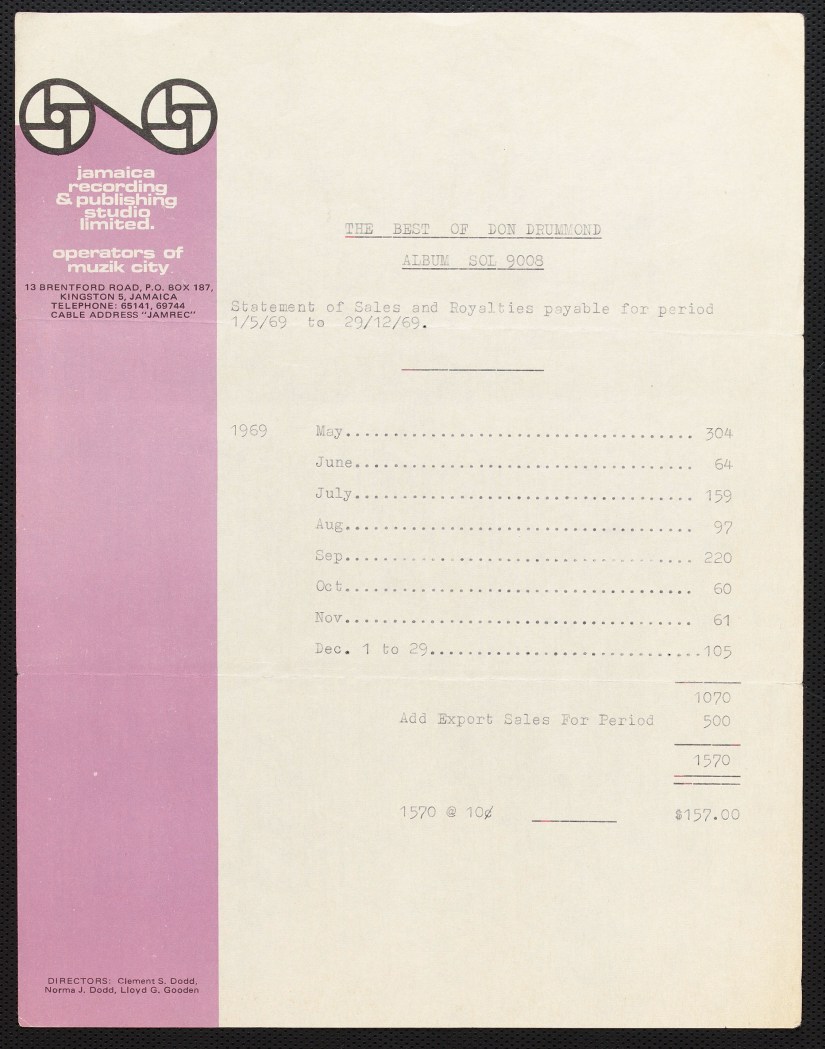
Royalties-from-Coxsone-to-Yap

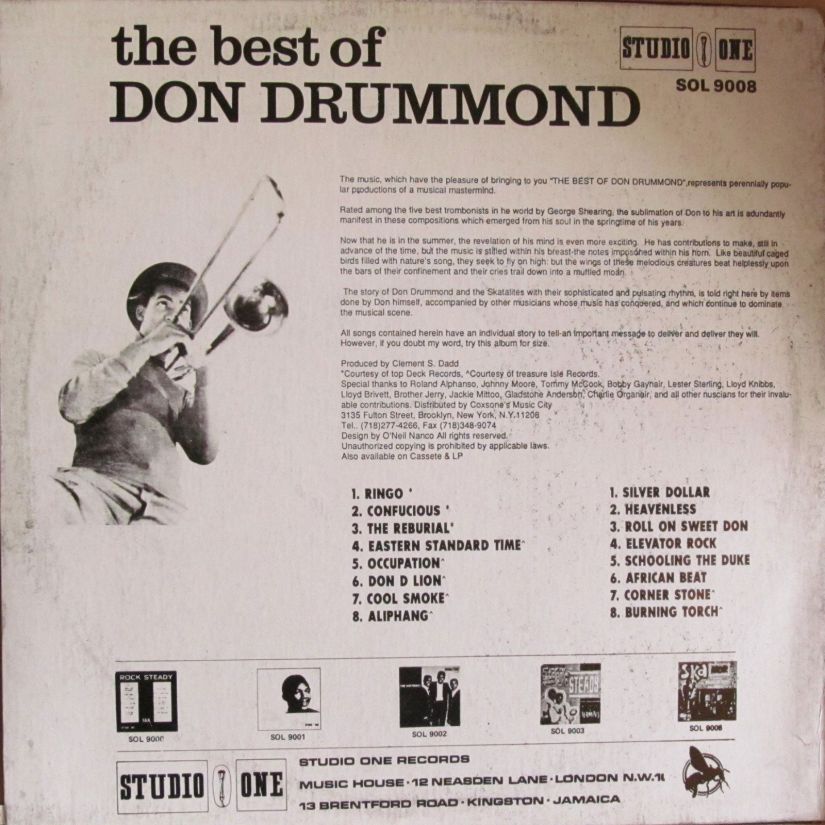
This is a document showing royalties that Coxsone paid to Justin Yap for use of the Top Deck songs Justin recorded that Coxsone then used on the Studio One album, The Best of Don Drummond. These songs were “Confucius,” “The Reburial,” and “Ringo” which appeared on this album, also Yap also recorded others with Drummond like “Chinatown,” “Smiling,” and “Marcus Junior” but Coxsone didn’t place these on this album. So this statement is for three of the songs that Top Deck recorded, a measly $157 for seven months of sales. It is surprising the royalties were paid at all, frankly. But Drummond was dead by this time, having just died that May 1969, so he certainly didn’t see a dime and even if he were alive, he still wouldn’t have seen a dime. Other songs on the album that were not recorded by Studio One and were instead recorded by Duke Reid for Treasure Isle, according to the album notes, are “Eastern Standard Time,” “Occupation,” “Don D Lion,” “Cool Smoke,” “Aliphang” (should be Alipang), “Corner Stone,” and “Burning Torch.” Wonder if royalties were paid to Reid?!

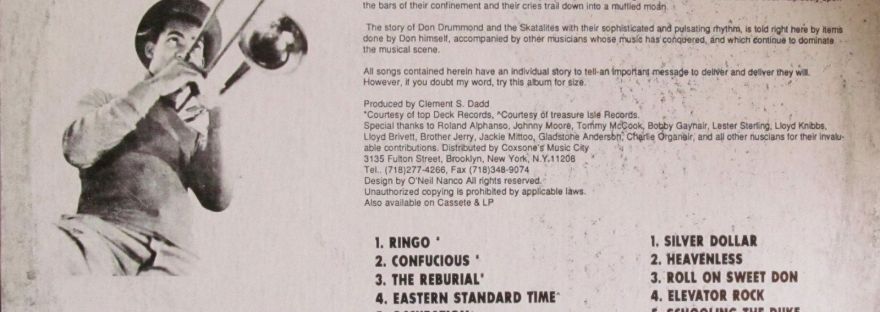
don-d-album

This album also credits the artist who performed with Don Drummond on these tunes, or certainly some of them: Roland Alphonso, Johnny Moore, Tommy McCook, Bobby Gaynair, Lester Sterling, Lloyd Knibb, Lloyd Brevett, Brother Jerry (Jah Jerry Haynes), Jackie Mittoo, Gladstone Anderson, and Charlie Organaire. If you are near Chicago and attend any of the Jamaica Oldies events hosted by Chuck Wren you will see Charlie Organaire take the stage with his harmonica for a few tunes, and let me tell you, he is amazing. Charlie lives in Chicago. Lester still performs frequently with the Skatalites, but unfortunately, all other musicians listed here have returned to the universe to commune.

Back to the topic of royalties. Musicians during the days of ska never received royalties. They didn’t know about royalties. They knew their instrument, not the business, in many instances. The way it worked in the studio was artists either punched in and out on a time clock, or others were paid by the record side, about two pounds a tune if they were lucky. And today, the royalties are owned by the producers and their estates, so those whose talent and imagination created the song, like Don Drummond and Roland Alphonso and even Bob Marley in his earliest years, either don’t see a dime or receive a small slice of the pie from reworked agreements. For example, on one of Bob Marley’s first songs, a ska song called “Simmer Down,” only Bob Marley’s estate and Coxsone Dodd’s estate, since he recorded the song for Studio One in 1964, receive royalties, and they fought in court in the 1990s for monies from the song. None of the artists who perform the actual music on this song that sold 80,000 copies just in the months following its release, not Roland Alphonso on saxophone, nor Lloyd Knibb on drums, nor Lloyd Brevett on bass, nor Don Drummond on trombone, nor Tommy McCook on saxophone, nor any of the others, not even the Wailers who sing backup, Peter Tosh, Bunny Livingston, Junior Braithwaite, and Beverley Kelso, get one red cent from Simmer Down. Marley’s widow, Rita Marley, said she had never received money from any of Marley’s early work with Coxsone. This is but one song of hundreds, thousands, earning hundreds, thousands for their producers’ estates. Producers defend their exploitation by saying that it was the system of the day, akin to today’s “free culture” of ripping tracks from a torrent or megaupload music site.

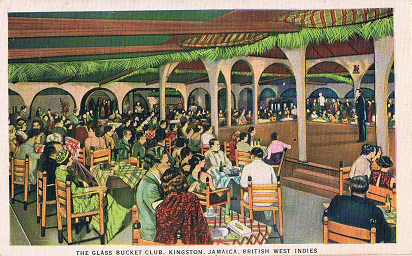
Glass Bucket Club

Ska at the Glass Bucket

Glass-Bucket

This is the Glass Bucket Club, a stage that once bore the greats before ska ever existed. This stage helped to shape the musicians who would go on to create the sound that swept Jamaica and the world. Without this stage, it could be argued that Jamaican music would be altered and unrecognizable.

The Glass Bucket Club opened on December 22, 1934 on Half Way Tree Road in Kingston owned by Bob Webster and later Joe Abner. This area of Kingston was a border between uptown and downtown and the club certainly catered to high-class clientele. On opening night, some 700 patrons packed the club to see “the Rhythm Raiders, a new dance orchestra under the direction of’ Dan Williams. These musicians have been carefully chosen. not only to play for dancing, but to accompany the Vaudeville troupe which will be a regular feature of the Glass Bucket dances. Vaudeville acts are to be brought from the United States, each troupe remaining on the island for six weeks beginning January 5th,” read the Daily Gleaner announcing the opening.

Because the club catered to the upper classes and tourists, the entertainment offered was according to established tastes and was frequently dictated by trends in the U.S., such as Vaudeville. But when tastes changed from Vaudeville to the sounds of big band orchestras, the Glass Bucket adapted. It was here, at the Glass Bucket in 1956, that great American jazz singer Sarah Vaughan came to perform in mid July. Don Drummond played trombone as part of Vaughan’s musical backup and Vaughn was so impressed with his playing that she said he likely ranked in the top five trombonists in the world. Other acts included Xavier Cugat and Abby Lane. In the 40s and 50s the people who went the Glass Bucket wore gowns and tuxedos, or suits at least. There were formal shows on Christmas Eve and New Year’s Eve and galas of all sorts.

It was also here that Margarita, who was advertised in Glass Bucket advertisements as “Jamaica’s No. 1 Torrid Rhumba Dancer,” performed her sultry dance. Another advertisement on July 9, 1955 for her performance at the Glass Bucket stated, “Sparkling Native Flooor Show featuring Desir & Rahma in their sensational dance on broken glass, and Marguerita, ‘exotic dancer.'” Margarita’s father, Jad Eid Mahfood, did not approve of her dancing at the Glass Bucket, or anywhere, but she snuck out to do it anyway. When Anita won a competition at the Glass Bucket, her father was there to see it, unbeknownst to her. Her father’s discovery never stopped her though. The Glass Bucket also served as the live broadcast venue of the Teenage Dance Party (TDP) hosted by Sonny Bradshaw which was broadcast on JBC Radio in its early days. Later, Winston Blake played the venue with Merritone Disco, and his moves made him the first King of the TDP.

Byron Lee & the Dragonaires first performed here in 1960. Lee recounted these days for an article in the Daily Gleaner. “When you go to the Glass Bucket you had to have a reputation.  We used to play as an opening act,” for such entertainers as Perez Prado from Cuba and Sammy Davis Junior. Soon they graduated to holding main spots of their own. Lee said the Glass Bucket’s real party days were Fridays, Saturdays, and Sundays, with lunch being served and activities such as rehearsals being conducted during the week. On party nights, when the music was provided by a band before clubs utilized sound systems, the music started at 9 p.m. and by 1 a.m. things were winding down. “By 8 p.m. people started to come in. They expected that you would start at 9 p.m., or they would clap you,” Lee said. Lee remembers that it was also a very peaceful time. “You used to park your car, don’t roll up your windows when you come back everything was inside. Sometimes even the key was in it,” he said. Lee brought ska to the Glass Bucket from what he had seen at Chocomo Lawn, sent there by Edward Seaga to popularize the sound. “Glass Bucket mash up the night. Glass Bucket was for the rich and famous and then for the people. Ska played that role,” said Lee.

Today, the site of the Glass Bucket, which changed names to VIP during the later 1960s, is a shopping plaza.